

Nestled in a skillet is one of those simple yet dazzling dishes that feels like sunshine on a plate. When I first tried sautéing tender asparagus with zucchini and yellow squash, it felt like I’d unlocked a new level of home cooking magic. The vibrant hues of green stalks mingling with pale zucchini crescents and golden squash slices made me smile before I even took the first bite. It’s such a playful dance of colors, and the bright pop of lemon zest brings everything to life. I find myself drawn to recipes that look as lively as they taste, and this one checks all the boxes: bright, colorful, and utterly nutritious. It’s the kind of dish that transforms a routine dinner into something you actually look forward to preparing.
Beyond those eye-catching visuals, this trio of vegetables offers a textural symphony that always surprises me. There’s that initial snap of crisp asparagus giving way to the silky, tender zucchini and squash, all lightly kissed by olive oil and garlic. Every forkful carries a little crunch, a hint of nutty garlic, and a refreshing lift of lemon. It’s the sort of vegetarian dish that never feels one-note, because each ingredient plays its own role: asparagus brings freshness and vitamins, while zucchini and squash add subtle sweetness and satisfying body. I often whip this up in just 20 minutes flat, and it never fails to impress guests or brighten a weekday meal. If you’re hunting for a beginner-friendly yet showstopper side—or even a light main course—this recipe is a keeper you’ll revisit season after season.
KEY INGREDIENTS IN HEALTHY ASPARAGUS WITH ZUCCHINI AND SQUASH
Before we dive into the kitchen, let’s talk about the star players that make this dish shine. Each ingredient brings its own personality and purpose, blending together into a vibrant, healthy medley.
- Fresh asparagus
These slender green spears add a lovely crunch and earthy richness. They’re packed with antioxidants and vitamins, making them the nutritional backbone of this recipe.
- Zucchini
With its mild, slightly sweet flavor, zucchini softens as it cooks and absorbs the garlicky olive oil, creating a tender bite that complements the asparagus perfectly.
- Yellow squash
Similar in texture to zucchini, yellow squash lends a hint of buttery sweetness and a pop of sunshine on the plate. It balances the green hues and provides contrast in both taste and appearance.
- Olive oil
A heart-healthy fat that prevents sticking and helps carry the flavors of garlic and lemon. It gives the vegetables a gentle gloss and ensures even cooking.
- Garlic
When minced and sautéed, garlic infuses the oil with its fragrant, slightly pungent aroma, adding depth and warmth to every piece of vegetable.
- Salt and pepper
Essential seasonings that elevate natural flavors. Salt coaxes out the moisture and intensifies the taste, while pepper adds a subtle kick.
- Lemon
Both juice and zest are used for a two-fold citrus burst. The juice brightens the entire dish, and the zest offers aromatic oils for an extra layer of freshness.
- Grated Parmesan cheese (optional)
A sprinkling of parmesan adds a savory, nutty finish and a hint of creaminess that melts beautifully into warm vegetables.
- Fresh basil or parsley (optional)
These herbs provide an aromatic green finish. Chopped and scattered on top, they brighten the plate and add a fragrant flourish.

HOW TO MAKE HEALTHY ASPARAGUS WITH ZUCCHINI AND SQUASH
Let’s walk through how you can transform these ingredients into a vibrant, tender-crisp side that doubles as a light main course. The steps are straightforward, and the entire process takes just minutes from start to finish. You’ll learn how to handle the vegetables, get that perfect sauté, and finish everything off with a zing of citrus.
1. Wash all the vegetables thoroughly under cold running water. Gently rub each piece to remove any dirt or debris, then pat them dry on a clean kitchen towel to prevent excess moisture in the skillet.
2. Trim the tough ends off the asparagus by snapping or cutting about an inch from the bottom. Slice the zucchini and yellow squash into even half-moons, aiming for uniform thickness so they cook at the same rate.
3. In a large skillet, heat the olive oil over medium heat until it shimmers but doesn’t smoke. This ensures a gentle, even cooking environment.
4. Add the minced garlic to the heated oil and sauté for about 1 minute, stirring constantly. Watch closely—you want it fragrant and slightly softened but not browned, which could introduce a bitter flavor.
5. Increase the heat to medium-high and add the asparagus, zucchini, and squash. Sauté the vegetables for about 5–7 minutes, giving the pan a gentle toss or stir every minute or so. You’re looking for tender stalks and half-moons that still have a bit of snap.
6. Season the mix with salt and pepper to taste, ensuring each bite has balanced seasoning.
7. Pour in the lemon juice and sprinkle the lemon zest over the vegetables. Stir well to combine, then cook for an additional 1–2 minutes, allowing the citrus oils to infuse every piece.
8. If you’d like a cheesy finish, sprinkle grated Parmesan cheese over the hot veggies and let it melt slightly in the residual heat.
9. Transfer the vegetables to a serving dish and garnish with chopped fresh basil or parsley for a pop of color and herbal aroma.
10. Serve immediately while warm, and enjoy your healthy side dish or satisfying vegetarian main course.
SERVING SUGGESTIONS FOR HEALTHY ASPARAGUS WITH ZUCCHINI AND SQUASH
When it comes to showcasing this vibrant vegetable medley, a little creativity goes a long way. You can keep it simple as an eye-catching side, or build around it for a complete meal that’s as beautiful as it is delicious.
- Layered Grain Bowl
Create a nourishing base with warm quinoa or brown rice, then spoon the sautéed vegetables on top. Add a dollop of creamy hummus and a sprinkle of toasted sunflower seeds for extra crunch and protein, turning a simple side into a balanced lunch or dinner bowl.
- Topped Crostini
Toast slices of crusty baguette until golden, then lash them with a smear of whipped ricotta or goat cheese. Pile on the warm asparagus, zucchini, and squash, drizzle with a bit more olive oil, and finish with a crack of fresh black pepper for an elegant appetizer.
- Grilled Protein Pairing
Serve alongside grilled chicken or fish for a complete dinner that’s bursting with seasonal flair. The light vinaigrette notes and garlicky undertones of the vegetables complement simply seasoned proteins perfectly.
- Breakfast Frittata Filling
Beat eggs with a splash of milk, pour into an ovenproof skillet, and scatter the cooked vegetables evenly. Sprinkle on extra cheese and bake until golden. This makes an impressive brunch centerpiece that’s both filling and full of color.
HOW TO STORE HEALTHY ASPARAGUS WITH ZUCCHINI AND SQUASH
Keeping this dish fresh and flavorful for later is easy, and with a few simple tips you can enjoy leftovers that taste almost as good as the first scoop. Proper storage also cuts down on waste and gives you a healthy go-to option for busy weeknights.
- Refrigerate in an Airtight Container
Transfer fully cooled vegetables into a sealed container. Stored in the fridge, they’ll stay fresh for up to 3 days. When reheating, cover loosely and warm in the microwave or in a skillet over medium-low heat.
- Freeze Individual Portions
For longer-term storage, arrange cooled vegetables in single-serve freezer bags, squeezing out excess air before sealing. Label with the date, and freeze for up to 2 months. Thaw overnight in the refrigerator before reheating gently on the stove.
- Keep Lemon Zest Separate
If you plan to store and reheat, consider sprinkling extra lemon zest on top right before serving to reawaken those citrus oils that can fade in storage. This little trick brightens each bite.
- Refresh with a Quick Sauté
To revive any loss of texture, drizzle a teaspoon of olive oil into a hot skillet, add the refrigerated veggies, and toss until warmed through. A quick splash of fresh lemon juice and a twist of pepper will revive the flavors beautifully.
CONCLUSION
I hope this guide to Healthy Asparagus with Zucchini and Squash inspires you to bring color, texture, and bright flavors to your next meal. This recipe has become a staple in my own kitchen, whether I’m serving it as a vibrant side for grilled fish or folding it into an easy breakfast frittata. The lively mix of tender-crisp asparagus, silky zucchini, and sweet yellow squash, all uplifted by garlic and a squeeze of lemon, never fails to impress. The balance of simplicity and flavor, combined with the dish’s nutritional punch—rich in antioxidants, vitamins, and low in calories—makes it a go-to for weeknight dinners and weekend gatherings alike. Feel free to customize with red pepper flakes for heat or swap in fresh herbs like thyme or rosemary for a new aromatic twist.
Don’t forget that you can print this article and save it for later, so whenever you need a quick, healthy recipe, it’s right at your fingertips. You’ll also find a handy FAQ section below for tips on substitutions, reheating methods, and more. If you give this recipe a try, I’d love to hear how it turned out! Drop your comments, questions, or any feedback—whether you’ve modified it with your own favorite herbs or paired it with a unique protein. Your kitchen stories and cooking triumphs make this community feel like we’re all chatting around the same countertop. Happy cooking, and here’s to many meals brightened by these delightful spring and summer veggies!
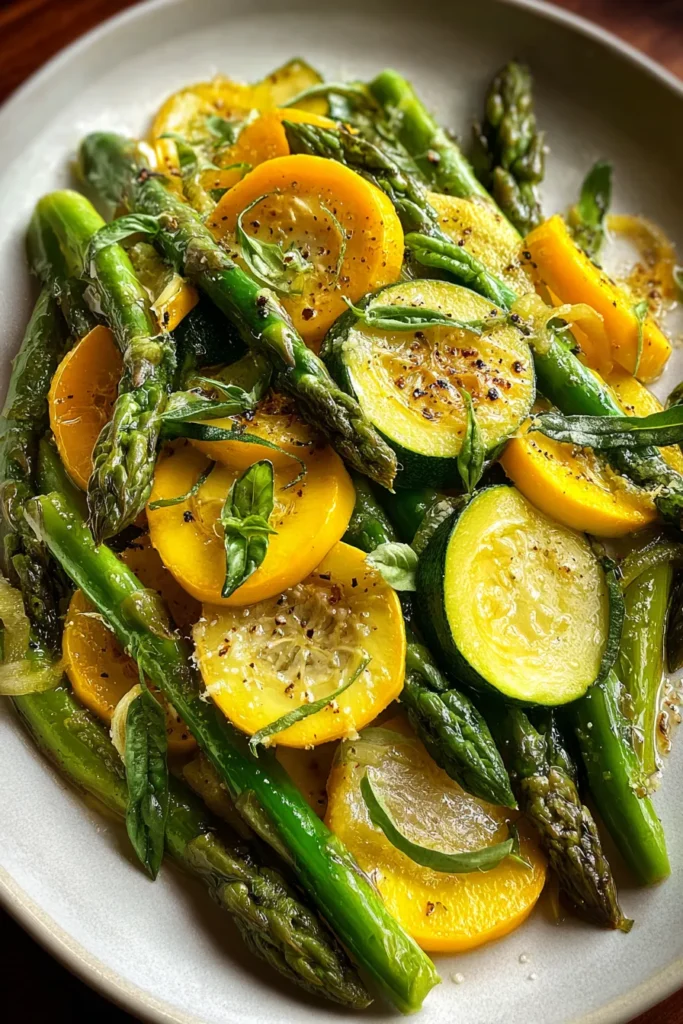

Healthy Asparagus with Zucchini and Squash
Description
This vibrant mix of asparagus, zucchini, and squash sautéed with garlic and lemon creates a perfect balance of flavors and textures that will elevate any meal.
Ingredients
Instructions
-
Begin by washing all the vegetables thoroughly under cold running water.
-
Trim the tough ends off the asparagus and slice the zucchini and squash into even half-moons.
-
In a large skillet, heat the olive oil over medium heat.
-
Add the minced garlic to the heated oil and sauté for about 1 minute until fragrant but not browned.
-
Increase the heat to medium-high and add the asparagus, zucchini, and squash to the skillet. Sauté the vegetables for about 5-7 minutes, stirring occasionally, until they are tender but still slightly crisp.
-
Season the vegetables with salt and pepper to taste.
-
Pour in the lemon juice and sprinkle the lemon zest over the cooked vegetables, stirring well to combine. Cook for an additional 1-2 minutes.
-
If desired, sprinkle with grated Parmesan cheese and let it melt slightly before removing the skillet from heat.
-
Transfer the vegetables to a serving dish and garnish with fresh basil or parsley if using.
-
Serve immediately while it's still hot, and enjoy your healthy side dish or vegetarian main course.
Note
- Asparagus is rich in antioxidants and vitamins, making this dish nutrient-packed.
- For added flavor, consider adding red pepper flakes for a bit of heat.
- This recipe works well with grilled chicken or fish for a complete meal.
- The dish is naturally gluten-free and can be made vegan by omitting the Parmesan cheese.
- Experiment with different herbs like thyme or rosemary for a unique flavor twist.

