

There’s something so comforting in the simplicity of a bowl of spaghetti drenched in a vibrant, homemade tomato sauce. This Classic Old School Spaghetti That Takes You Back to Italy! isn’t just a meal—it’s a warm hug at the end of a long day, a taste of rustic trattorias, and a nostalgia trip to family kitchens where laughter mingles with garlic-scented air. Whether you’re a complete beginner or a seasoned home cook, this recipe’s laid-back approach and straightforward steps make it perfect for lunch or dinner. Gathering all the ingredients is half the fun: plump tomatoes, silky olive oil, pungent garlic, and a handful of fresh basil leaves. With only 15 minutes of prep and 30 minutes of cooking, you’ll have a satisfying, 450-calorie plate of pure comfort that feels much fancier than the effort invested.
As you dive into this recipe, you’ll notice how each component works in harmony. The extra virgin olive oil carries the garlic’s savory essence, while the whole peeled tomatoes form the backbone of a sauce that simmers to a luscious consistency. A pinch of red pepper flakes wakes up your palate, while a little sugar balances the tomatoes’ tang. Sprinkling on grated Parmesan and tearing fresh basil leaves add those finishing notes that make every forkful sing. From the first forkful of perfectly al dente pasta to the last spoonful of that velvety sauce, this dish embodies why Italian cooking has stolen so many hearts. Get your apron on, fill a glass of something crisp, and let’s celebrate the art of simple, honest flavors.
KEY INGREDIENTS IN OLD SCHOOL SPAGHETTI
Before you get cooking, let’s talk about what goes into this timeless dish. Each ingredient plays a starring role, building layers of flavor that feel effortlessly special. You’ll rely on pantry staples and fresh produce to create a sauce that’s both rustic and refined—no complicated gadgets or secret spices required.
- Spaghetti
This long, slender pasta is the canvas for our sauce. Its smooth surface and hollow shape allow the tomato mixture to cling perfectly, ensuring every strand is coated in flavor.
- Extra Virgin Olive Oil
A high-quality oil infuses the sauce with fruity, peppery notes. It’s the medium in which we gently sauté garlic and red pepper flakes, creating a fragrant base.
- Garlic
Thinly sliced cloves release a sweet, aromatic richness as they brown. Golden garlic is essential—it imparts depth without overwhelming the palate.
- Red Pepper Flakes
Used sparingly, these add a subtle kick. They awaken the sauce’s natural sweetness and provide a gentle warmth that balances the tomatoes.
- Whole Peeled Tomatoes
When crushed by hand, these tomatoes bring a chunky, rustic texture. Their bright acidity and natural juices form the heart of the sauce.
- Salt and Freshly Ground Black Pepper
Seasoning isn’t an afterthought—it sharpens and enhances every flavor. Freshly ground pepper adds a vibrant bite that pre-ground cannot match.
- Sugar
A small amount tames the tomatoes’ acidity, rounding out the sauce’s profile without adding overt sweetness.
- Fresh Basil Leaves
Torn or chiffonaded, basil offers a floral, herbal lift. It’s the final green flourish that brightens each bite.
- Grated Parmesan Cheese
Nutty and salty, Parmesan adds creaminess and a savory finish. It’s the crowning touch that brings everything together.

HOW TO MAKE OLD SCHOOL SPAGHETTI
This recipe comes together with simple techniques and straightforward steps. From boiling pasta to simmering sauce, you’ll use basic skills to coax maximum flavor. Follow along carefully, and don’t rush the simmering stage—you’ll maximize the depth and richness of the sauce.
1. Bring a large pot of salted water to a rolling boil, then add the spaghetti. Cook according to the package instructions until al dente, meaning it still has a slight chew. Before draining, scoop out 1 cup of the starchy pasta water and set it aside; this liquid will help bind the sauce and pasta later. Drain the spaghetti and set it aside.
2. In a large skillet, heat the olive oil over medium heat. Add the sliced garlic and red pepper flakes (if you like a hint of heat). Sauté gently, stirring often, until the garlic edges turn golden brown—watch closely to avoid burning, which can introduce bitterness.
3. Meanwhile, pour the canned tomatoes into a bowl and crush them by hand. Discard any tough stem pieces, then add the crushed tomatoes and their juices to the skillet with the garlic. Stir to combine.
4. Season the sauce with salt, freshly ground black pepper, and sugar (if you’re using it). These adjustments balance the tomatoes’ natural acidity and highlight their sweetness. Allow the sauce to simmer for about 20 minutes, stirring occasionally. You’ll see it reduce, thicken, and develop a beautifully concentrated flavor.
5. Once the sauce has thickened, add the cooked spaghetti directly into the skillet. Toss everything together, using a pair of tongs or two big forks to coat each strand. If the sauce feels too stiff, pour in a splash of the reserved pasta water to loosen it and help it cling to the noodles.
6. Continue cooking the spaghetti in the sauce for an additional 2 minutes. This final simmer lets the pasta absorb those vibrant tomato flavors. Taste, then adjust the seasoning with extra salt or pepper as needed.
7. Serve the spaghetti immediately. Tear or chiffonade fresh basil leaves over the top, then finish with a generous sprinkle of grated Parmesan cheese. Dig in while it’s hot, and savor each forkful!
SERVING SUGGESTIONS FOR OLD SCHOOL SPAGHETTI
When it comes to serving this Old School Spaghetti, presentation and pairing can elevate the experience from a casual family dinner to a cozy, italian-inspired celebration. Think about fresh, vibrant accents that contrast and complement the deep, tomato-forward flavors of your pasta. Whether you’re plating individual bowls or setting out a family-style dish, these suggestions will help you present and enjoy your creation like a pro.
- Serve with Garlic Bread
A crisp, buttery slice of garlic bread makes the perfect sidekick. Rub warm, toasted baguette slices with a cut clove of garlic and drizzle with olive oil for a simple, aromatic accompaniment.
- Pair with a Light Salad
Offer a Mediterranean salad of mixed greens, cherry tomatoes, cucumber, red onion, and a drizzle of balsamic vinaigrette. The refreshing crunch balances the pasta’s richness.
- Top with Fresh Herbs
Alongside basil, sprinkle chopped flat-leaf parsley or a few mint leaves for a pop of color and an herbal twist. This keeps each plate looking bright and inviting.
- Finish with a Drizzle of Olive Oil
Right before serving, pour a small ribbon of extra virgin olive oil over each portion. It lends a silky sheen and an extra layer of fruity aroma.
HOW TO STORE OLD SCHOOL SPAGHETTI
Storing your spaghetti properly ensures you’ll enjoy its fresh, vibrant flavors even days later. With a few simple steps, you can preserve both texture and taste. Whether you’re saving leftovers for weekday lunches or batch-cooking for a busy week, these methods will keep your pasta at its best.
- Refrigeration in Airtight Containers
Transfer cooled spaghetti into airtight plastic or glass containers. Seal tightly and refrigerate for up to 3–4 days. This prevents moisture loss and keeps flavors locked in.
- Freezing Single-Serve Portions
Portion the spaghetti into freezer-safe bags or containers, leaving a little headspace for expansion. Freeze for up to 2 months. Thaw overnight in the refrigerator before reheating gently on the stovetop.
- Reheat with a Splash of Water or Oil
When warming leftovers, add a splash of water or olive oil to prevent the noodles from drying out. Heat on low in a skillet or microwave, stirring frequently until hot.
- Separate Sauce and Pasta
For the longest shelf life, store the sauce and pasta in individual containers. Keep the sauce refrigerated for up to 5 days, and reheat gently before tossing with freshly cooked pasta.
CONCLUSION
What a journey we’ve taken together through the world of Classic Old School Spaghetti. From selecting quality olive oil to mastering the art of a slow-simmered tomato sauce, you’ve added authentic Italian flavors to your home kitchen. This beginner-friendly recipe requires just over 45 minutes and rewards you with a satisfying, 450-calorie dish perfect for lunch or dinner. The key ingredients—garlic, basil, whole peeled tomatoes, and a sprinkle of Parmesan—work in concert to create a comforting, rustic experience. Whether you linger over a plate at your family table or share it with friends, this spaghetti is guaranteed to bring warmth and joy to any gathering. Don’t hesitate to print this article and tuck it into your recipe binder; you’ll return to these guiding steps and insider tips time and again.
As you savor those last bites, remember there’s a FAQ section waiting below to answer your pressing questions—everything from adjusting spice levels to achieving perfect al dente texture. If you try this Old School Spaghetti, I’d love to hear how it went! Share your comments, ask questions, or let me know if you’ve added a personal twist that made it even more special. Your feedback helps build a community of passionate home cooks who celebrate simple, honest flavors every day. Buon appetito!
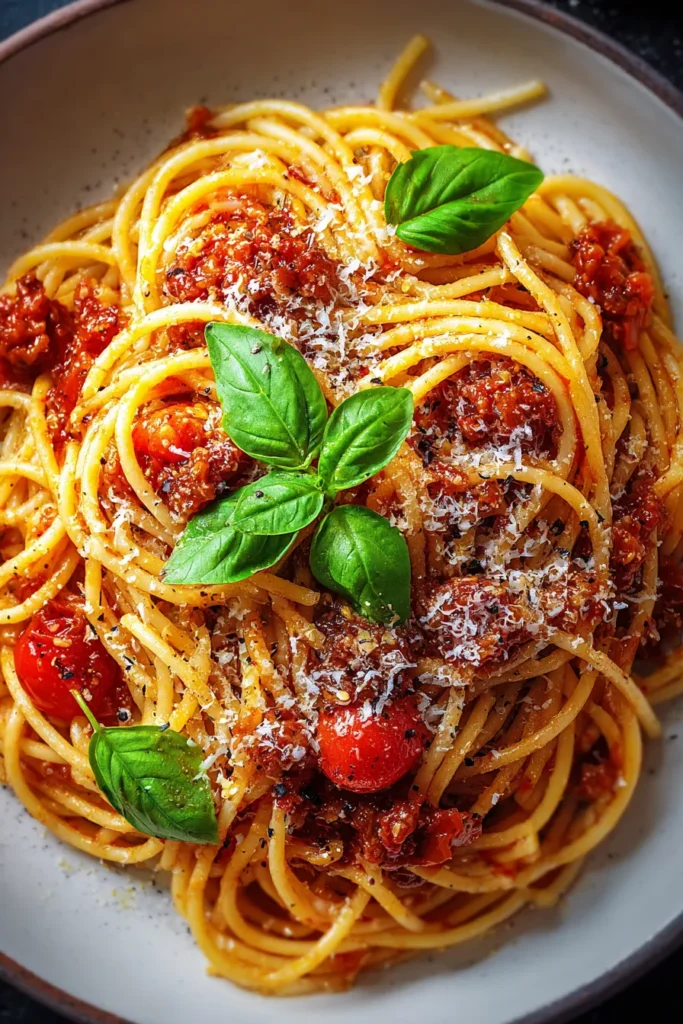

Old School Spaghetti
Description
This Old School Spaghetti features al dente pasta tossed in a rich, simple tomato sauce with garlic and fresh basil. It's a comforting dish full of rustic flavors!
Ingredients
Instructions
-
Bring a large pot of salted water to a boil. Add the spaghetti and cook according to package instructions until al dente. Reserve 1 cup of pasta water, then drain and set aside.
-
In a large skillet, heat the olive oil over medium heat. Add the sliced garlic and red pepper flakes (if using). Sauté until the garlic is golden brown, being careful not to burn it.
-
Crush the canned tomatoes in a bowl using your hands, removing any tough stem ends. Add the crushed tomatoes and their juices to the skillet.
-
Season the sauce generously with salt, freshly ground black pepper, and sugar (if using) to balance the acidity of the tomatoes. Simmer the sauce for about 20 minutes, stirring occasionally, until it thickens and the flavors meld together.
-
Add the cooked spaghetti to the sauce in the skillet and toss to coat. If needed, add a little reserved pasta water to loosen the sauce and help it cling to the spaghetti.
-
Cook the spaghetti in the sauce for an additional 2 minutes to absorb the flavors. Adjust seasoning if necessary.
-
Serve the spaghetti hot, garnished with fresh basil leaves and a generous sprinkle of grated Parmesan cheese.
Note
- Use good quality olive oil for the best flavor.
- Adjust the amount of garlic and red pepper flakes to suit your taste.
- For a deeper flavor, cook the sauce longer to allow it to reduce further.
- Adding a pinch of sugar helps reduce the acidity of the tomatoes.
- Fresh basil adds a lovely herbal note; however, it can be omitted if not available.

