

Cozy nights in the kitchen often call for hearty dishes that wrap you in warmth and flavor, and this Classic Beef Stew delivers just that. Rich, slow-cooked tender chunks of chuck beef mingle with vibrant carrots and potatoes, all swimming in a savory broth enriched by red wine and tomato paste. Every spoonful feels like a hug—perfect for those evenings when the temperature dips, and you crave something more nourishing than the everyday. Whether you’re hosting family or savoring a quiet meal solo, this stew stands out as a comfort food champion.
This recipe may carry an Intermediate difficulty level, but don’t let that intimidate you. With just 20 minutes of prep, 2 hours 15 minutes of cooking, and a 10-minute rest, you’ll easily fill your kitchen with mouthwatering aromas and create a satisfying Dinner centerpiece. Each serving clocks in around 550 calories, making it perfect for a filling homemade meal that doesn’t skimp on flavor. As a beloved stew recipe in the realm of homemade comfort food, it turns simple pantry staples—like garlic, onion, and beef broth—into something truly extraordinary. Gather your ingredients, grab your apron, and get ready for a cozy, slow-cooked adventure that echoes with laughter, conversation, and that lovely feeling of a shared meal.
KEY INGREDIENTS IN CLASSIC BEEF STEW
Before we jump into the cooking steps, let’s get familiar with the key players that give this stew its beloved character:
- Chuck beef: A well-marbled cut that breaks down beautifully during slow cooking, yielding melt-in-your-mouth tenderness and a rich, meaty base for the stew.
- Olive oil: Used for browning the beef and sautéing aromatics, it adds a silky mouthfeel and helps develop those deep, caramelized flavors.
- Salt: Enhances the natural flavors of meat and vegetables, ensuring every bite is seasoned perfectly.
- Freshly ground black pepper: Provides a subtle heat that complements the savory notes without overpowering the dish.
- All-purpose flour: Acts as a thickening agent when sprinkled over the sautéed veggies, giving the broth a luxurious, stew-like consistency.
- Garlic: Minced and cooked until fragrant, it infuses the stew with its warm, slightly pungent aroma and depth.
- Onion: Chopped and softened, it brings natural sweetness and body to the base of the stew.
- Beef broth: The liquid foundation that carries the meat and veggie flavors; it’s the heart of the stew’s comforting, savory profile.
- Red wine: Adds acidity, complexity, and a touch of fruitiness that brightens the dish and balances the richness.
- Tomato paste: Concentrated and tangy, it deepens the color and provides a subtle tomato backbone.
- Dried thyme: Offers herbal, slightly lemony notes that pair beautifully with beef and root vegetables.
- Bay leaf: Releases a subtle earthy fragrance that lingers in the background and ties all the flavors together.
- Carrots: Peel and slice into hearty chunks; they add natural sweetness and a lovely pop of color.
- Potatoes: Starchy cubes that absorb the broth’s flavor and contribute both heft and creaminess once tender.
- Frozen peas: Stirred in at the end, they bring a bright green hue, fresh flavor, and slight textural contrast.
- Fresh parsley: Chopped and sprinkled as a garnish for a final burst of freshness and color.

HOW TO MAKE CLASSIC BEEF STEW
Rolling up your sleeves for this stew is a delightful journey, with each stage building deeper flavors and comforting textures. Follow these detailed steps to bring your Classic Beef Stew to life:
1. Heat 2 tablespoons of the olive oil in a large pot over medium-high heat. Generously season the beef cubes with salt and pepper. Working in batches, add half of the beef and let it brown undisturbed on all sides (about 5 minutes total). Transfer the seared pieces to a plate, then repeat with the remaining beef. Browning builds flavor through the Maillard reaction, so take your time to get a good crust.
2. Lower the heat to medium and stir in the remaining tablespoon of olive oil. Add the minced garlic and chopped onion. Cook, stirring often, until the onions are softened and translucent: about 5 minutes. This step unlocks the sweet, mellow flavors of the aromatics.
3. Sprinkle the flour over the softened vegetables and stir vigorously until it’s fully incorporated. The flour will create a roux-like base that helps thicken the stew as it simmers.
4. Return all the browned beef to the pot. Pour in the beef broth and the red wine, scraping up any browned bits from the bottom. Add the tomato paste, dried thyme, and bay leaf. Increase the heat to bring the mixture to a boil, then reduce to low. Cover and let it simmer for 1 hour and 30 minutes, allowing the flavors to meld and the beef to become fork-tender.
5. After the initial simmer, stir in the carrot and potato chunks. Cover again and continue to simmer for another 45 minutes, or until the vegetables are tender when pierced with a fork. The stew will thicken naturally as the veggies release their starches.
6. Stir in the frozen peas and cook for an additional 5 minutes. Remove and discard the bay leaf—you don’t want anyone accidentally biting into it.
7. Give your stew a final taste test and adjust the seasoning with extra salt and pepper if needed. Garnish generously with chopped fresh parsley before serving, adding a vibrant pop of color and freshness.
SERVING SUGGESTIONS FOR CLASSIC BEEF STEW
When it comes to presenting this hearty stew, you’ll want every element to shine. Here are four creative ideas to elevate your serving game:
- Serve the stew in deep bowls with a drizzle of extra broth on top to keep it warm and soupy. Nestle a thick slice of crusty bread on the side for dipping and soaking up every last drop.
- Scoop the stew over a mound of creamy mashed potatoes for an indulgent twist. The velvety potatoes double as a sauce-thickener, turning each bite into pure comfort.
- Garnish each bowl with a dollop of sour cream or Greek yogurt to add a cool, tangy contrast that brightens the savory richness.
- Pair with a simple mixed green salad dressed in lemon vinaigrette. The crisp freshness cuts through the hearty stew, creating a well-rounded meal that’s both satisfying and balanced.
HOW TO STORE CLASSIC BEEF STEW
Ensuring your stew stays just as delicious tomorrow (or the next day!) is simple with the right storage approach. Here’s how to keep your homemade classic beef stew tasting its best:
- Refrigerate in an airtight container once the stew has cooled to room temperature. This preserves moisture and prevents it from absorbing odors in the fridge. Consume within 3 days for optimal flavor.
- For longer storage, freeze individual portions in freezer-safe bags or containers. Leave a bit of headspace for expansion and label with the date. Frozen stew lasts up to 3 months and tastes even better as the flavors mature over time.
- When reheating, thaw overnight in the refrigerator for best results. Heat gently in a saucepan over low to medium heat, stirring occasionally to prevent sticking. Add a splash of beef broth or water if the stew appears too thick.
- If you’d like to revive any lost brightness, finish with a squeeze of fresh lemon juice or a sprinkle of fresh herbs before serving to refresh the flavor profile.
CONCLUSION
From the moment you begin browning that first batch of beef to the final sprinkle of parsley, making this Classic Beef Stew is a journey of aromas, textures, and heartwarming satisfaction. This article has guided you through every step—from selecting the essential ingredients, understanding their roles, mastering cooking techniques, to serving and storing your creation. Whether you’re gathering loved ones for a cozy dinner or preparing meals ahead for busy weeknights, this slow-cooked stew adapts beautifully. With its tender meat, vibrant vegetables, and a broth that’s both rich and comforting, it’s no wonder this recipe has earned its place among beloved comfort foods.
Feel free to print and save this guide so you can revisit it whenever you’re in need of a hearty, homemade meal. You’ll also find a FAQ below to answer any lingering questions. I’d love to hear how your stew turned out—drop a comment, share your tweaks, or ask for advice if you hit any snags along the way. Your kitchen triumphs and questions fuel this community, and I’m here to help you make every bite memorable. Happy cooking!
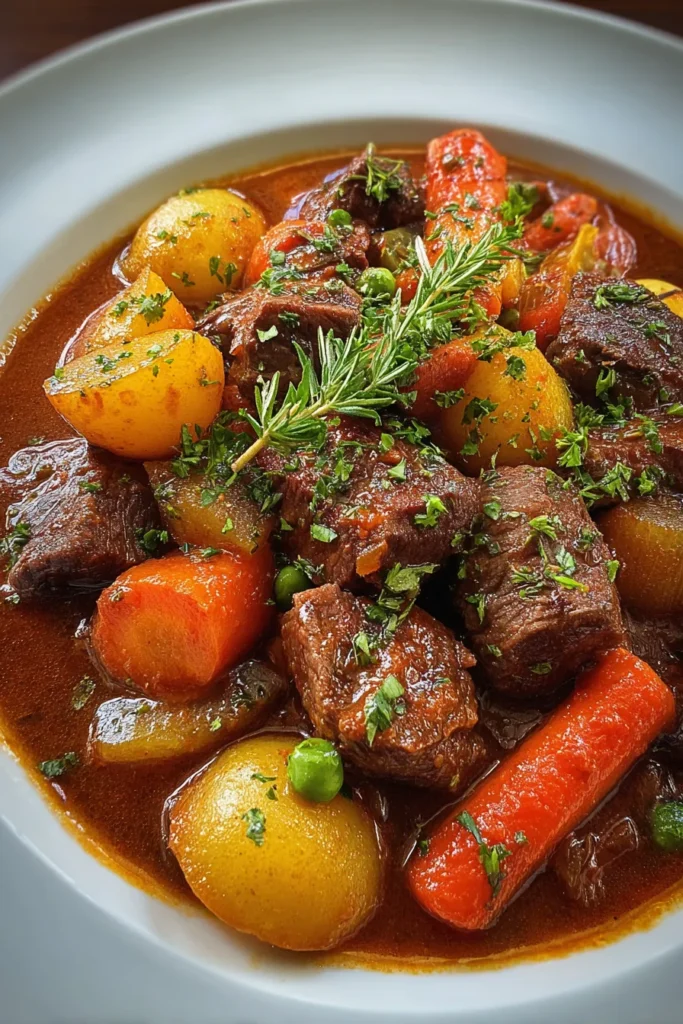

Classic Beef Stew
Description
This classic beef stew features tender chunks of meat simmered in a rich, savory broth with vibrant vegetables. Perfect for cold nights or family gatherings!
Ingredients
Instructions
-
Heat 2 tablespoons of the olive oil in a large pot over medium-high heat. Season the beef with salt and pepper. Add half of the beef to the pot and brown it on all sides, about 5 minutes total; transfer browned beef to a plate. Repeat with remaining beef.
-
Lower the heat to medium and add the remaining tablespoon of olive oil. Stir in the garlic and onion, cooking until softened, about 5 minutes.
-
Sprinkle the flour over the vegetables and stir until well incorporated.
-
Return the beef to the pot and stir in the beef broth and red wine. Add the tomato paste, thyme, and bay leaf. Bring the mixture to a boil, then reduce the heat to low. Cover and simmer for 1 hour and 30 minutes.
-
After 1 hour and 30 minutes, add the carrots and potatoes to the pot. Continue to simmer, covered, for an additional 45 minutes, or until vegetables are tender.
-
Stir in the peas and cook for an additional 5 minutes. Remove the bay leaf and discard.
-
Taste the stew and add additional salt and pepper if necessary. Garnish with fresh parsley before serving.
Note
- This stew can be made ahead of time and stored in the fridge for up to 3 days, allowing the flavors to meld even more.
- For a gluten-free version, replace the all-purpose flour with gluten-free flour or cornstarch as a thickener.
- Adding a few dashes of Worcestershire sauce can enhance the depth of flavor.
- If you prefer a thicker stew, consider mashing a few of the potatoes to naturally thicken the sauce.

