

There’s something truly comforting about a steaming bowl of white bean soup on a chilly evening. As the creamy beans meld with tender carrots, celery, and fragrant herbs, each spoonful wraps you in a warm, savory hug that feels like home. I still remember the first time I stirred a pot of these beans with diced tomatoes and a bay leaf—the kitchen filled with a gentle warmth that invited me to savor life’s simple pleasures. Opening the pantry to find dried cannellini or navy beans always sparks ideas for hearty meals, and this soup never fails to deliver. It’s amazing how the humble white bean can transform into a silky, velvety base that carries the bright pop of tomatoes and the earthy whispers of thyme. This is a recipe perfect for both beginner cooks and kitchen veterans; you simply soak the beans, sauté some veggies, and then let everything simmer until those beans dissolve into pure deliciousness. No complicated techniques—just cozy satisfaction in every ladle. Plus, leftovers taste even better the next day, making it a champion of meal prep and a lifesaver during busy weeks.
A thick bowl of white bean soup isn’t just food; it’s a cozy experience that transforms lunch or dinner into a little celebration of simple, nourishing ingredients. Warm up with a hearty White Bean Soup that’s packed with flavor and comfort, perfect for any cozy meal. The combination of creamy beans, fresh vegetables, and aromatic herbs comes together in under two hours for a fuss-free approach to a healthy soup. With just 30 minutes of prep time and 1.5 hours of simmering, you can sit back with a cup of tea or dive into an exciting novel as the flavors meld together. At about 350 calories per bowl, it’s a balanced lunch or dinner choice that still leaves room for a crisp salad or a slice of crusty bread on the side. Whether you’re feeding your family on a weeknight or serving friends at a casual weekend gathering, this recipe shines in its versatility and comforting depth.
KEY INGREDIENTS IN WHITE BEAN SOUP
Every ingredient in this white bean soup plays its part in building layers of flavor and texture. From the creamy beans that form a satisfying base to the bright burst of diced tomatoes, each component contributes to the rich, comforting character of this dish. You’ll also find aromatic vegetables like onion, garlic, carrots, and celery creating a fragrant mirepoix, while herbs and spices bring warmth and depth. Whether you’re a seasoned cook or new to the kitchen, understanding how these ingredients work together will help you customize the soup to your taste.
- White beans
These are the star of the show—cannellini or navy beans offer a creamy, buttery texture that thickens the broth and adds protein and fiber.
- Water
Used to soak the beans, it kickstarts their hydration process and helps remove indigestible sugars, ensuring a tender, creamy result.
- Olive oil
Adds richness when sautéing the vegetables and helps carry fat-soluble flavors, giving the soup a glossy finish and a subtle fruity note.
- Onion
Forms the aromatic base, lending sweetness and depth when cooked until translucent.
- Garlic
Brings a warm, pungent kick that complements the earthiness of the beans and the sweetness of the onion.
- Carrots
Add a hint of natural sweetness and a pop of color, balancing the savory flavors and providing extra nutrients.
- Celery
Offers a mild vegetal crunch and subtle herbaceous notes that round out the mirepoix.
- Bay leaf
Infuses a gentle, earthy fragrance that simmers into the broth, enhancing the overall aroma.
- Thyme
Delivers a woodsy, slightly minty flavor that pairs beautifully with the beans and tomatoes.
- Salt
Brings out all the flavors, ensuring each ingredient shines without tasting flat.
- Black pepper
Adds a warm, sharp bite that punctuates the richness of the beans and broth.
- Broth
Whether vegetable or chicken, it provides a savory foundation and extra depth, so you don’t have to rely solely on water.
- Diced tomatoes
Introduce acidity and bright tomato notes, balancing the creaminess and making the soup feel lighter.
- Fresh parsley
Sprinkled at the end, it adds a burst of color and a fresh, herbaceous finish.
- Grated Parmesan cheese (optional)
A final sprinkle of this salty, nutty cheese adds umami and a luxurious, melty garnish.

HOW TO MAKE WHITE BEAN SOUP
Let’s walk through the straightforward steps to turn your pantry staples into a bowl of comfort. This step-by-step guide will help you soak the beans for optimal creaminess, sauté the vegetables to develop a flavorful base, and simmer everything together until tender. Follow these detailed instructions, and before you know it, you’ll be ladling out a steaming portion of homemade goodness.
1. Rinse the dried white beans under cold running water to remove any debris. Place them in a large pot and cover with 8 cups of water. Bring to a boil and let cook for 2 minutes. Remove the pot from the heat, cover, and let the beans soak for at least 1 hour.
2. Drain and rinse the soaked beans thoroughly, then set aside. This ensures a cleaner broth and creamier bean texture.
3. In a large soup pot over medium heat, warm the olive oil. Add the diced onion and cook, stirring occasionally, until the onion becomes translucent, about 5 minutes.
4. Add the minced garlic, sliced carrots, and celery to the pot. Continue cooking and stirring occasionally until the vegetables are softened, about 5 more minutes.
5. Stir in the soaked and drained beans, bay leaf, thyme, salt, and black pepper, combining everything evenly. This step lets the spices and herbs bloom in the warm oil.
6. Pour in the vegetable or chicken broth along with the undrained can of diced tomatoes. Stir to combine and bring all the ingredients together.
7. Increase the heat to high until the mixture comes to a rolling boil. Once boiling, reduce the heat to a gentle simmer and cover the pot partially.
8. Let the soup simmer for about 1 to 1.5 hours, stirring occasionally. Check the beans for tenderness—at this point, they should be creamy and soft. Add additional broth or water if you prefer a looser consistency.
9. Remove the bay leaf and discard it. Taste and adjust the seasoning, adding more salt or pepper if needed to balance the flavors.
10. Stir in the chopped fresh parsley just before serving. Ladle the soup into bowls and, if desired, top each serving with a sprinkle of grated Parmesan cheese for an extra layer of savory richness.
SERVING SUGGESTIONS FOR WHITE BEAN SOUP
Once your white bean soup is ready, it’s time to turn that steaming pot into an unforgettable dining experience. Presenting this cozy soup with the right accompaniments can elevate its simple, homey charm into something special. Whether you’re serving it for a casual family dinner, a weekend brunch, or meal prepping for the week ahead, these serving suggestions will help you style each bowl. From garnishes that add pops of color and texture to pairing ideas that round out the meal, there are plenty of ways to make every spoonful even more delightful. Don’t be afraid to mix and match—this versatile soup welcomes creativity. Sprinkle a handful of fresh herbs for brightness, add a swirl of creamy dairy or plant-based topping for richness, or offer crunchy sides that contrast with the silky texture of the broth. With these serving ideas, your white bean soup will shine in any setting, from relaxed weeknight dinners to more festive gatherings with friends.
- Serve in warmed bowls and drizzle a little extra virgin olive oil on top for a glossy finish and a fruity accent that highlights the soup’s savory depth.
- Pair with crusty bread—such as a toasted baguette or sourdough—so guests can soak up every last drop. A smear of garlic butter on the bread adds an indulgent touch.
- Add a dollop of pesto or a swirl of plain yogurt for a vibrant, creamy contrast that brightens the soup both visually and flavor-wise.
- Top with grated Parmesan and a sprinkle of extra fresh parsley for an umami boost and a pop of green, making each bowl look as good as it tastes.
HOW TO STORE WHITE BEAN SOUP
Storing your white bean soup properly ensures you can enjoy its comforting flavors whenever you need a quick, nutritious meal. Because this soup develops even deeper flavor as it rests, planning ahead and setting aside portions is a great way to maximize your cooking efforts. Whether you’re tucking leftovers into the fridge for next-day lunches, freezing individual servings for busy days, or just prepping a week’s worth of meals, the right storage method preserves texture and taste. Keep in mind that beans can thicken over time, so a splash of water or broth during reheating is often helpful. In the following list, you’ll find my top tips for storing, freezing, and reheating, all designed to keep your soup fresh, flavorful, and ready to enjoy with minimal fuss.
- Refrigerator storage: Let the soup cool to room temperature, then transfer it to an airtight container. It will keep for up to 4 days, and the flavors will continue to meld, making leftovers even more delicious.
- Freezer method: Portion the soup into freezer-safe containers or heavy-duty zip-top bags, leaving some headspace for expansion. It can be frozen for up to 3 months—perfect for busy weeks or impromptu gatherings.
- Thawing and reheating: For best results, thaw frozen portions overnight in the fridge. Reheat gently in a saucepan over medium heat, adding a splash of broth or water to restore your desired consistency.
- Make-ahead tip: If you plan to serve within a day, you can let the soup sit in the covered pot on the counter (as long as it cools down within two hours) before storing. This reduces the cooking day workload and keeps flavors bold.
CONCLUSION
We’ve taken a simple stack of pantry staples—dried white beans, humble vegetables, aromatic herbs, and pantry broth—and transformed them into a warm, hearty White Bean Soup that’s perfect for beginner cooks and seasoned home chefs alike. From the initial soak of the beans to the final sprinkle of fresh parsley (and optional Parmesan), each step is designed to build flavor without overwhelming your schedule or your skill level. Throughout this article, we’ve explored the key ingredients that bring depth and balance, provided a detailed, step-by-step guide to cooking, shared creative serving ideas to make every bowl special, and outlined foolproof storage methods to extend the joy of this recipe. You can print this article and save it for later use, and you’ll also find a helpful FAQ section below to address any lingering questions. Whether you’re planning a cozy dinner for two or batch-cooking lunches for the week, this white bean soup recipe delivers consistent comfort and satisfaction.
I can’t wait to hear how your soup turns out! If you try this recipe or put your own spin on it, please share your experience in the comments. Questions, feedback, or little tweaks you discovered along the way are always welcome—after all, cooking is best when we learn from each other. Whether you need help adjusting seasonings or you’ve found the perfect bread to serve alongside, drop a note below and let’s keep the conversation simmering.
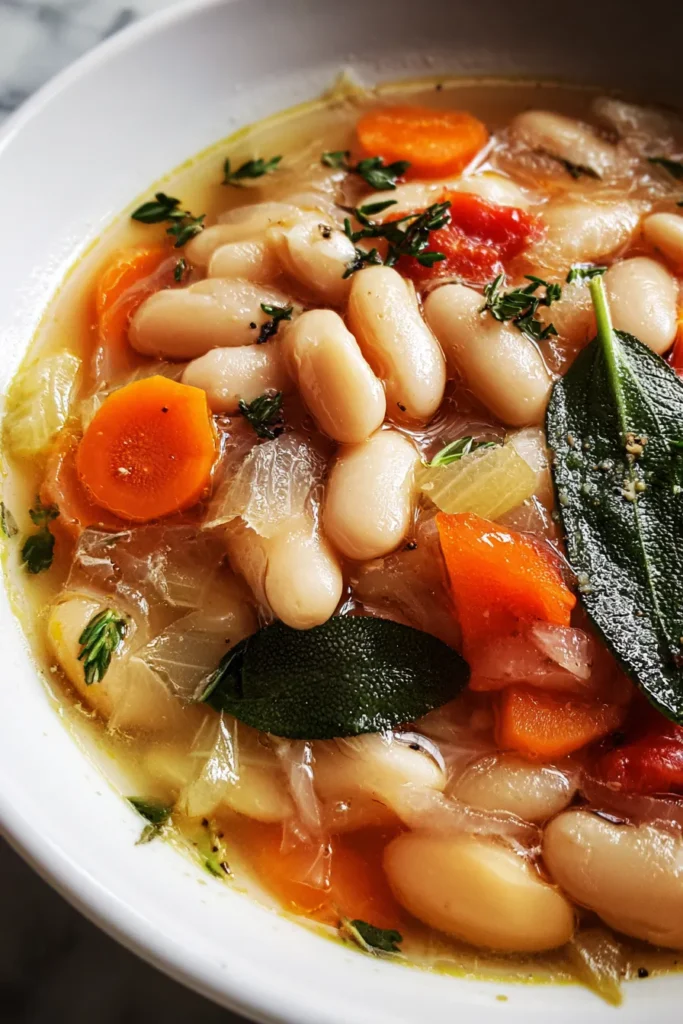

White Bean Soup
Description
Experience the delightful combination of creamy white beans, fresh vegetables, and aromatic herbs in this satisfying soup. It's the perfect bowl of warmth on chilly days.
Ingredients
Instructions
-
Rinse the dried white beans under cold water. Place them in a large pot and cover with 8 cups of water. Bring to a boil and let cook for 2 minutes. Then, remove the pot from heat, cover, and let the beans soak for at least 1 hour.
-
Drain and rinse the beans again. Set aside.
-
In a large soup pot over medium heat, warm the olive oil. Add the diced onion and cook until translucent, about 5 minutes.
-
Add the minced garlic, sliced carrots, and celery to the pot. Cook, stirring occasionally, until the vegetables are softened, about 5 more minutes.
-
Add the soaked and drained beans, bay leaf, thyme, salt, and pepper to the pot. Stir well to combine.
-
Pour in the vegetable or chicken broth and the can of diced tomatoes with their juice. Stir to combine everything.
-
Increase the heat to high and bring the mixture to a boil. Once boiling, reduce the heat to a simmer and cover the pot.
-
Let the soup simmer for about 1 to 1.5 hours, or until the beans are tender, stirring occasionally. Add more broth or water if needed for desired consistency.
-
Remove the bay leaf and discard it. Adjust seasoning with more salt and pepper if needed.
-
Stir in the chopped fresh parsley and serve the soup hot. If desired, sprinkle each serving with grated Parmesan cheese.
Note
- This soup tastes even better the next day after the flavors meld together overnight.
- For a smoother texture, you can blend part of the soup and mix it back or use an immersion blender for a few seconds.
- Adding a splash of lemon juice before serving brightens up the flavors.
- If you prefer a meat version, add diced cooked ham or bacon towards the end of cooking for added richness.

