

Nothing beats stepping into the kitchen on a crisp afternoon and filling the air with the irresistible scent of garlic mingling with fresh herbs. This classic minestrone soup does exactly that, wrapping your senses in a warm, inviting hug that feels like home. Bursting with colorful vegetables and tender pasta, it is the epitome of comfort food that never goes out of style. Each spoonful is a vibrant tapestry of carrots, celery, zucchini, and green beans dancing in a savory tomato and herb-infused broth. The gentle simmer brings out the sweetness of the garden-fresh vegetables, while the cannellini beans lend a creamy richness that makes every mouthful deeply satisfying. Whether you’re craving a light lunch or a hearty dinner, this minestrone is ready to deliver all the cozy goodness you need.
I still remember the first time I tried minestrone at my grandmother’s house—her wooden spoon stirring the bubbling pot as she hummed an old Italian tune. That memory guided me as I developed this recipe, combining simple ingredients for maximum flavor. The beauty of this soup is in its versatility: you can toss in whatever seasonal veggies you have on hand, and it will still shine. It’s perfect for a novice home cook because it requires only basic chopping, stirring, and simmering skills, yet the result feels like a gourmet masterpiece. Plus, leftovers only deepen in flavor overnight, making it a go-to for meal prep or a busy weeknight dinner. Gather your tools, rally your ingredients, and prepare to taste a bowl of warmth that feels like a hug from nonna herself.
KEY INGREDIENTS IN CLASSIC MINESTRONE SOUP
Before diving into the pot, let’s get acquainted with the star players of this cozy Italian soup. Each ingredient brings a unique texture, flavor, or aroma that contributes to the harmonious whole—think of it as an orchestra where every instrument counts.
- Olive oil
The foundation of flavor, this extra-virgin oil helps sauté the aromatics gently while adding a hint of fruity richness that carries throughout the soup.
- Onion
When chopped and cooked until translucent, it imparts a sweet, savory base that supports all other flavors.
- Garlic
Minced garlic lends a punchy, warming note, brightening the broth with its distinctive, zesty profile.
- Carrots
Peeled and diced, these add natural sweetness and a pop of vibrant orange, as well as a satisfying tender-crunch texture.
- Celery
Diced celery enhances the soup with an earthy, slightly peppery crispness, balancing sweeter vegetables beautifully.
- Zucchini
This mild, tender squash absorbs surrounding flavors and adds a soft bite that pairs well with firmer veggies.
- Green beans
Cut into bite-size lengths, they retain a fresh snap and vibrant color, making each spoonful lively.
- Diced tomatoes
Canned tomatoes supply acidity, body, and a bright red hue, creating the hearty tomato broth that defines minestrone.
- Vegetable broth
A savory liquid base that carries every note, from herbs to veggies, ensuring a well-rounded, comforting flavor.
- Cannellini beans
Drained and rinsed white beans contribute a creamy texture and plant-based protein, turning this into a filling meal.
- Dried oregano
Adds a warm, slightly minty earthiness that complements the tomato base.
- Dried basil
Brings a sweet, aromatic note reminiscent of summer gardens.
- Dried thyme
Offers subtle lemony and minty undertones, rounding out the herb profile.
- Salt and pepper
Simple seasonings that enhance and balance all other flavors—season to taste.
- Small pasta
Ditalini or any petite shape gives little bursts of al dente texture, making the soup heartier.
- Fresh spinach
Stirred in at the end, the wilted greens add a tender, nutritious finish and a bright pop of green.
- Grated Parmesan cheese (optional)
A final flourish of salty, nutty richness that melts into the hot soup for extra creaminess.
HOW TO MAKE CLASSIC MINESTRONE SOUP
Let’s walk through the cooking process step by step. This recipe is straightforward but packed with layers of flavor, guiding you from sautéing aromatics to the final addition of fresh pasta and spinach. With a few simple techniques—like sautéing, simmering, and achieving perfectly al dente pasta—you’ll have a sumptuous soup in under an hour.
1. Heat the olive oil in a large pot over medium heat. Add the chopped onion and garlic, and sauté until the onion is translucent, about 5 minutes. Stir occasionally to prevent browning and ensure even cooking.
2. Add the carrots, celery, zucchini, and green beans to the pot. Cook for another 5 minutes, stirring occasionally, until the vegetables are slightly softened but still hold their shape and vibrant colors.
3. Stir in the diced tomatoes, vegetable broth, cannellini beans, oregano, basil, and thyme. Season with salt and pepper to taste. Gently mix to distribute the herbs and beans evenly.
4. Bring the soup to a boil, then reduce the heat to low. Let it simmer uncovered for about 20 minutes, allowing the flavors to meld and the broth to develop depth.
5. In a separate pot, cook the pasta according to the package instructions until al dente. Drain the pasta well and set it aside to prevent overcooking in the hot soup.
6. Add the cooked pasta and chopped spinach to the simmering soup. Stir well and cook for an additional 5 minutes, or until the spinach is wilted and the pasta has soaked up some of the savory broth.
7. Taste the soup and adjust seasoning if necessary. Serve hot, garnished with grated Parmesan cheese if desired, for that extra layer of savory richness.
SERVING SUGGESTIONS FOR CLASSIC MINESTRONE SOUP
After all that loving care in the kitchen, serving your minestrone becomes a moment to shine. This section is all about presentation and pairing ideas that elevate your bowl into a full-on dining experience—whether you’re serving a casual family dinner or entertaining friends.
- Serve with crusty bread or garlic focaccia for dipping. The chewy interior and crisp crust are perfect for soaking up every last drop of broth.
- Top each bowl with a generous sprinkle of freshly grated Parmesan or Pecorino Romano, adding a creamy, salty finish that melds beautifully with the vegetables.
- Offer a small dish of red pepper flakes or chili oil so guests can dial up the heat. A tiny pinch adds a thrilling kick that some will adore.
- Garnish with fresh herbs like chopped basil or parsley just before serving. The bright green flecks bring a burst of freshness and color to the steaming bowl.
HOW TO STORE CLASSIC MINESTRONE SOUP
Once you’ve created a big pot of this warming delight, it’s worth knowing how to store it properly so each reheated bowl tastes as good (or even better) than fresh from the stove. Proper storage preserves texture, flavor, and nutritional value, ensuring your effort pays off throughout busy weeknights or lazy weekends.
- Refrigeration: Allow the soup to cool slightly, then transfer it into an airtight container. Stored in the refrigerator, it will remain fresh for up to 4 days. Make sure to keep the lid sealed tight to prevent absorption of other fridge odors.
- Freezing: Divide the cooled soup into meal-sized portions and pour into freezer-safe containers or heavy-duty freezer bags. Label with the date, and freeze for up to 3 months. Thaw overnight in the refrigerator before reheating.
- Vacuum sealing: For longer freezer life and pristine flavor preservation, vacuum-seal individual portions. This removes excess air, reducing the risk of freezer burn and maintaining peak taste for several months.
- Reheating: When ready to enjoy, warm the soup slowly over medium-low heat on the stove, stirring occasionally. Add a splash of vegetable broth or water if it seems too thick. For freezer portions, gently bring to a simmer until fully heated through.
CONCLUSION
This classic minestrone soup has taken us from a bustling kitchen filled with chopped vegetables to a cozy table where every bowl feels like a warm embrace. We’ve covered everything—fresh ingredients harmonizing in a bright tomato broth, simple yet crucial cooking techniques, and tips for garnishing and storing your culinary creation. You now have a detailed blueprint that will guide you to minestrone mastery every time, whether it’s your first attempt or your fiftieth. Feel free to print this article and save it for later use, tucking it into your recipe binder or pinning it to the fridge. That way, whenever you crave a nourishing bowl that’s as healthy as it is hearty, this guide will be right at your fingertips. And don’t forget—right below, you’ll find a FAQ section that dives even deeper into troubleshooting, ingredient swaps, and serving ideas to answer all your lingering questions.
We love hearing about your kitchen triumphs and friendly experiments with this recipe, so please leave a comment if you try it out! Questions about substitutions, cooking times, or simply how to make it even more-special? Drop them below, and I’ll be delighted to help. Your feedback not only helps me refine these instructions but also inspires other home cooks to dive into the wonderful world of homemade minestrone. Happy cooking, and here’s to many steamy bowls of soup shared with family and friends!
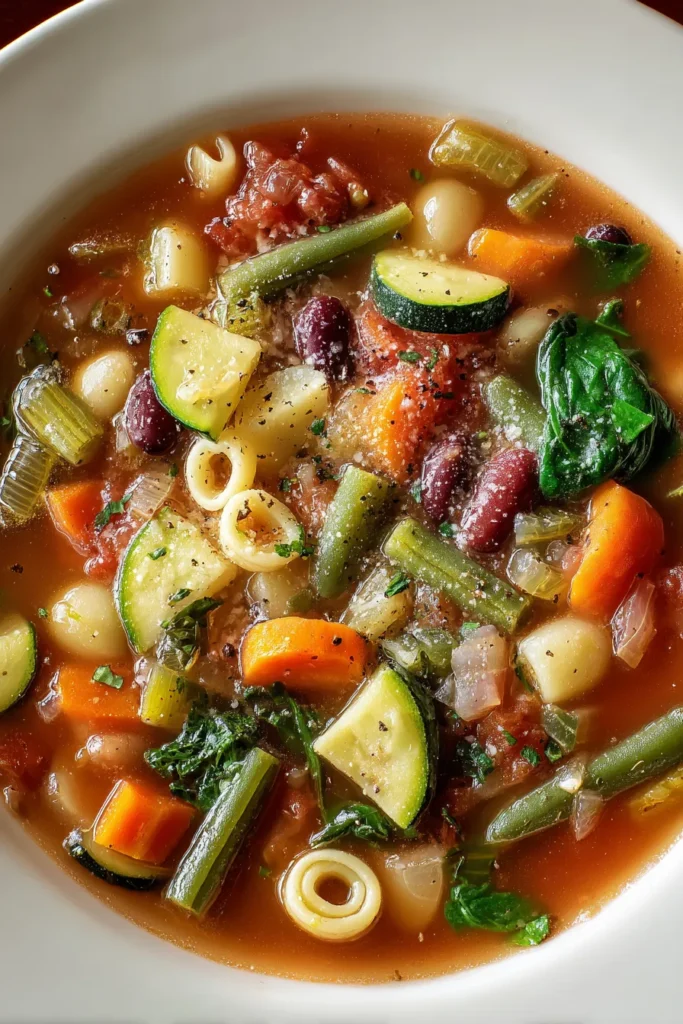

Classic Minestrone Soup
Description
This classic minestrone soup is a delightful mix of seasonal vegetables, tender pasta, and savory spices, creating a nourishing and vibrant dish that warms the heart.
Ingredients
Instructions
-
Heat the olive oil in a large pot over medium heat. Add the chopped onion and garlic, and sauté until the onion is translucent, about 5 minutes.
-
Add the carrots, celery, zucchini, and green beans to the pot. Cook for another 5 minutes, stirring occasionally, until the vegetables are slightly softened.
-
Stir in the diced tomatoes, vegetable broth, cannellini beans, oregano, basil, and thyme. Season with salt and pepper to taste.
-
Bring the soup to a boil, then reduce the heat to low. Let it simmer for about 20 minutes, allowing the flavors to meld together.
-
In a separate pot, cook the pasta according to the package instructions until al dente. Drain and set aside.
-
Add the cooked pasta and chopped spinach to the simmering soup. Stir well and cook for an additional 5 minutes, or until the spinach is wilted.
-
Taste the soup and adjust seasoning if necessary. Serve hot, garnished with grated Parmesan cheese if desired.
Note
- Minestrone soup can be easily customized, so feel free to add any seasonal vegetables you have on hand.
- This soup stores well and tastes even better the next day, making it great for meal prep.
- Consider adding a pinch of red pepper flakes for a spicy kick.
- Substituting gluten-free pasta or omitting it altogether can make this dish suitable for gluten-free diets.
- Minestrone can be made more hearty by adding cooked chicken or sausage.

