

There’s something undeniably satisfying about transforming simple ingredients into a dip that feels both rustic and gourmet at the same time. Elevate Your Snacking with Flavorful Bread Dipping Oil, Perfect for Any Gathering! This easy-to-follow recipe brings together a rich blend of extra virgin olive oil, aromatic herbs, and a hint of balsamic vinegar to create an appetizer that shines whether you’re hosting friends or enjoying a quiet lunch at home. With just 10 minutes of prep time and a resting period of 30 minutes to an hour, you’ll soon be dipping crusty slices of baguette or artisan loaf into a luscious pool of flavor that punches well above its weight.
Perfect for beginner cooks and seasoned home chefs alike, this olive oil dip requires minimal effort but delivers maximum taste. The balance of fruity, peppery olive oil with the sweet tang of balsamic vinegar will make every bite feel like a mini celebration. At around 120 calories per 2-tablespoon serving, it’s a guilt-free way to add a gourmet touch to your meals without complex techniques or exotic ingredients. Whether you’re looking for a delightful lunch accompaniment, a quick snack, or a crowd-pleasing party starter, this bread dipping oil recipe is destined to become a staple in your recipe box.
KEY INGREDIENTS IN BREAD DIPPING OIL
Before diving into the step-by-step instructions, let’s look at the star players that create this sensational dip. Each ingredient contributes its own unique character, blending together to produce a harmonious flavor profile that’s anything but ordinary.
- Extra Virgin Olive Oil
This high-quality olive oil brings a fruity, smooth foundation to the dip. Its healthy fats and vibrant taste are the canvas on which all other flavors shine.
- Balsamic Vinegar
Aged to perfection, this vinegar adds a sweet and tangy contrast that balances the richness of the olive oil, lifting the overall flavor.
- Minced Fresh Garlic
Bright and pungent, garlic introduces a sharp, savory note that’s essential for depth and character in the oil.
- Dried Oregano
Earthy and slightly bitter, oregano infuses a Mediterranean flair that pairs beautifully with the olive oil base.
- Dried Basil
With its sweet and peppery aroma, dried basil complements the oregano and deepens the herbal complexity.
- Dried Thyme
Offering subtle minty and lemony undertones, thyme ties the herb blend together for a well-rounded taste.
- Red Pepper Flakes (optional)
For those who crave a gentle kick, red pepper flakes introduce warmth and a touch of heat.
- Freshly Ground Black Pepper
Adding a bit of sharp spice, black pepper rounds out the seasoning, enhancing every other ingredient.
- Salt
Essential for bringing out the natural flavors, salt ensures that the dip tastes vibrant and well-seasoned.
- Freshly Grated Parmesan Cheese (optional)
A sprinkle of umami-rich cheese adds creaminess and a savory finish that feels delightfully indulgent.
- Fresh Bread
Whether you choose a crusty baguette or an artisan loaf, the bread is your delicious delivery system, soaking up every drop of the herbed oil.
HOW TO MAKE BREAD DIPPING OIL
Creating this herb-infused bread dipping oil is a breeze, and the instructions below will guide you through every step. From combining the right acids and oils to letting the flavors mingle, you’ll soon have a vibrant dip ready to serve.
1. In a small mixing bowl, pour 1/2 cup of extra virgin olive oil, ensuring you use a fruity, top-quality variety to maximize flavor.
2. Add 1 tablespoon of balsamic vinegar to the oil, then gently whisk the mixture until the two liquids are thoroughly combined and emulsified.
3. Mince fresh garlic until you have one teaspoon of finely chopped cloves, then stir them into the oil and vinegar blend to infuse that unmistakable garlicky punch.
4. Sprinkle in 1 teaspoon each of dried oregano, dried basil, and dried thyme, allowing the dried herbs to float and bloom in the oil.
5. If you enjoy a bit of heat, add 1/4 teaspoon of red pepper flakes, adjusting the amount to suit your spice preference.
6. Season the mixture with 1/4 teaspoon of freshly ground black pepper and 1/2 teaspoon of salt, ensuring each granule disperses evenly.
7. Stir all the ingredients together until well combined, watching as the herbs and spices distribute throughout the golden liquid.
8. (Optional) Gently fold in 1 tablespoon of freshly grated Parmesan cheese, offering an extra layer of creamy umami.
9. Cover and allow the mixture to rest for 30 minutes to 1 hour, giving the flavors time to meld and intensify.
10. Pour the dipping oil into a shallow dish or individual serving bowls to showcase its colorful herbs and inviting sheen.
11. Arrange slices of fresh bread alongside the oil, then dig in and enjoy every aromatic, flavorful bite.
SERVING SUGGESTIONS FOR BREAD DIPPING OIL
This versatile dipping oil shines in so many serving scenarios! Whether you’re designing a beautiful appetizer spread or adding a gourmet twist to a simple lunch, these suggestions will help you present your creation like a pro.
- Artisanal Bread Board
Create a rustic display by arranging an assortment of breads—like sourdough, rosemary focaccia, and a classic baguette—around a shallow dish of dipping oil. The variety of textures and flavors invites guests to taste-test and compare.
- Charcuterie Pairing
Elevate your charcuterie board by placing the dipping oil among cured meats, olives, and cheeses. A dab of dip on a slice of prosciutto or salami adds a burst of herbaceous flavor.
- Salad Drizzle
Transform a simple green salad by using this dipping oil as a light vinaigrette. Drizzle over mixed greens, cherry tomatoes, and shaved Parmesan for a quick lunch upgrade.
- Roasted Vegetable Marinade
Before roasting zucchini, bell peppers, or eggplant, toss the veggies in the dipping oil to impart savory, herby notes. The residual oil left in the serving dish also makes a delightful post-roast dip.
HOW TO STORE BREAD DIPPING OIL
Maintaining the brightness and freshness of your bread dipping oil ensures you can enjoy it days after preparation. Follow these storage tips to preserve its flavor and quality.
- Store in an airtight container in the refrigerator for up to one week. Chilling helps prevent oxidation but may cause the oil to solidify; simply let it sit at room temperature for 10–15 minutes before serving.
- Keep away from direct light and heat sources by placing the container in a cool, dark spot. This practice slows down the breakdown of aromatic compounds.
- If you’d like to prepare ahead, mix the oil and vinegar base with herbs and spices, then store them together for up to three days. Add fresh garlic or Parmesan just before serving to maintain their peak flavor.
- For longer-term storage, freeze small portions in an ice cube tray, then pop out individual cubes as needed. Thaw at room temperature and stir gently before serving.
CONCLUSION
Crafting this bread dipping oil is like discovering a new way to celebrate the simple pleasure of fresh bread. From the fruity notes of extra virgin olive oil to the sweet tang of balsamic vinegar and the warmth of aromatic herbs, every element works in harmony to create an unforgettable appetizer or lunch companion. The fact that this recipe is rated beginner-level, takes just 10 minutes to prepare, and only needs a brief resting time makes it an ideal choice for anyone looking to add a touch of gourmet flair to their table without the fuss. Plus, with around 120 calories per 2-tablespoon serving, you can indulge in that luscious, herby dip guilt-free.
Feel free to print out this article and save it for later—you’ll find it’s a handy reference whenever you’re planning a gathering or simply craving a flavorful snack. You can also flip through the FAQ below if you need tips on ingredient swaps or troubleshooting. I’d love to hear how your bread dipping oil turns out, so please share your comments, questions, or feedback. Whether you tweak the herb blend, try new breads, or experiment with serving ideas, let me know how you make this recipe your own!
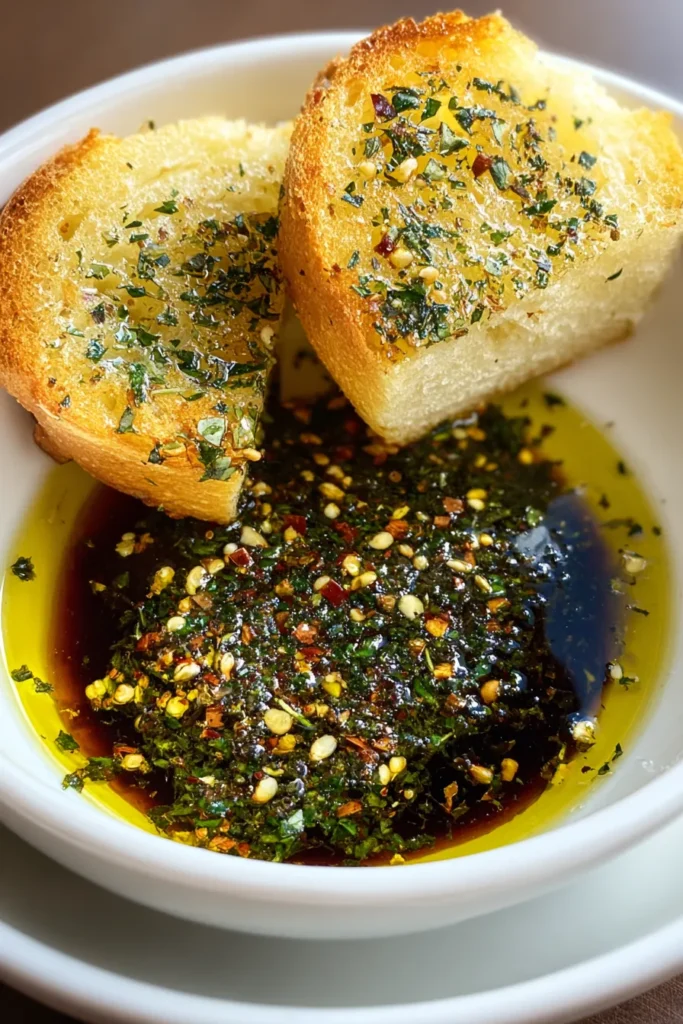

Bread Dipping Oil
Description
Savor the rich blend of extra virgin olive oil, aromatic herbs, and a hint of balsamic vinegar. This dipping oil is perfect for enjoying with crusty bread, adding a gourmet touch to your meals.
Ingredients
Instructions
-
In a small mixing bowl, pour 1/2 cup of extra virgin olive oil.
-
Add 1 tablespoon of balsamic vinegar to the olive oil, mixing gently.
-
Mince fresh garlic until you have 1 teaspoon, then add it to the oil and vinegar mixture.
-
Sprinkle in 1 teaspoon each of dried oregano, dried basil, and dried thyme.
-
If you like a bit of heat, add 1/4 teaspoon of red pepper flakes, adjusting to your spice preference.
-
Season the mixture with 1/4 teaspoon of freshly ground black pepper and 1/2 teaspoon of salt.
-
Stir all the ingredients together until they are well combined and the herbs are evenly distributed.
-
(Optional) Add 1 tablespoon of freshly grated Parmesan cheese for an extra layer of flavor.
-
Allow the mixture to sit for 30 minutes to an hour to let the flavors meld together.
-
Pour the dipping oil into a shallow dish or individual dipping bowls for serving.
-
Serve the bread dipping oil alongside fresh slices of bread and enjoy!
Note
- The quality of your olive oil will greatly influence the taste; opt for a good quality, fruity variety for the best results.
- Balsamic vinegar adds sweetness and acidity, balancing the richness of the olive oil.
- Customize the herbs and seasoning to your personal taste.
- This dipping oil doubles as a salad dressing or a marinade for meats and vegetables.
- If you're serving it at a party, prepare a day in advance to enhance the flavors.
- Offer a variety of breads, such as sourdough or rosemary bread, to provide guests with different taste experiences.

