

Yaki Udon Noodle is like a comforting friend on a busy weeknight, wrapping you in its warm embrace while delivering chewy texture and vibrant visuals. The base of fresh udon noodles shines with every glossy strand coated in an umami-packed sauce that marries soy sauce, oyster sauce, and a hint of sweet mirin. With just ten minutes of prep and fifteen minutes of cooking—no resting time needed—this beginner-level dinner is a breeze for anyone craving a satisfying Asian cuisine staple. The tender chicken breast slices absorb the rich, caramelized flavors while crisp bell peppers, carrots, and broccoli add pops of color and delightful crunch. Twirling those thick noodles alongside scallions and sesame seeds turns each bite into a symphony of flavors and textures dancing on your palate. With only 450 calories per serving and perfectly portioned for two, it balances health and indulgence in a single bowl. Whether you’re mastering stir-fry techniques or simply seeking an easy dinner solution, this recipe delivers on every front. The kitchen even fills with sizzling notes as garlic and chicken hit the hot wok, making your home smell like a cozy street stall. Leftover friendliness means you can enjoy this vibrant stir-fry again the next day with minimal fuss when stored properly. The sheer ease and flavor payoff make it a go-to in my weekly rotation, especially when unexpected guests drop by or when I need a fuss-free solo meal.
For me, the magic of this Yaki Udon recipe lies in its perfect harmony between savory and sweet elements. Sautéing minced garlic until fragrant releases an invitation to gather around the stove, as soon as that first whiff hits the air. Then, tossing vibrant green onions into the mix adds a bright, fresh bite, balancing the richer sauce ingredients. Whether it’s a Tuesday night craving or a celebratory weekend treat, this stir-fry noodle dish never disappoints. It shines as an easy dinner solution for busy schedules or as a simple yet impressive offering for friends. Each forkful carries whispers of Japanese street food culture, yet it adapts seamlessly to your pantry staples and personal taste. I’ve swapped chicken for tofu to please vegan pals, added shrimp for special occasions, and even experimented with seasonal vegetables year-round. That level of versatility is what keeps this noodle recipe feeling new every time. The cooking process itself feels like a mini adventure: mastering the art of heat control, timing, and the rhythmic toss of sauce-coated noodles. After nailing the technique just once, you’ll feel confident recreating it whenever the craving for a quick chicken stir-fry strikes.
KEY INGREDIENTS IN YAKI UDON NOODLE
Every great stir-fry starts with fresh, flavorful components that work together in harmony. Below are the main stars that bring this Yaki Udon to life, each playing a specific role in taste, texture, and overall satisfaction.
- fresh udon noodles: These thick, chewy noodles form the heart of the dish, soaking up the savory-sweet sauce so every bite is perfectly coated.
- chicken breast: Lean and tender when thinly sliced, chicken adds protein and soaks up the wok’s heat and seasonings for a juicy, flavorful bite.
- vegetable oil: A neutral cooking oil that allows the ingredients to sear without burning, creating a slick surface for stir-frying and even heat distribution.
- mixed vegetables: A colorful medley (bell peppers, carrots, broccoli) that provides crunch, nutrients, and visual appeal, balancing the softness of the noodles.
- green onions: Freshly sliced, these scallions add sharpness and a burst of green that livens up the dish in the final moments of cooking.
- garlic: Minced garlic releases aromatic oils when sautéed, laying a flavorful foundation that partners beautifully with the sauces.
- soy sauce: This umami-rich seasoning contributes saltiness and depth, acting as a cornerstone for the stir-fry’s savory profile.
- oyster sauce: With its slightly sweet, briny character, oyster sauce enhances complexity and adds a glossy finish to the noodles.
- mirin: A touch of sweet rice wine that rounds out the sauce, balancing savory notes with a gentle hint of sweetness.
- sesame seeds: Garnishing with these adds a final nutty crunch and visual contrast, making each plate feel complete and restaurant-worthy.
HOW TO MAKE YAKI UDON NOODLE
Let’s dive into the step-by-step process that transforms these simple ingredients into a delicious, beginner-friendly dinner in just 25 minutes. Follow these detailed instructions closely, and you’ll be enjoying homemade Yaki Udon in no time.
1. Boiling the noodles
Fill a large pot with water and bring it to a rolling boil. Add the fresh udon noodles and cook according to the package instructions, usually about 3–4 minutes. Aim for al dente texture—tender but still a bit firm to the bite. Drain thoroughly and set aside to prevent extra moisture from diluting the flavors later.
2. Heating the wok
Place a large skillet or wok over medium-high heat and pour in the vegetable oil. Allow the oil to shimmer slightly—this ensures a hot surface that sears proteins and vegetables rather than steaming them.
3. Cooking the chicken
Add the thinly sliced chicken breast to the hot wok. Season lightly with salt and pepper. Stir-fry the chicken for 5–7 minutes, tossing continuously until it’s fully cooked through and lightly browned on the edges. This caramelization builds rich flavor.
4. Sautéing the garlic
Push the chicken to one side of the skillet to free up space. Add the minced garlic to the empty section and sauté for about 30 seconds, just until fragrant. Be careful not to let it burn—garlic cooks quickly and can turn bitter.
5. Adding the vegetables
Incorporate the mixed vegetables into the skillet, combining them with the chicken and garlic. Continue stir-frying for an additional 3–4 minutes, ensuring the veggies are heated through but still maintain a satisfying crunch.
6. Combining noodles and sauces
Return the cooked udon noodles to the wok. Pour in the soy sauce, oyster sauce, and mirin. With gentle but thorough tossing, coat every noodle strand evenly so the rich sauce clings to each bite.
7. Final cooking
Let everything cook together for 2–3 more minutes, stirring frequently to prevent sticking. This allows the noodles to absorb the sauce fully and develop a slightly charred, smoky edge.
8. Finishing touches
Scatter the sliced green onions over the top and toss for another minute. Taste and adjust seasoning with extra salt, pepper, or a splash of soy sauce if needed.
9. Serving
Transfer the Yaki Udon to plates or bowls while hot. Garnish generously with sesame seeds and additional green onions for a beautiful, flavorful finish.
SERVING SUGGESTIONS FOR YAKI UDON NOODLE
Presenting your Yaki Udon with thoughtful accompaniments can elevate the entire dining experience. Whether you’re enjoying a casual family dinner or hosting friends for an impromptu Asian cuisine night, these serving ideas will impress everyone at the table.
- Pair with miso soup for a traditional Japanese starter that balances the noodle dish’s richness. A warm bowl of miso soup with tofu cubes and seaweed creates a gentle contrast in texture and flavor.
- Offer pickled ginger on the side to cleanse the palate between bites. The sharp, tangy notes of ginger perk up your taste buds and keep each mouthful of stir-fry tasting fresh.
- Drizzle chili oil or sprinkle red pepper flakes over the finished dish for those who love a spicy kick. The bright heat intertwines with the savory sauce, adding an exciting layer of warmth.
- Serve alongside a crisp green salad dressed in a light sesame vinaigrette. The refreshing crunch of lettuce and cucumber complements the hearty noodles, making for a well-rounded dinner.
HOW TO STORE YAKI UDON NOODLE
Knowing how to store leftover Yaki Udon properly helps maintain its delightful texture and bold flavors. Whether you plan to enjoy it later this week or freeze a portion for future cravings, follow these tips to keep your stir-fry tasting just as good as the day you made it.
- Refrigerate immediately in an airtight container once cooled to room temperature. Keeping air out prevents moisture loss and preserves the noodle’s soft chewiness.
- Separate the sauce from noodles and chicken if you anticipate a longer storage period. Storing components individually prevents the noodles from becoming overly saturated and ensures a fresher reheat.
- Use shallow containers when possible to help the dish cool more quickly, reducing the risk of bacterial growth. A rapid cool-down preserves quality and food safety.
- Freeze for up to one month by portioning into freezer-safe bags or containers. When you’re ready to enjoy, thaw overnight in the fridge and reheat gently in a skillet with a splash of water to revive that signature stir-fry texture.
CONCLUSION
This journey through Yaki Udon Noodle has shown how a handful of fresh ingredients, simple sauces, and basic kitchen techniques can transform into a sensational dinner in just twenty-five minutes. From the chewy embrace of fresh udon noodles to the savory-sweet dance of soy sauce, oyster sauce, and mirin, every element plays a part in creating a well-balanced, satisfying meal. We explored the key ingredients—like lean chicken breast, crisp mixed vegetables, and aromatic garlic—each contributing its own unique texture and flavor. The step-by-step instructions guided you through boiling, stir-frying, and tossing to ensure perfect results every time. Serving suggestions such as pairing with miso soup or adding a spicy chili oil drizzle elevate this dish from simple to spectacular, while storage tips guarantee that leftovers maintain their deliciousness. With a total preparation time of ten minutes, fifteen minutes of cooking, and zero rest time, you can have a beginner-level dinner on the table without breaking a sweat—perfect for weeknights, cozy meals for two, or impressing hungry guests.
Feel free to print this article and save it for later reference whenever the craving for an easy, flavorful stir-fry strikes. You’ll also find a FAQ section below to answer any lingering questions about ingredients, substitutions, or technique. If you give this recipe a try, let me know how it turns out! I’d love to hear your comments, questions, or feedback—whether you swapped in shrimp, tried a vegan oyster sauce alternative, or discovered a new veggie combination that stole the show. Happy cooking, and may your kitchen always be filled with delicious aromas and good company!
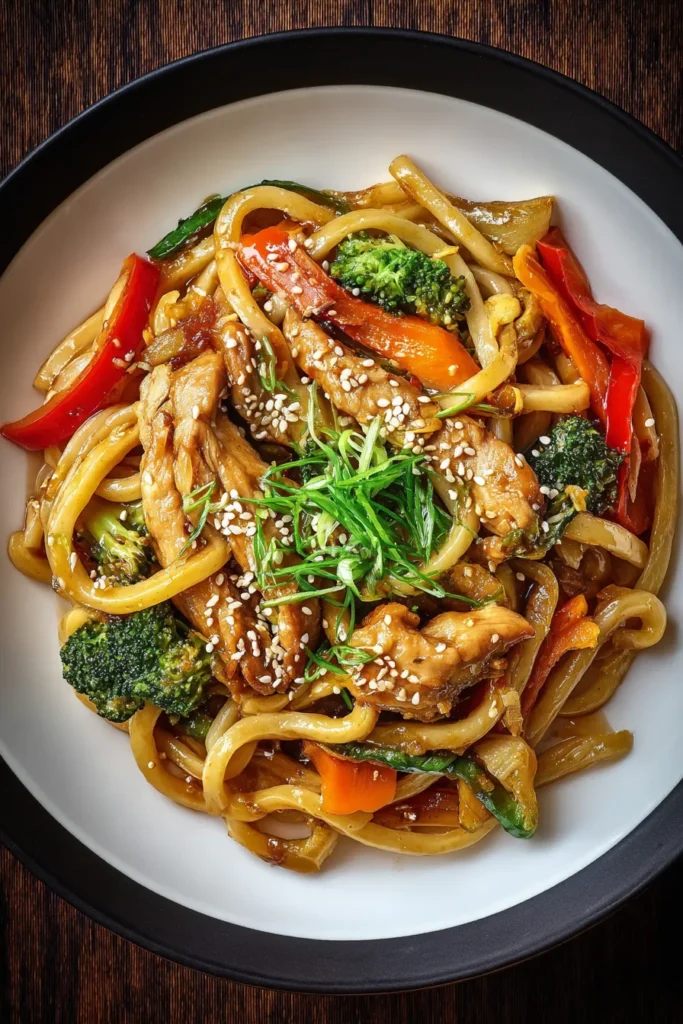

Yaki Udon Noodle
Description
Yaki Udon brings together tender chicken, crisp vegetables, and rich flavors that dance on your palate. This quick and satisfying dish is perfect for any weeknight dinner!
Ingredients
Instructions
-
Begin by boiling a pot of water. Once boiling, add the udon noodles and cook according to the package instructions, usually about 3-4 minutes. Drain and set aside.
-
In a large skillet or wok, heat the vegetable oil over medium-high heat.
-
Add the sliced chicken breast to the skillet and season with salt and pepper. Stir-fry for about 5-7 minutes until the chicken is cooked through and browned.
-
Push the chicken to one side of the skillet and add the minced garlic. Sauté for about 30 seconds until fragrant.
-
Incorporate the mixed vegetables into the skillet, stirring everything together. Cook for an additional 3-4 minutes until the vegetables are tender but still crisp.
-
Add the cooked udon noodles to the skillet along with the soy sauce, oyster sauce, and mirin. Toss everything together gently to combine, ensuring the noodles are evenly coated with the sauces.
-
Cook for another 2-3 minutes, stirring frequently to prevent sticking.
-
Finally, toss in the sliced green onions and stir for another minute. Taste and adjust the seasoning as needed.
-
Serve hot, garnished with sesame seeds and additional green onions if desired.
Note
- Yaki Udon is incredibly versatile; feel free to add your favorite proteins like shrimp, beef, or tofu.
- For a vegan version, substitute chicken with tofu and use a plant-based oyster sauce.
- Leftovers can be reheated easily in a microwave or skillet with a splash of water to avoid drying out.
- Customize the vegetables based on the season or what's locally available for a fresher taste.

