

Creamy Coconut Thai Soup is a velvety coconut broth laced with fragrant lemongrass, ginger, and red curry, warming every spoonful with tender mushrooms, vibrant veggies, and your choice of chicken, shrimp, or tofu. This intermediate-level dinner recipe brings the taste of Thailand into your kitchen in under an hour—perfect for cozy weeknight dinners or impressing friends with minimal fuss. Dive in and get ready to stir, simmer, and savor!
Key Ingredients
Every spoonful of this soup comes to life thanks to a handful of kitchen heroes:
- 2 tbsp vegetable oil (or coconut oil): Neutral oil for sautéing aromatics and adding subtle coconut notes.
- 1 small onion, finely sliced: Provides sweetness and depth once softened.
- 3 cloves garlic, minced: Lends pungent aroma and savory warmth.
- 1 tbsp fresh ginger, finely grated: Adds spicy, citrusy brightness that complements the lemongrass.
- 1–2 stalks lemongrass, trimmed, outer layer removed, lightly smashed and cut into 3-inch pieces: Infuses a bright, lemony fragrance.
- 2–3 tbsp Thai red curry paste (adjust to heat preference): Brings rich color and signature spicy undertones.
- 4 cups low-sodium chicken broth or vegetable broth: Forms the savory base and balances the coconut milk.
- 2 cans (13.5 oz / 400 ml each) full-fat coconut milk: Creates the creamy, velvety texture characteristic of Thai soups.
- 1 1/2 tbsp fish sauce (or soy sauce for vegetarian/vegan): Delivers umami depth and balanced saltiness.
- 1–2 tbsp brown sugar or palm sugar, to taste: Balances heat and acidity with gentle sweetness.
- 8 oz (225 g) mushrooms, sliced (shiitake, button, or cremini): Brings earthy flavor and tender bite.
- 1 red bell pepper, thinly sliced: Adds vibrant color and a mild sweetness.
- 1 cup cherry tomatoes, whole or halved: Provides juicy bursts of acidity.
- 10–12 oz (280–340 g) protein of choice, thinly sliced (chicken breast, shrimp, tofu, or a mix): Absorbs the rich broth flavors beautifully.
- 1–2 small Thai bird’s eye chilies, sliced (optional, for extra heat): Kick of heat for those who love fiery spice.
- 1 lime, juiced (plus extra wedges for serving): Offers fresh acidity to brighten the final soup.
- 1 1/2 cups canned baby corn or fresh corn kernels (optional but great for texture): Adds sweet crunch and texture contrast.
- 1 cup snow peas or green beans, trimmed and halved: Contributes crisp, green freshness.
- Salt, to taste: Adjusts seasoning perfectly.
- Freshly ground black pepper, to taste: Adds gentle warmth and depth.
- 1/2 cup fresh cilantro leaves, roughly chopped: Garnish that infuses herbal brightness.
- 1/4 cup fresh Thai basil or sweet basil leaves: Provides sweet, aromatic finish.
- 2 green onions, thinly sliced: Offers mild onion flavor and color contrast.
- Lime wedges: Extra citrus tang on the side.
- Thinly sliced red chili or chili flakes (optional): Additional heat garnish.
- Drizzle of chili oil or toasted sesame oil (optional): Final aromatic flourish.
How To Make Creamy Coconut Thai Soup
Bringing this Creamy Coconut Thai Soup together is all about building layers of flavor, one step at a time. You’ll start by unlocking the aromas of onions, garlic, ginger, and lemongrass, then bloom the curry paste before gently simmering with coconut milk and broth. Once the base is ready, tender veggies and your selection of protein go in, followed by a final bright finish of lime juice and fresh herbs. Here’s exactly how to do it:
1. Prepare aromatics: Peel and thinly slice the onion. Mince the garlic and grate the ginger. Trim the lemongrass by cutting off root ends and tough green tops, keep the pale middle, lightly smash with a knife to release oils, then cut into 3-inch pieces.
2. Sauté the base: In a large pot or Dutch oven, heat the vegetable oil over medium heat. Add sliced onion and cook 3–4 minutes until softened and translucent. Stir in garlic and ginger and cook 30–60 seconds until fragrant, stirring frequently to prevent burning.
3. Add lemongrass and curry paste: Add lemongrass pieces and Thai red curry paste to the pot. Cook 1–2 minutes, stirring constantly, to bloom the curry paste and deepen flavor.
4. Build the broth: Pour in chicken or vegetable broth, stir to dissolve curry paste, and bring to a gentle simmer over medium-high heat. Once simmering, lower heat to medium.
5. Add coconut milk and seasonings: Shake cans of coconut milk well, pour into pot, and stir until creamy. Mix in fish sauce (or soy sauce) and brown sugar or palm sugar. Taste and adjust seasoning. Simmer gently 5–7 minutes—avoid a rolling boil to prevent separation.
6. Cook the mushrooms and vegetables: Stir in sliced mushrooms and red bell pepper. Simmer 5 minutes until mushrooms soften. Add cherry tomatoes and baby corn (if using), simmer another 3–4 minutes until veggies are tender-crisp.
7. Add the protein: For chicken, add thinly sliced breast and cook 6–8 minutes until no longer pink. For shrimp, cook 3–4 minutes until pink and opaque. For tofu, add ¾-inch cubes and simmer 5–7 minutes to warm through and absorb flavors.
8. Finish with greens and chilies: Add snow peas or green beans and sliced bird’s eye chilies, if using. Simmer 2–3 minutes until greens turn bright. Remove lemongrass pieces and discard.
9. Adjust flavor balance: Turn off heat. Stir in fresh lime juice. Taste and fine-tune with more lime, fish sauce, sugar, or coconut milk as needed. Season with black pepper.
10. Serve: Ladle soup into bowls, ensuring each has broth, veggies, and protein. Garnish with cilantro, Thai basil, and green onions. Add red chili or chili flakes for extra heat and drizzle with chili or sesame oil. Serve with lime wedges, steamed jasmine rice, or rice noodles.
Serving Suggestions
This soup is stunning on its own, but a few simple extras take it to the next level. Feel free to mix and match these ideas for family-style entertaining or a cozy night in:
- Serve in deep bowls with extra lime wedges on the side for a bright squeeze at the table.
- Pair with a side of steamed jasmine rice or rice noodles to soak up every drop of the creamy broth.
- Offer small dishes of crispy wonton strips or fresh cucumber salad to contrast the warm richness.
- Scatter toasted peanuts and extra chili flakes over each bowl for added crunch and heat.
Tips For Perfect Creamy Coconut Thai Soup
Nailing this Creamy Coconut Thai Soup is easier than you think—just keep these friendly pointers in mind as you cook:
- For a fully vegan version, use vegetable broth, firm tofu as the protein, and soy sauce or tamari instead of fish sauce.
- If you cannot find lemongrass, add a few strips of lime zest plus a bit more lime juice at the end to mimic its citrusy brightness.
- For extra richness, replace 1 cup of broth with an additional cup of coconut milk or coconut cream.
- Leftovers keep well for 2–3 days in the refrigerator; reheat gently over low heat without boiling to maintain a silky texture.
- Add cooked rice noodles directly into the bowls before ladling the soup over for a heartier meal that feels like a full noodle bowl.
How To Store It
Got leftovers or want to prep ahead? Here’s how to keep your soup tasting just as wonderful as the day you made it:
- Refrigerate in an airtight container: Keeps fresh for 2–3 days; simply reheat gently over low heat.
- Freeze portions: Store in freezer-safe containers for up to 1 month; thaw overnight in the fridge before warming.
- Thaw safely: Transfer frozen soup to the refrigerator overnight, then warm gradually on the stovetop to preserve creamy texture.
- Reheat over low heat: Stir occasionally and avoid rolling boils to prevent the coconut milk from separating.
Frequently Asked Questions
Here are quick answers to the most common questions about this soup:
- How long does it take to prepare and cook this Creamy Coconut Thai Soup?
Expect about 10–15 minutes for prep—slicing onions, mincing garlic and ginger, trimming lemongrass—and roughly 25–30 minutes of cooking time. In total, plan on 35–45 minutes from start to finish.
- What can I use if I don’t have lemongrass on hand?
If lemongrass is unavailable, substitute the bright citrus note by adding the zest of one lime when you build the broth and increase the lime juice at the end by an extra tablespoon. This helps mimic lemongrass’s aromatic, citrusy essence.
- How do I control the spice level of the soup?
Adjust heat by using 2 tablespoons of Thai red curry paste for a milder soup or up to 3 tablespoons for more kick. Omit or reduce the bird’s eye chilies if you prefer less heat, or add them sparingly at the end to dial in extra spice.
- How can I make this soup vegan or vegetarian?
Swap chicken broth for vegetable broth, replace fish sauce with soy sauce or tamari, and use firm tofu (3/4-inch cubes) instead of chicken or shrimp. Follow the same cooking times, letting the tofu simmer for about 5–7 minutes to absorb the flavors.
- How should I store and reheat any leftovers?
Store leftovers in an airtight container in the refrigerator for 2–3 days. To reheat, gently warm the soup over low heat—stirring occasionally—to avoid boiling, which can cause the coconut milk to separate and lose its silky texture.
- Can I turn this into a noodle soup with rice noodles?
Absolutely. Cook rice noodles separately according to package instructions, drain, and divide them among serving bowls. Ladle the hot soup over the noodles just before serving to keep them from getting too soft.
- What’s the best way to prevent coconut milk from separating during cooking?
Keep the soup at a gentle simmer rather than a rolling boil once you’ve added the coconut milk. Stir occasionally and maintain medium to low heat for the 5–7 minute melding stage so the fats stay emulsified and the broth remains creamy.
- How do I balance and finish the flavors before serving?
After turning off the heat, stir in fresh lime juice and taste the broth. If it feels flat, add more fish sauce (or soy sauce) for saltiness, a pinch of sugar for sweetness, or extra lime juice for brightness. Season with freshly ground black pepper, then garnish with cilantro, basil, green onions, and a drizzle of chili or sesame oil.
What Makes This Special
This Creamy Coconut Thai Soup works because it masterfully balances sweet, salty, spicy, and sour in every spoonful—plus you get to customize it with chicken, shrimp, tofu, or all three! The velvety coconut broth clings to tender veggies and protein, while fresh lime juice and herbs add a lively finish. Feel free to print and save this recipe for cozy nights ahead, and drop a comment below if you’ve got questions, tweaks, or just want to share your soup success!
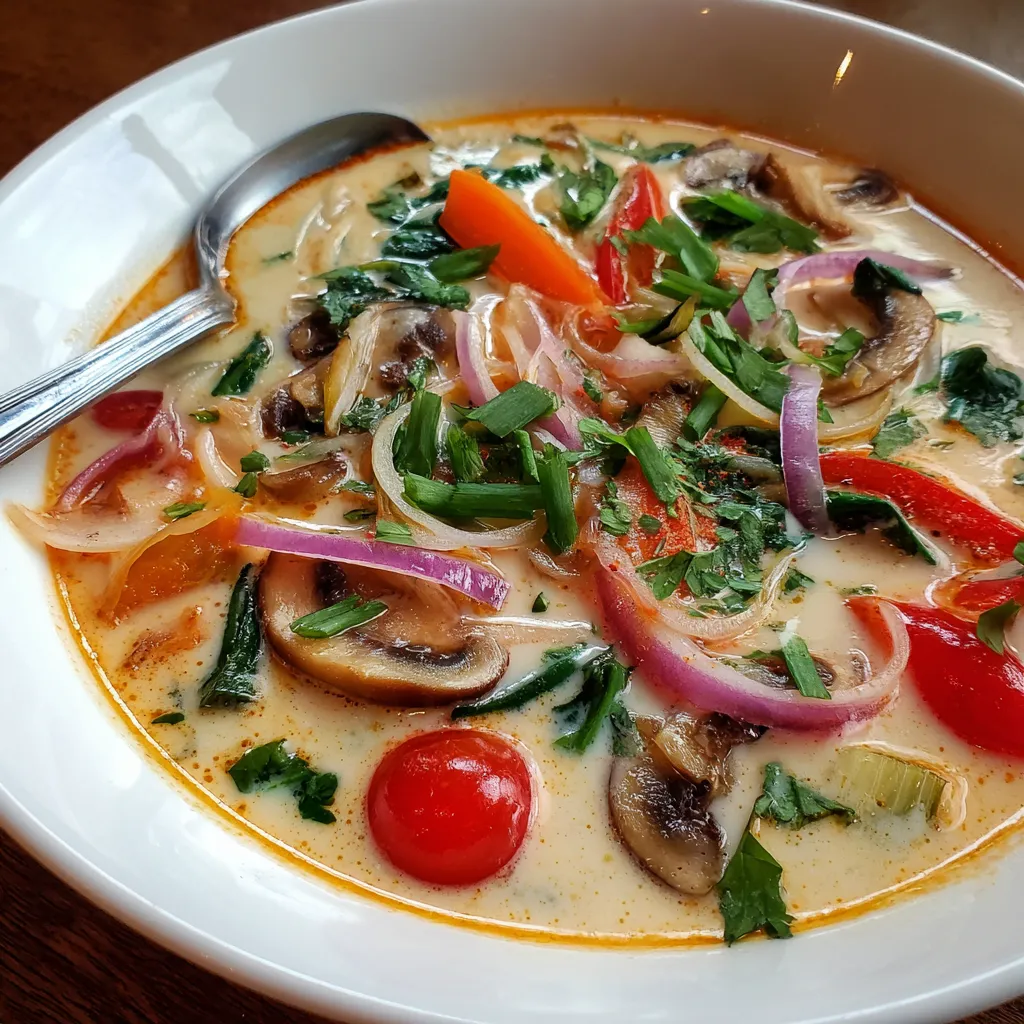

Creamy Coconut Thai Soup
Description
Rich coconut milk and fragrant red curry paste swirl with lemongrass and ginger in a silky broth, studded with tender veggies, mushrooms, and perfectly cooked chicken, shrimp, or tofu for a warming, aromatic treat.
Ingredients
Instructions
-
Prepare aromatics:
-
Peel and thinly slice the onion. Mince the garlic and grate the ginger. Trim the lemongrass by cutting off the root end and the tough green tops, keeping the pale middle section. Lightly smash the lemongrass stalks with the back of a knife to release their oils, then cut them into 3-inch pieces.
-
Sauté the base:
-
In a large pot or Dutch oven, heat the vegetable oil over medium heat. Add the sliced onion and cook for 3–4 minutes until softened and translucent. Stir in the garlic and ginger and cook for 30–60 seconds until fragrant, stirring frequently to prevent burning.
-
Add lemongrass and curry paste:
-
Add the lemongrass pieces and Thai red curry paste to the pot. Cook for 1–2 minutes, stirring constantly, to bloom the curry paste and deepen the flavor. The mixture should be very fragrant.
-
Build the broth:
-
Pour in the chicken or vegetable broth while stirring to dissolve the curry paste. Bring to a gentle simmer over medium-high heat. Once simmering, lower the heat to medium.
-
Add coconut milk and seasonings:
-
Shake the cans of coconut milk well, then pour them into the pot. Stir until uniform and creamy. Add fish sauce (or soy sauce) and brown sugar or palm sugar. Taste the broth and adjust with more curry paste for spice, fish sauce for saltiness, or sugar to balance the heat and acidity. Simmer gently for 5–7 minutes to let the flavors meld, but do not let it boil vigorously to avoid separating the coconut milk.
-
Cook the mushrooms and vegetables:
-
Add the sliced mushrooms and red bell pepper to the pot. Simmer for 5 minutes until the mushrooms begin to soften. Add cherry tomatoes and baby corn (if using), then simmer another 3–4 minutes. The vegetables should be tender but not mushy.
-
Add the protein:
-
For chicken: Add thinly sliced chicken breast to the lightly simmering soup and cook for about 6–8 minutes, or until the chicken is just cooked through and no longer pink.
-
For shrimp: Add peeled and deveined shrimp and cook for 3–4 minutes, until they turn pink and opaque.
-
For tofu: Add firm tofu cut into 3/4-inch cubes and simmer gently for 5–7 minutes to warm through and absorb flavor.
-
You can also combine proteins (for example, chicken and shrimp) but watch cooking times to avoid overcooking.
-
Finish with greens and chilies:
-
Add snow peas or green beans and sliced Thai bird’s eye chilies, if using. Simmer for 2–3 minutes, just until the greens are bright and still slightly crisp. Remove the lemongrass pieces with tongs and discard.
-
Adjust flavor balance:
-
Turn off the heat. Stir in the fresh lime juice. Taste and adjust: add more lime juice for tang, more fish sauce or salt for depth, sugar if it is too sharp or spicy, or a bit more coconut milk if you want it milder and creamier. Season with black pepper to taste.
-
Serve:
-
Ladle the hot soup into bowls, making sure each serving has a generous amount of broth, vegetables, and protein. Garnish with chopped cilantro, Thai basil or sweet basil leaves, and sliced green onions. Add a few slices of fresh red chili or a pinch of chili flakes for extra heat, if desired. Drizzle lightly with chili oil or toasted sesame oil just before serving for a glossy, aromatic finish. Serve immediately with lime wedges on the side, and optionally with steamed jasmine rice or rice noodles.
Note
- For a fully vegan version, use vegetable broth, firm tofu as the protein, and soy sauce or tamari instead of fish sauce.
- If you cannot find lemongrass, add a few strips of lime zest plus a bit more lime juice at the end to mimic its citrusy brightness.
- For extra richness, replace 1 cup of broth with an additional cup of coconut milk or coconut cream.
- Leftovers keep well for 2–3 days in the refrigerator; reheat gently over low heat without boiling to maintain a silky texture.
- Add cooked rice noodles directly into the bowls before ladling the soup over for a heartier meal that feels like a full noodle bowl.

