

Hearty Hungarian Slow-Cooked Goulash delivers tender beef cubes bathing in a deep paprika-infused sauce, enriched with sweet peppers, root veggies, and a hint of caraway for true Hungarian soul-satisfaction. Slow-cooked beef melts into a paprika-laced gravy, mingling with sweet carrots and bell peppers. Each spoonful releases warm, earthy aromas, balanced by a creamy swirl of sour cream and a sprinkle of fresh parsley—comfort food at its finest.
Key Ingredients
Here’s what you’ll need to bring that rich, comforting flavor to life:
- 3 tbsp sunflower oil or neutral vegetable oil: Provides a neutral base for sautéing onions and building flavor without overpowering the paprika.
- 2 tbsp unsalted butter: Adds richness and helps caramelize the onions for a deep, sweet foundation.
- 2 large yellow onions, finely chopped: The aromatic base that softens and caramelizes to create sweetness and depth.
- 4 cloves garlic, minced: Offers pungent warmth and rounds out the savory profile.
- 2 ½ lb (1.1 kg) beef chuck, trimmed and cut into 1 ½-inch cubes: Well-marbled meat that becomes meltingly tender during slow cooking.
- 1 ½ tsp salt, plus more to taste: Essential seasoning to enhance all flavors.
- ¾ tsp freshly ground black pepper: Provides subtle heat and balances the richness.
- 2 ½–3 tbsp sweet Hungarian paprika (high quality, not smoked): The soul of the dish, delivering vibrant color and authentic flavor.
- 1–1 ½ tsp hot Hungarian paprika or cayenne to taste (optional, for heat): Adds a gentle kick that complements the sweet paprika.
- 1 tsp caraway seeds, lightly crushed: Infuses a nutty, earthy aroma characteristic of traditional goulash.
- 2 tbsp tomato paste: Concentrates sweetness and tang while thickening the sauce.
- 1 tbsp flour (optional, for slightly thicker sauce): Helps attain a luscious, thicker gravy.
- 1 cup (240 ml) dry red wine (e.g., Kékfrankos, Merlot, or similar): Deglazes the pot and adds depth and acidity.
- 3 cups (720 ml) beef broth, low sodium: Builds the hearty stew base and ensures gentle simmering.
- 2 bay leaves: Contribute a subtle floral herbiness to the long-cooked gravy.
- 3 medium carrots, peeled and sliced into thick rounds: Add sweetness and texture as they soften.
- 2 medium parsnips, peeled and sliced into thick rounds (optional but traditional): Enhance earthiness and tradition.
- 1 large red bell pepper, deseeded and cut into strips: Brightens the stew with sweet, vibrant color.
- 1 medium yellow or green bell pepper, deseeded and cut into strips: Adds contrasting sweetness or crisp color.
- 4 medium waxy potatoes (Yukon Gold or similar), peeled and cut into 1-inch chunks: Bulk out the stew and soak up the rich gravy.
- 1 medium tomato, chopped (or ½ cup canned diced tomatoes, drained): Offers fresh acidity and a hint of brightness.
- 1 tsp dried marjoram (or 2 tsp fresh, chopped): Imparts a mild, oregano-like flavor that pairs beautifully with paprika.
- ¼ cup (60 ml) sour cream, plus more for serving (optional): Creates a silky finish and balances the spices with creamy tang.
- Fresh parsley, chopped, for garnish: Sprinkles fresh color and herbaceous aroma on top.
- Cooked egg noodles, csipetke (Hungarian pinched pasta), or crusty bread: Perfect for soaking up the saucy goodness when serving.
- Extra sour cream: For guests to dollop more tangy creaminess at the table.
- Additional chopped fresh parsley: To garnish plates for a vibrant final touch.
How To Make Hearty Hungarian Slow-Cooked Goulash
Let’s dive into the heart of this recipe: building layers of flavor from browning beef to gently simmering until everything melds into a rich, fragrant stew. Follow these steps to achieve perfectly tender meat, vibrant veggies, and that signature deep-red sauce.
1. Prepare and season the beef:
Pat the beef cubes dry with paper towels to ensure good browning, then season evenly with 1 tsp salt and ½ tsp black pepper. Let the meat rest at room temperature while you start the onions.
2. Build the onion base:
In a large heavy pot or Dutch oven, heat the oil and butter over medium heat. Add the chopped onions with a pinch of salt and cook, stirring frequently for 12–15 minutes, until soft, golden, and lightly caramelized. Lower the heat if needed, then stir in the minced garlic and cook 1 minute until fragrant.
3. Toast spices and bloom paprika:
Sprinkle in the crushed caraway seeds and stir for 30 seconds to toast. Remove the pot from the heat and quickly sprinkle the sweet (and hot, if using) Hungarian paprika over the onions. Stir to coat and bloom the paprika oils without burning.
4. Brown the beef:
Return to medium-high heat, add the beef in batches so it’s not crowded, and brown on all sides for 6–8 minutes per batch. Push browned pieces to the side or remove them to a bowl, then brown the next batch. Return all meat and juices to the pot.
5. Add tomato paste and optional flour:
Stir in the tomato paste, coating meat and onions, and cook 2–3 minutes until it darkens slightly. If you want a thicker sauce, sprinkle in flour and stir for 1 minute to form a light roux.
6. Deglaze with wine:
Pour in the dry red wine and scrape up any browned bits with a wooden spoon. Simmer 3–4 minutes to reduce slightly and cook off alcohol.
7. Add broth and aromatics:
Pour in beef broth, add bay leaves and marjoram, and bring just to a gentle boil. Taste and adjust salt and pepper to ensure a well-seasoned base.
8. Slow-cook the stew:
Reduce heat to low, cover, and let the goulash simmer very gently for 1½–2 hours, stirring occasionally and adding a splash of broth if it looks dry. Aim for a lazy simmer to keep meat tender.
9. Add vegetables:
When the beef is just tender, stir in carrots, parsnips (if using), bell peppers, potatoes, and chopped tomato. Cover and continue to simmer on low for 35–50 minutes, until vegetables are soft and beef is fork-tender. Uncover for the last 10–15 minutes if the sauce needs reducing.
10. Finish with sour cream (optional):
Remove bay leaves and taste for seasoning. To temper the sour cream, whisk it with a ladle of hot cooking liquid in a small bowl, then stir into the pot off the heat for a silky finish—or serve it on the side.
11. Rest and serve:
Let the goulash rest, covered, for 10–15 minutes. Serve over buttered egg noodles, with csipetke or crusty bread, and garnish each bowl with a dollop of sour cream and chopped parsley.
Serving Suggestions
This goulash shines when paired thoughtfully—here are my favorite ways to plate it up:
- Over buttered egg noodles: The silky noodles catch every drop of the paprika-laced gravy for the ultimate comfort-food bowl.
- With csipetke (Hungarian pinched pasta): Small, hand-shaped dumplings add a rustic touch and soak up sauce beautifully.
- Alongside crusty bread: Tear off thick slices of crusty bread to mop up the rich stew for a satisfyingly hearty meal.
- Garnished with extra sour cream and parsley: A swirl of cool sour cream and a sprinkle of bright parsley add tang and freshness to each serving.
Tips For Perfect Hearty Hungarian Slow-Cooked Goulash
Get ready to wow everyone with these friendly hints—little tweaks that elevate your goulash game every time:
- Use good-quality Hungarian paprika; it is the soul of authentic goulash and makes a huge difference.
- Beef chuck is ideal because its marbling and connective tissue become meltingly tender with slow cooking.
- For a more soup-like traditional gulyásleves, add extra broth and slightly reduce the potatoes.
- Goulash tastes even better the next day; cool completely before refrigerating and reheat gently.
- This recipe adapts well to a slow cooker: after browning and deglazing, transfer to a slow cooker and cook on low for 7–8 hours, adding vegetables for the last 2–3 hours.
How To Store It
Once you’ve made this hearty goulash, here’s how to keep it tasting fresh and delicious:
- Refrigerate in an airtight container for up to 3 days—flavors deepen overnight, so leftovers are even better.
- Freeze single-serve portions in freezer-safe bags or containers for up to 3 months; thaw overnight in the fridge.
- Reheat gently over low heat, stirring occasionally and adding a splash of broth if the sauce thickens too much.
- Store garnishes like extra sour cream and parsley separately to maintain their bright flavor when serving leftovers.
Frequently Asked Questions
Here are quick answers to common questions from home cooks:
- Why does the recipe call for patting the beef dry and seasoning it before browning?
Patting the beef cubes dry removes excess surface moisture so they brown instead of steam. Even browning develops richer flavor through the Maillard reaction. Seasoning with salt and pepper before browning also penetrates the meat fibers and ensures the meat is flavorful from the inside out.
- What is the purpose of removing the pot from heat to bloom the paprika?
Paprika has delicate oils that can burn and taste bitter if added to high heat. By removing the pot from the heat, you gently bloom the sweet and hot Hungarian paprika in the warm fat, releasing its vibrant color and full flavor without scorching.
- How can I adjust the thickness of the goulash sauce?
For a slightly thicker sauce, stir in 1 tablespoon of flour after adding the tomato paste and cook 1 minute to form a roux. You can also allow the stew to simmer uncovered for the last 10–15 minutes to reduce excess liquid. If it becomes too thick, add a splash of beef broth or water to loosen the sauce.
- Can I adapt this recipe to a slow cooker?
Yes. After browning the onions, garlic, spices, and beef and deglazing with wine, transfer everything to a slow cooker. Cook on low for 7–8 hours, then add the vegetables for the last 2–3 hours so they stay tender but not mushy. Adjust seasoning before serving.
- How do I properly temper and add sour cream to prevent curdling?
Place sour cream in a small bowl and whisk in a ladleful of hot cooking liquid until smooth. This raises its temperature gradually. Then stir the tempered sour cream back into the pot off the heat for a silky finish, or serve it on the side for guests to add to their bowls.
- What techniques ensure the beef becomes meltingly tender?
Maintain a very gentle simmer—just a few bubbles—to slowly break down connective tissue without toughening the meat. Cook covered on low for 1½–2 hours, stirring occasionally and checking liquid levels. Adding vegetables only after the beef is almost tender prevents overcooking them.
- Can I prepare the goulash in advance, and how should I store and reheat it?
Goulash tastes even better the next day once flavors meld. Cool it completely, then refrigerate in an airtight container for up to 3 days. Reheat gently over low heat, stirring occasionally and adding a splash of broth if needed to restore saucy consistency.
What Makes This Special
This Hearty Hungarian Slow-Cooked Goulash works its magic with simple, high-quality ingredients and a little patience—seasoned beef cubes, perfectly caramelized onions, and layers of sweet and hot paprika slowly meld into a bowl of pure comfort. It’s funny how a humble pot stew can taste like a hug in a bowl, but that’s the power of authentic Hungarian flavors! Feel free to print this recipe and save it for cozy weeknight dinners or special gatherings. If you try it, drop your thoughts, questions, or any tweaks you made below—I’d love to hear how your goulash turned out.
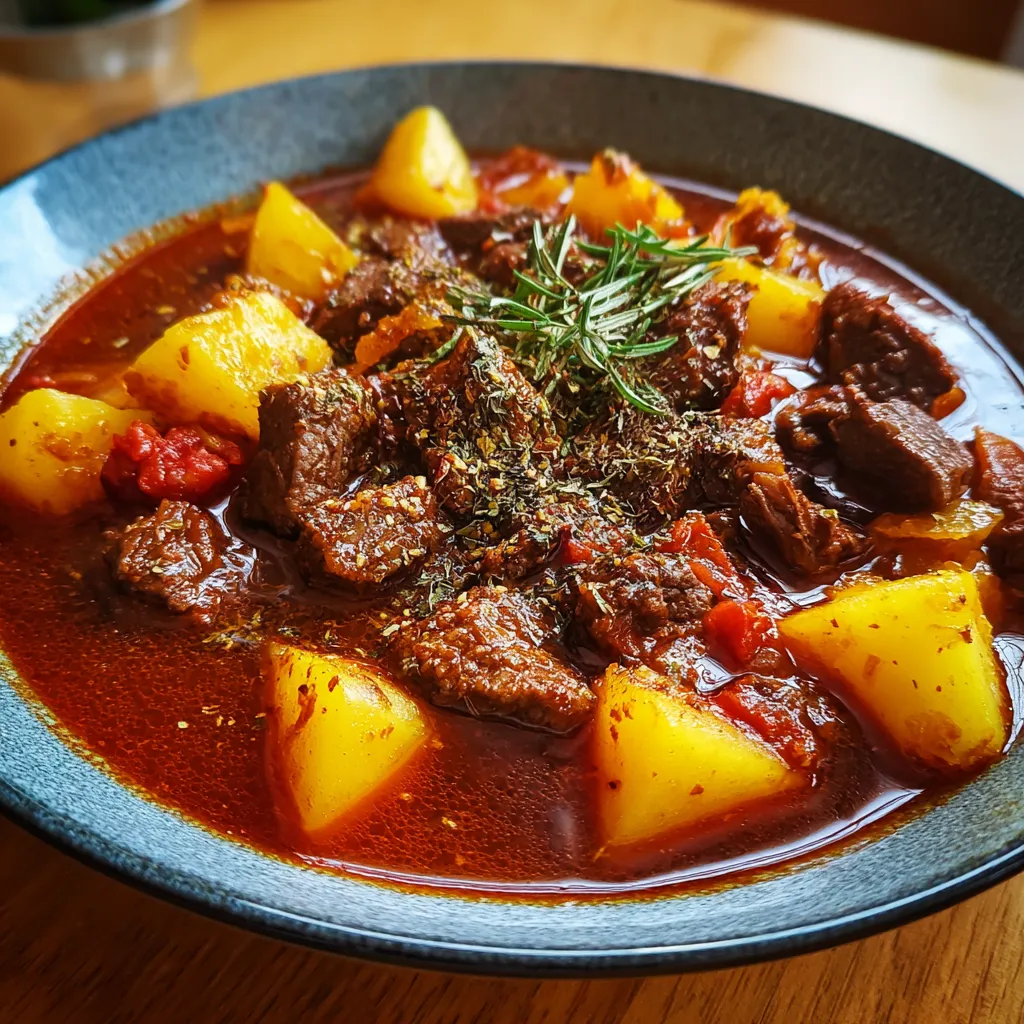

Hearty Hungarian Slow-Cooked Goulash
Description
Slow-cooked beef melts into a paprika-laced gravy, mingling with sweet carrots and bell peppers. Each spoonful releases warm, earthy aromas, balanced by a creamy swirl of sour cream and a sprinkle of fresh parsley.
Ingredients
Instructions
-
Prepare and season the beef:
-
- Pat the beef cubes dry with paper towels to ensure good browning.
-
- Season evenly with 1 tsp salt and ½ tsp black pepper. Set aside at room temperature while you start the onions.
-
Build the onion base:
-
- In a large heavy pot or Dutch oven, heat the oil and butter over medium heat.
-
- Add the chopped onions and a pinch of salt.
-
- Cook, stirring frequently, for 12–15 minutes until the onions turn soft, golden, and lightly caramelized. Control the heat to avoid burning; adjust to medium-low if needed.
-
- Add the minced garlic and cook for 1 minute until fragrant.
-
Toast spices and bloom paprika:
-
- Sprinkle in the caraway seeds and stir for 30 seconds to toast lightly.
-
- Remove the pot from the heat briefly. Sprinkle the sweet Hungarian paprika and any hot paprika over the onions and garlic.
-
- Stir quickly to coat the onions; this step blooms the paprika in the warm fat and releases flavor without burning.
-
Brown the beef:
-
- Return the pot to medium-high heat.
-
- Add the seasoned beef cubes in batches so they are not crowded.
-
- Brown on all sides, about 6–8 minutes per batch, adding a splash of oil if the pot looks dry.
-
- As pieces brown, push them to the side of the pot or temporarily remove them to a bowl until all the meat is browned, then return all meat to the pot along with any accumulated juices.
-
Add tomato paste and optional flour:
-
- Stir in the tomato paste, coating the meat and onions.
-
- Cook for 2–3 minutes, allowing the tomato paste to darken slightly; this adds depth and sweetness.
-
- If using, sprinkle in the flour and stir well for 1 minute. This will gently thicken the sauce during slow cooking.
-
Deglaze with wine:
-
- Pour in the red wine.
-
- Stir, scraping up any browned bits from the bottom of the pot with a wooden spoon.
-
- Simmer for 3–4 minutes to let the alcohol cook off and the liquid reduce slightly.
-
Add broth and aromatics:
-
- Pour in the beef broth and add the bay leaves and marjoram.
-
- Bring the mixture just to a gentle boil.
-
- Taste the liquid and adjust salt and pepper at this stage; it should be well seasoned but not overly salty.
-
Slow-cook the stew:
-
- Reduce the heat to low, cover the pot with a tight-fitting lid, and let the goulash simmer very gently for 1 ½–2 hours, stirring occasionally.
-
- Maintain a lazy simmer (just a few bubbles breaking the surface). If it boils too vigorously, the meat can become tough.
-
- Check occasionally and add a splash of broth or water if the liquid reduces too much.
-
Add vegetables:
-
- After 1 ½–2 hours, when the beef is beginning to turn tender but not yet falling apart, add the carrots, parsnips (if using), bell peppers, potatoes, and chopped tomato.
-
- Stir to distribute evenly.
-
- Cover again and continue to simmer on low for another 35–50 minutes, or until the vegetables are soft and the beef is very tender and easily broken with a spoon.
-
- If the sauce is too thin near the end, remove the lid for the last 10–15 minutes to allow it to reduce. If it is too thick, add a little more broth or water.
-
Finish with sour cream (optional):
-
- When the goulash is done, remove the bay leaves.
-
- Taste and adjust seasoning with more salt, pepper, or paprika as desired.
-
- If using sour cream, place it in a small bowl and stir in a ladleful of hot cooking liquid to temper it.
-
- Then stir this mixture back into the pot off the heat for a silky, lightly creamy finish, or serve the sour cream on the side so each person can add their own.
-
Rest and serve:
-
- Let the goulash rest for 10–15 minutes with the lid on; flavors will meld and the sauce will settle.
-
- Serve hot over buttered egg noodles, with csipetke, or alongside thick slices of crusty bread.
-
- Garnish each serving with a dollop of sour cream and a sprinkling of chopped fresh parsley.
Note
- Use good-quality Hungarian paprika; it is the soul of authentic goulash and makes a huge difference.
- Beef chuck is ideal because its marbling and connective tissue become meltingly tender with slow cooking.
- For a more soup-like traditional gulyásleves, add extra broth and slightly reduce the potatoes.
- Goulash tastes even better the next day; cool completely before refrigerating and reheat gently.
- This recipe adapts well to a slow cooker: after browning and deglazing, transfer to a slow cooker and cook on low for 7–8 hours, adding vegetables for the last 2–3 hours.

