

Thai Coconut Custard is a delightful blend of silky coconut milk, fragrant vanilla, and just the right touch of palm sugar sweetness. This beginner-friendly steamed dessert brings a taste of Thailand right to your kitchen, melding creamy texture with subtle caramel notes. It’s perfect for an elegant finish to any meal or a comforting afternoon treat—give it a whirl and fall in love with every spoonful!
Key Ingredients
Before you start, gather these simple yet essential ingredients to craft your custard:
- 1 cup coconut milk: Creamy base that brings velvety richness and tropical flavor.
- 3 large eggs: Provide structure and create a smooth, custardy texture.
- 1/4 cup palm sugar: Adds warm, caramel-like sweetness with a depth you won’t get from white sugar.
- 2 tbsp sugar: Balances the overall sweetness and enhances custard stability.
- 1/4 tsp salt: Brightens flavors and rounds out the sweetness.
- 1 tsp vanilla extract: Infuses a fragrant, sweet aroma that complements the coconut.
How To Make Thai Coconut Custard
Let’s walk through a simple steaming process that transforms these ingredients into a luxuriously smooth custard. You’ll whisk, dissolve, strain, and gently steam your mixture until it’s perfectly set, yielding a tender, wobble-worthy dessert that melts in your mouth.
1. In a mixing bowl, crack the eggs and whisk vigorously until the mixture is smooth and slightly frothy.
2. Add the palm sugar, regular sugar, and salt; stir continuously until the sugars dissolve completely and the mixture is uniform.
3. Pour in the coconut milk and vanilla extract, then mix thoroughly to combine all flavors into a cohesive custard base.
4. Place a fine sieve over a pouring jug and strain the mixture to remove any lumps or air bubbles for a silky finish.
5. Grease your ramekins lightly, then divide the custard mixture evenly among them.
6. Arrange the ramekins in a steamer over medium heat, cover with a tight-fitting lid, and steam until set—about 15 to 20 minutes—until the centers wobble slightly when nudged.
7. Carefully remove the custards from the steamer and let them cool slightly before serving warm or chilled.
Serving Suggestions
Once your custard is set, consider these fun ways to serve it and elevate the experience:
- Top with toasted coconut flakes for a crunchy contrast that complements the creamy custard.
- Garnish each ramekin with a knotted pandan leaf placed on the side, infusing aroma as you serve.
- Add a spoonful of fresh tropical fruit—mango or pineapple work beautifully—to introduce bright, juicy notes.
- Drizzle a bit of coconut caramel sauce over the top for an extra layer of sweetness and visual appeal.
Tips For Perfect Thai Coconut Custard
This custard is wonderfully forgiving, but a few tricks will make it truly shine. Think of full-fat coconut milk for indulgent creaminess, and don’t hesitate to swap sugars or infuse extra aroma with pandan. Keep your steaming gentle to avoid a rubbery texture and watch the clock to catch that perfect wobble.
- For a richer flavor use full fat coconut milk
- You can replace palm sugar with white or brown sugar if unavailable
- Adding a pandan leaf to the steamer infuses additional aroma
- Store leftovers covered in the refrigerator for up to two days
How To Store It
Proper storage ensures your custard stays smooth and flavorful for days. Whether you’re prepping in advance or saving leftovers, these methods will help you maintain that silky texture.
- Refrigerate covered: Allow custards to cool to room temperature, then wrap each ramekin with plastic wrap to prevent odors and drying.
- Airtight container: If you prefer portability, transfer custards to a sealed container, keeping them shielded from fridge moisture.
- Chill before serving: For a cooler, firmer texture, refrigerate for at least 2 hours; this also helps flavors meld.
- Gentle reheating: Warm custards in a steamer or water bath over low heat for a few minutes if you’d like them served slightly warm.
Frequently Asked Questions
Here are quick answers to the most common questions about this Thai Coconut Custard:
- How long does it take to prepare this Thai Coconut Custard?
It takes about 10 minutes to whisk the eggs, dissolve the sugars and salt, pour in coconut milk and vanilla, then strain the mixture. Steaming requires an additional 15 to 20 minutes, for a total time of approximately 25 to 30 minutes.
- Can I substitute palm sugar with another sweetener, and how will that affect the flavor?
Yes, you can replace palm sugar with white or brown sugar. White sugar yields a cleaner sweetness without the caramel notes, while brown sugar adds some molasses flavor. You may want to taste and adjust the total sugar amount to suit your preference, since palm sugar has a more complex, less sweet profile.
- What is the best way to steam the ramekins to ensure an even custard texture?
Arrange ramekins in a steamer basket or on a rack with water at a gentle boil beneath. Cover the steamer with a tight-fitting lid or wrap foil around the top to trap steam. Steam over medium heat to maintain a gentle, consistent steam. Avoid lifting the lid during cooking, as temperature fluctuations can create cracks or uneven setting.
- How can I tell when the custard is fully set without overcooking it?
After about 15 minutes, check by gently shaking one ramekin; the center should wobble slightly but not be liquid. A toothpick or skewer inserted in the center should come out mostly clean with only a few moist crumbs. Overcooking will make the custard dry and rubbery.
- What are the storage recommendations and shelf life for leftover custard?
Allow custards to cool to room temperature, then cover each ramekin with plastic wrap or transfer to an airtight container. Store in the refrigerator for up to two days. Before serving, you can gently reheat in a steamer for a few minutes or enjoy chilled.
- How does adding a pandan leaf affect the aroma, and how should I use it?
Pandan leaf imparts a sweet, grassy fragrance that complements the coconut. Tie a leaf into a knot and place it in the steamer water around the ramekins. The steam carries the pandan scent into the custard without altering its texture.
- Can I make this recipe dairy-free and vegan if I omit the eggs?
Omitting the eggs removes the custard’s structure. To achieve a similar set, you could use a plant-based thickener such as agar-agar (about 1 teaspoon dissolved in the hot coconut milk) or cornstarch slurry (1 to 2 tablespoons cornstarch mixed with cold water, then whisked into the warm coconut mixture). These substitutes change the texture slightly but keep it creamy and egg-free.
What Makes This Special
This Thai Coconut Custard truly stands out thanks to its simple ingredients coming together in a steamed marvel that’s both comforting and exotic. The marriage of palm sugar’s caramel hints with creamy coconut milk and fragrant vanilla creates a melt-in-your-mouth experience that feels both luxurious and homey. It’s a fuss-free dessert that’s perfect for quiet dinners or when you need a crowd-pleasing sweet finish. Don’t forget to print or bookmark this recipe for future delight, and let me know your thoughts or questions if you give it a whirl!
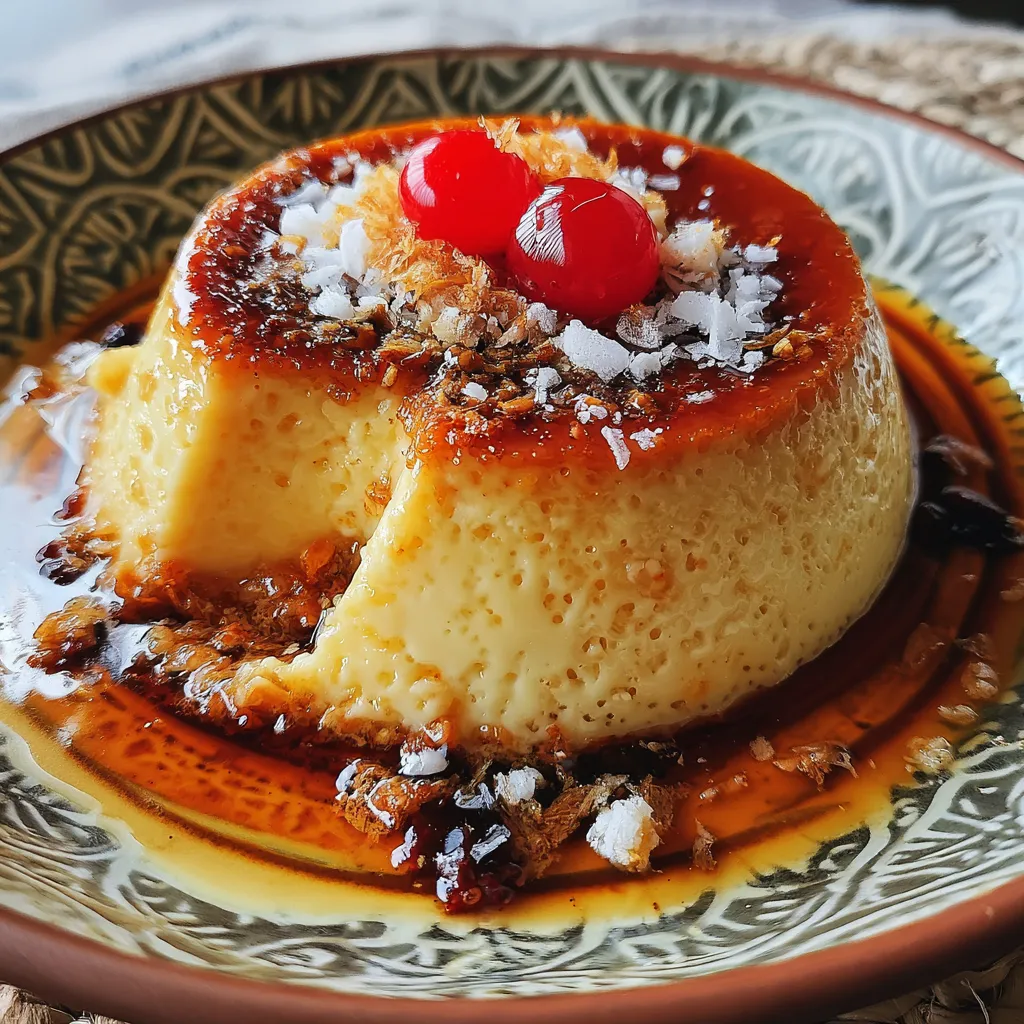

Thai Coconut Custard
Description
Velvety custard infused with rich coconut milk and fragrant vanilla, subtly sweetened with palm sugar. Steamed until set and topped with pandan aroma, each bite melts on your tongue.
Ingredients
Instructions
-
In a bowl whisk eggs until smooth
-
Add palm sugar sugar and salt stir until dissolved
-
Pour in coconut milk and vanilla extract mix thoroughly
-
Strain mixture through a sieve into a pouring jug
-
Divide custard evenly into greased ramekins
-
Steam ramekins in a steamer over medium heat until set about 15 to 20 minutes
-
Remove custard and let cool slightly before serving
Note
- For a richer flavor use full fat coconut milk
- You can replace palm sugar with white or brown sugar if unavailable
- Adding a pandan leaf to the steamer infuses additional aroma
- Store leftovers covered in the refrigerator for up to two days

