

Egg Fried Rice brings together golden rice grains dancing with fluffy egg ribbons, vibrant peas, carrots, and scallions—all kissed by savory soy and fragrant sesame oil. In just minutes, your wok sizzling away, you’ll create a comforting meal that feels both indulgent and effortlessly simple. Whether you’re cleaning out the fridge or craving a quick dinner, this recipe is your new go-to and will have everyone asking for seconds.
Key Ingredients
Before you dive into the stir-fry fun, gather these trusty basics that deliver flavor, texture, and that classic restaurant-style finish:
- 2 cups day-old cooked white rice: Slightly dried grains that fry up fluffy and separate for the best mouthfeel.
- 2 tablespoons vegetable oil: Neutral oil that withstands high heat and prevents sticking.
- 2 large eggs, beaten: Provides soft, ribbon-like egg pieces that coat each grain.
- 1/2 cup frozen peas and carrots, thawed: Adds color, sweetness, and a tender-crisp bite.
- 2 green onions, sliced: Fresh onion flavor—white parts sautéed for depth, green tops for brightness.
- 1 clove garlic, minced: Infuses aromatic, savory undertones throughout.
- 1 tablespoon soy sauce: Delivers that signature salty umami lift.
- 1 teaspoon sesame oil: Brings a nutty aroma when drizzled at the end.
- 1/4 teaspoon salt: Balances and enhances all the flavors.
- 1/4 teaspoon black pepper: Adds a gentle, warm spice note.
How To Make Egg Fried Rice
Let’s talk stir-fry strategy: heat, toss, and timing are key for achieving fluffy rice interlaced with silky egg ribbons and vibrant veggies. Follow these steps to master the technique and flavor layering in your wok or skillet:
1. Heat vegetable oil in a wok or large skillet over medium-high heat until shimmering.
2. Add the beaten eggs and gently scramble, stirring until just set; transfer the soft curds to a plate.
3. Toss in garlic and the white parts of the green onions, sautéing for about 30 seconds until fragrant.
4. Crank heat to high, add the rice, and use a spatula to break up any clumps, ensuring each grain touches the pan.
5. Stir in peas and carrots, cooking for 2 to 3 minutes until they’re tender-crisp and warmed through.
6. Return the scrambled eggs to the pan and gently fold into the rice mixture.
7. Drizzle soy sauce and sesame oil over the rice, stirring constantly to coat everything evenly.
8. Season with salt and black pepper, then sprinkle in the green onion tops for a fresh pop.
9. Remove from heat and dish up immediately for that perfect, just-cooked texture.
Serving Suggestions
Egg Fried Rice is endlessly adaptable—here’s how to make it shine at your table:
- As a main course: Pile it high on a plate and top with sliced grilled chicken or tofu for a protein-packed dinner.
- With a side of pickles: Serve alongside kimchi or quick-pickled cucumbers to cut through the richness.
- Garnished with cilantro and lime: A squeeze of lime juice and fresh cilantro turns this into a zesty fusion twist.
- Spoon into lettuce cups: For a light, crunchy contrast, fill crisp lettuce leaves with warm rice and top with chili flakes.
Tips For Perfect Egg Fried Rice
Nailing restaurant-style egg fried rice at home is all about ingredient prep and timing. These friendly pointers will have you cooking like a pro:
- Using cold leftover rice prevents soggy fried rice by keeping grains firm and separate.
- Customize with your choice of vegetables and proteins—just make sure extras are pre-cooked and chopped small.
- Sesame oil should be added at the end for best aroma, preserving its nutty fragrance.
- Serve hot for optimal texture and flavor; fried rice cools quickly, so enjoy it right off the stove.
How To Store It
If you have leftovers (though that’s rare!), proper storage keeps your rice tasting fresh:
- Store in an airtight container in the refrigerator for up to 3 days to maintain moisture without sogginess.
- For longer keeps, freeze portions in zip-top bags, pressing out any air to prevent freezer burn.
- When ready to eat, thaw overnight in the fridge for even reheating.
- Reheat in a hot skillet with a dash of oil, stirring constantly until steaming, to restore the original texture.
Frequently Asked Questions
Here to clear up common queries so your fried rice turns out perfect every time:
- Q: How should I prepare the rice to prevent a soggy texture?
Use day-old cooked white rice that has been chilled in the refrigerator; this dries out the grains slightly so they separate easily when stir-frying, resulting in a fluffy final dish.
- Q: Can I substitute any of the ingredients or add other proteins?
Yes. You can customize the recipe by adding cooked shrimp, diced chicken, or tofu; for vegetables you can include bell peppers, corn, or bean sprouts; just ensure any added ingredients are pre-cooked and cut into small, uniform pieces for even cooking.
- Q: What type of pan is best for making egg fried rice?
A wok is ideal because its sloped sides allow for quick, high-heat stir-frying and easy tossing of ingredients; if you don’t have a wok, use a large heavy-bottomed skillet over medium-high to high heat to ensure good heat distribution.
- Q: Why is sesame oil added at the end, and can I omit it?
Sesame oil has a low smoke point and a strong nutty aroma that is best preserved by drizzling it on at the end of cooking; you can omit it if you don’t have any, but you’ll miss the distinctive fragrance it imparts.
- Q: How long does it take to make this egg fried rice from start to finish?
From heating the pan and cooking the eggs to stir-frying the rice and vegetables, it takes about 15 to 20 minutes, not including the time needed for rice to cool overnight.
- Q: What’s the best way to reheat leftover egg fried rice?
Reheat in a hot, lightly oiled skillet or wok over medium-high heat, stirring constantly for a few minutes until heated through to restore its texture; avoid the microwave if possible to prevent it from becoming mushy.
- Q: How do I adjust the seasoning if I want a lower-sodium version?
Reduce or omit the added salt and use a low-sodium soy sauce; you can boost flavor with a splash of rice vinegar, freshly ground black pepper, or a sprinkle of sliced green onions and minced garlic for a savory punch.
What Makes This Special
Egg Fried Rice works because it transforms simple leftovers into something thrillingly tasty. The contrast of bright veggies, soft egg strands, and perfectly seasoned rice hits all the right notes—salty, nutty, and just a tad sweet. Its speed and flexibility make it a weeknight hero, while the sizzling wok action adds a dash of kitchen theater. Don’t forget to print and pin this guide for those “what’s for dinner?” moments, and drop a comment if you’ve played with veggies, proteins, or have any burning rice-fry questions!
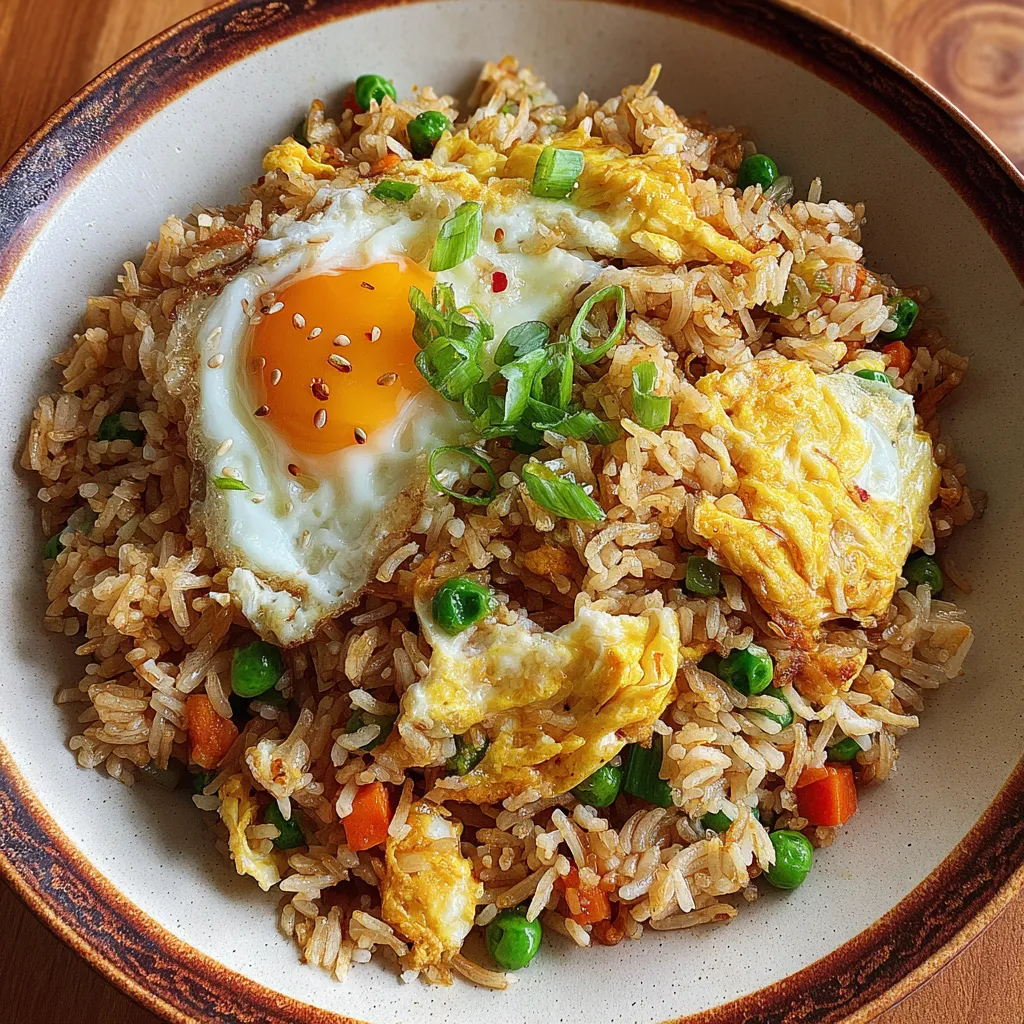

Egg Fried Rice
Description
Fried rice sears in the wok with aromatic garlic, tender-crisp peas and carrots, and soft egg ribbons, each grain coated in savory soy and a hint of sesame oil, delivering a warm, comforting meal in minutes.
Ingredients
Instructions
-
Heat vegetable oil in a wok or large skillet over medium-high heat.
-
Add beaten eggs and scramble until just set, then transfer eggs to a plate.
-
Add garlic and white parts of green onions to the pan and sauté for 30 seconds.
-
Increase heat to high and add rice, breaking up any clumps with a spatula.
-
Stir in peas and carrots and cook for 2 to 3 minutes until heated through.
-
Return scrambled eggs to the pan and mix with rice.
-
Drizzle soy sauce and sesame oil over the rice, stirring to coat evenly.
-
Season with salt and pepper and stir in green onion tops.
-
Remove from heat and serve immediately.
Note
- Using cold leftover rice prevents soggy fried rice
- Customize with your choice of vegetables and proteins
- Sesame oil should be added at the end for best aroma
- Serve hot for optimal texture and flavor

