

Authentic Korean Japchae Noodles offer a delightful dance of chewy glassy sweet potato noodles entwined with vibrant bell peppers, spinach, and succulent beef, all bathed in a glossy, sesame-scented sauce that sings sweet and savory. This intermediate-level dinner recipe is rooted in traditional Korean stir-fry techniques, yet simple enough for weeknight cooking. With straightforward steps and fresh ingredients, you’ll be savoring every forkful of this colorful, satisfying dish in no time—perfect for sharing or enjoying as a cozy solo treat.
Key Ingredients
Before you get started, let’s gather everything you need to create those glossy, chewy noodles and perfectly stir-fried veggies:
- 200 g sweet potato starch noodles (dangmyeon): provide the signature chewy texture and glossy appearance.
- 150 g beef sirloin, thinly sliced: adds savory richness and protein that pairs beautifully with the vegetables.
- 1 medium carrot, julienned: brings a subtle sweetness and crunchy bite to the stir-fry.
- 1 medium onion, thinly sliced: gives a tender aroma and slight sweetness when caramelized.
- 1 red bell pepper, thinly sliced: contributes vibrant color and crispness to the dish.
- 1 green bell pepper, thinly sliced: balances with fresh, grassy notes and a pop of green.
- 100 g spinach: offers a leafy texture and earthy flavor that melds well with noodles.
- 4 dried shiitake mushrooms, rehydrated and sliced: infuse an umami depth and chewy bite to every mouthful.
- 2 scallions, cut into 5 cm lengths: add a mild oniony crunch and fresh aroma when tossed in.
- 3 cloves garlic, minced: infuses the oil and meat with savory warmth and aroma.
- 2 tbsp soy sauce: brings umami depth and savory seasoning to the noodles.
- 1 tbsp sugar: balances the saltiness with a hint of sweetness in the sauce.
- 1 tbsp sesame oil: infuses a nutty aroma and signature sesame flavor at the end.
- 1 tbsp vegetable oil: provides a neutral base for stir-frying ingredients.
- 1 tbsp toasted sesame seeds: offer a crunchy finish and boost the sesame fragrance.
- salt to taste: adjusts seasoning to your preference.
- ground black pepper to taste: adds a subtle kick and depth.
How To Make Authentic Korean Japchae Noodles
Creating the perfect japchae is all about prepping, stir-frying each element to just the right tenderness, and then combining everything in a glossy, savory-sweet sauce. By cooking the vegetables separately and marinating the beef, you’ll ensure each component keeps its color, texture, and flavor. Follow these nine steps to achieve chewy noodles, crisp-tender veggies, and a harmonious blend of sweet and savory in every bite.
1. Soak sweet potato starch noodles in warm water for 30 minutes until soft. Drain thoroughly and set aside to prevent clumping.
2. Blanch the spinach in boiling water for 30 seconds, then drain, rinse under cold water, squeeze out excess moisture, and set aside.
3. In a small bowl, combine the beef with 1 tbsp soy sauce, 1 tsp sugar, minced garlic, and a pinch of ground black pepper. Let it marinate for 10 minutes.
4. Heat the vegetable oil in a large pan over medium-high heat. Stir-fry the carrot until it’s slightly tender, then remove and repeat separately with the onion, red bell pepper, and green bell pepper, setting each aside.
5. Return the pan to medium-high heat, add the marinated beef, and stir-fry until cooked through. Remove and set aside.
6. Add the drained noodles to the pan along with 1 tbsp soy sauce, 1 tbsp sugar, and sesame oil. Stir-fry for 2–3 minutes, tossing constantly to coat each strand.
7. Return all the vegetables, beef, spinach, and scallions to the pan. Toss gently and cook for another 2 minutes to combine flavors.
8. Season with salt and ground black pepper to taste, then transfer to a serving dish.
9. Sprinkle toasted sesame seeds over the top for a final flourish before serving.
Serving Suggestions
Once your Authentic Korean Japchae Noodles are ready, these serving ideas will help you elevate the experience and create a memorable meal:
- Serve at room temperature on a decorative platter, garnished with extra toasted sesame seeds.
- Pair with a side of kimchi for a spicy, tangy contrast that cuts through the sweetness.
- Enjoy alongside grilled bulgogi skewers to build a hearty Korean-inspired spread.
- Top with a drizzle of extra sesame oil and a sprinkle of thinly sliced scallions for an aromatic boost.
Tips For Perfect Authentic Korean Japchae Noodles
Achieving that glossy, balanced japchae is all about using the right noodle, managing cooking times, and allowing flavors to meld. Here are some friendly pointers to level up your dish:
- Authentic japchae uses sweet potato starch noodles for a distinctive chewiness.
- For a vegetarian version, omit beef and increase the amount of mushrooms or add tofu.
- Allow japchae to rest for 10 minutes after cooking to let flavors meld.
- Japchae is best served at room temperature or slightly warm for traditional flavor.
How To Store It
Leftover japchae can be just as delicious when stored properly. Letting it cool and sealing it correctly preserves both texture and taste for your next meal:
- Store in an airtight container in the refrigerator for up to 2 days, preserving texture and flavor.
- Let the japchae cool completely at room temperature before sealing to prevent condensation and sogginess.
Frequently Asked Questions
Here are some quick answers to common questions about making and enjoying Japchae:
- Q: Why is it important to soak sweet potato starch noodles for 30 minutes before cooking?
A: Soaking the dangmyeon in warm water for 30 minutes softens them evenly, reduces cooking time on the stovetop, and ensures the distinctive chewy texture of authentic japchae.
- Q: How can I make a vegetarian version of this japchae recipe?
A: Simply omit the beef sirloin, increase the number of rehydrated shiitake mushrooms or add firm tofu cut into matchsticks, and proceed with the same stir-fry and seasoning steps to maintain balanced flavor and texture.
- Q: What is the benefit of stir-frying each vegetable separately?
A: Stir-frying carrots, onions, red and green bell peppers individually over medium-high heat allows each vegetable to cook just until tender-crisp, preserves its vibrant color, and prevents moisture from one ingredient from softening the others too quickly.
- Q: How do I prevent the noodles from clumping together during stir-frying?
A: After draining the soaked noodles thoroughly, stir-fry them immediately in the pan with sesame oil, soy sauce, and sugar while tossing constantly; this coating keeps strands separated and adds flavor.
- Q: How long should I let japchae rest before serving, and why?
A: Allow the assembled japchae to rest for about 10 minutes off the heat so the flavors meld; this brief pause helps the sauce penetrate the noodles and vegetables for a more harmonious taste.
- Q: What is the best way to store and reheat leftover japchae?
A: Transfer cooled japchae to an airtight container and refrigerate for up to 2 days. To reheat, gently warm in a nonstick pan over low heat or briefly microwave until just heated through, then serve at room temperature or slightly warm.
- Q: Can I adjust the seasoning if I prefer a less sweet or saltier japchae?
A: Yes. Taste the noodles after the initial 2-3 minutes of stir-frying with soy sauce and sugar. You can add an extra teaspoon of sugar for sweetness or a dash more soy sauce for saltiness, then toss again to distribute evenly.
What Makes This Special
From its glossy, glassy noodles to the vibrant medley of veggies and tender beef, Authentic Korean Japchae Noodles are a show-stopping example of how simple ingredients and careful technique can yield incredible flavor and texture. The separate stir-fry approach ensures each component retains its character, while the sweet-savory sauce ties everything together in perfect harmony. Feel free to print and save this guide as your culinary cheat sheet, and let me know in the comments how your japchae adventure went or if you have any questions!
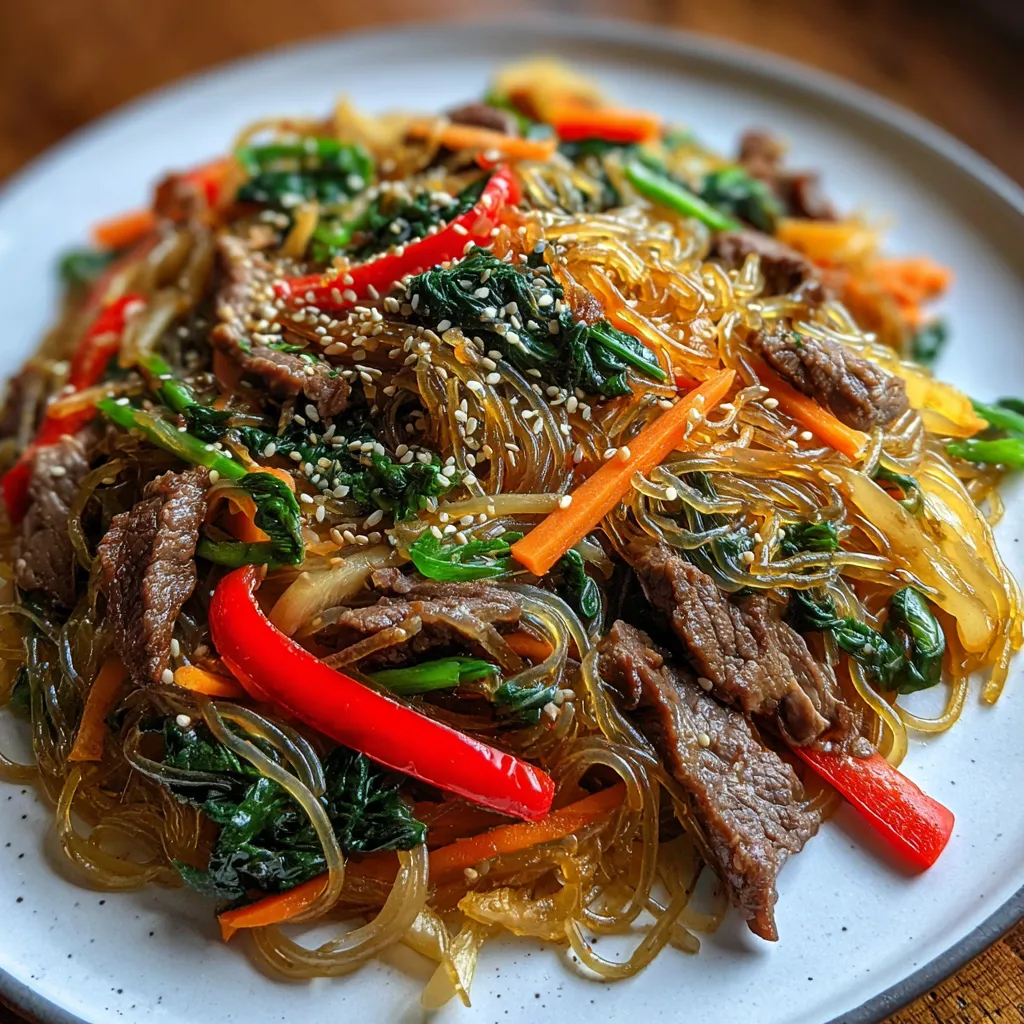

Authentic Korean Japchae Noodles
Description
Glassy noodles with a chewy bite dance with tender beef strips, crunchy veggies, and earthy mushrooms, all coated in a glossy, sesame-scented sauce that brings a burst of sweet-savory Korean flavor in every forkful.
Ingredients
Instructions
-
Soak sweet potato starch noodles in warm water for 30 minutes until soft, then drain and set aside.
-
Blanch spinach in boiling water for 30 seconds, drain, rinse under cold water, squeeze out excess moisture and set aside.
-
In a small bowl combine beef with 1 tbsp soy sauce, 1 tsp sugar, minced garlic and a pinch of ground black pepper, then marinate for 10 minutes.
-
Heat vegetable oil in a large pan over medium-high heat, stir-fry carrot until slightly tender, then remove and repeat separately with onion, red bell pepper and green bell pepper, setting each aside.
-
Stir-fry marinated beef in the same pan until cooked through, then remove and set aside.
-
Add drained noodles to the pan with 1 tbsp soy sauce, 1 tbsp sugar and sesame oil, then stir-fry for 2-3 minutes until well coated.
-
Return all vegetables, beef, spinach and scallions to the pan, toss gently and cook for another 2 minutes to combine flavors.
-
Season with salt and ground black pepper to taste, then transfer to a serving dish.
-
Sprinkle toasted sesame seeds over the top before serving.
Note
- Authentic japchae uses sweet potato starch noodles for a distinctive chewiness.
- For a vegetarian version, omit beef and increase the amount of mushrooms or add tofu.
- Allow japchae to rest for 10 minutes after cooking to let flavors meld.
- Japchae is best served at room temperature or slightly warm for traditional flavor.

