

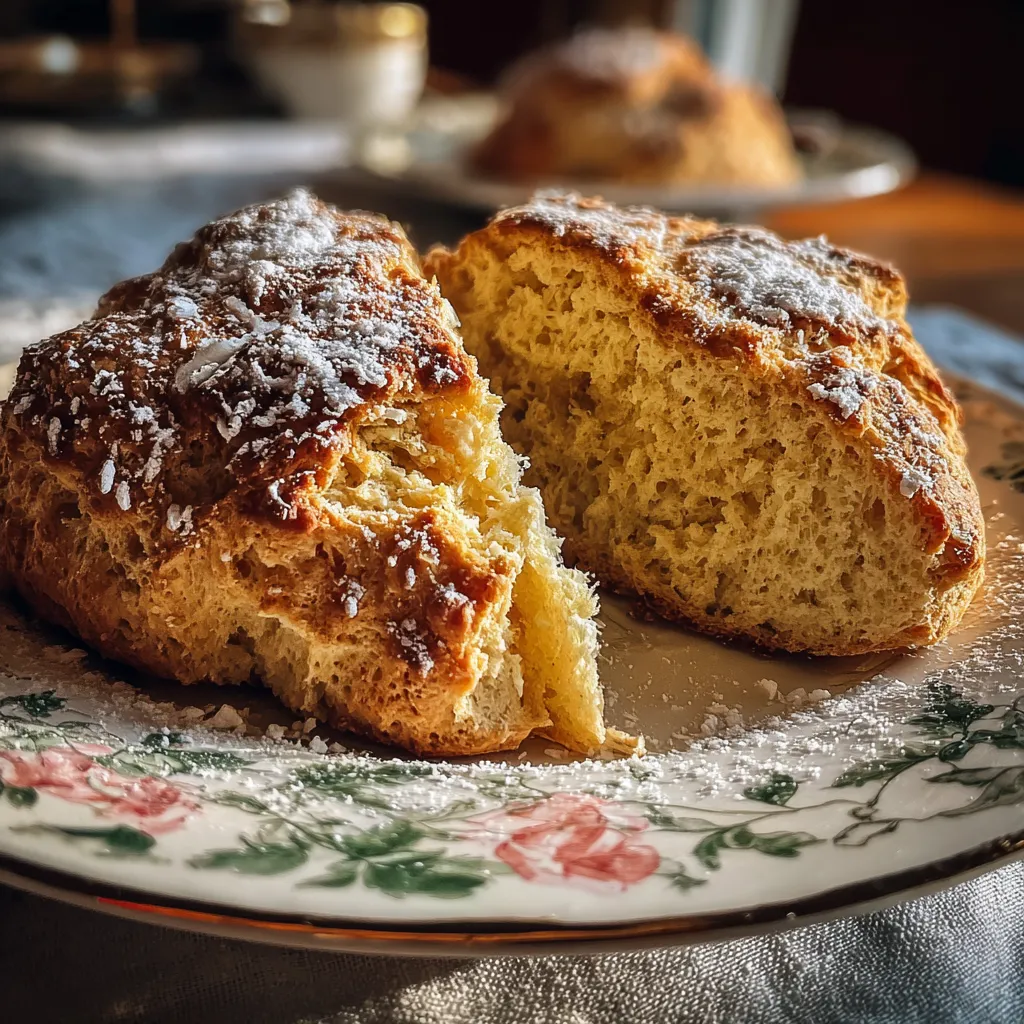
Irish Soda Bread is a warm, golden-crusted loaf with a tender, tangy crumb that’s ready in under an hour—you won’t need yeast or proofing. A simple mix of plain flour, baking soda, salt, cold butter, and buttermilk comes together in a rustic round loaf, scored with a traditional cross for even baking. Each slice reveals a moist, fragrant interior perfect for slathering with butter or jam. Whether you’re new to baking or craving cozy homemade bread, this quick Irish classic brings comforting flavor to your breakfast or teatime.
Key Ingredients
Here’s what you need to bake your own Irish Soda Bread from scratch:
- 450 grams plain flour: Forms the sturdy structure and gives the loaf its characteristic crumb.
- 1 teaspoon baking soda: Reacts with the buttermilk’s acidity to create lift and lightness.
- 1 teaspoon salt: Enhances the overall flavor and balances the tanginess of the dough.
- 25 grams cold unsalted butter: Cut into the flour to create flaky pockets and tender texture.
- 350 milliliters buttermilk: Supplies acidity to activate the soda and adds a rich, tangy moisture.
How To Make Irish Soda Bread
Baking Irish Soda Bread is delightfully straightforward, and these steps will guide you from mixing to slicing. You’ll learn how to handle the dough gently—minimal kneading ensures a tender interior—while mastering the traditional cross cut that helps the loaf bake evenly. Let’s break down each stage so you can enjoy a perfect golden crust and soft crumb every time.
1. Preheat the oven to 200°C and line a baking sheet with parchment paper to prevent sticking and ensure even browning.
2. In a large bowl, whisk together the flour, baking soda, and salt until fully combined and aerated.
3. Grate or rub the cold butter into the dry ingredients using your fingertips until the mixture resembles coarse crumbs.
4. Create a well in the center of the mixture and pour in the buttermilk, stirring gently with a spoon until a soft, shaggy dough forms.
5. Turn the dough onto a lightly floured surface and knead briefly—just enough to bring it together into a cohesive ball.
6. Shape the dough into a round loaf and place it on the prepared baking sheet, pressing gently to flatten slightly.
7. With a sharp knife, cut a deep cross on top of the loaf to guide an even bake and maintain its traditional look.
8. Bake for 30 to 35 minutes, or until the crust turns a rich golden color and a skewer inserted into the center comes out clean.
9. Remove the bread from the oven and cool on a wire rack for about 10 minutes before slicing to let the crumb set.
Serving Suggestions
This rustic Irish Soda Bread is best enjoyed fresh and warm, and there are so many delightful ways to serve it:
- Spread soft butter and a drizzle of honey over warm slices for a simple, sweet treat.
- Top with tangy jam or marmalade to highlight the bread’s subtle acidity.
- Serve alongside a hearty stew or soup—its firm crumb soaks up broths and sauces beautifully.
- Create open-faced sandwiches with smoked salmon, cream cheese, and dill for a brunch-worthy twist.
Tips For Perfect Irish Soda Bread
With a few friendly pointers, you’ll nail this recipe every time. Whether you want a sweeter loaf, a crispier crust, or just the ideal slice, these tips will guide you:
- For a sweeter variation, stir in 50 grams of raisins or currants with the dry ingredients.
- Scoring a deep cross on top helps the bread rise evenly and honors its traditional Irish roots.
- Serve the loaf warm with your favorite butter or jam immediately after baking for best flavor.
- Store the cooled bread wrapped in a tea towel to keep the crust crisp and the interior moist.
How To Store It
To maintain that freshly baked taste and texture, proper storage is key. Follow these methods to keep your soda bread at its best:
- Room temperature: Once completely cooled, wrap the loaf in a clean tea towel or linen bread bag and store on the counter for up to two days.
- Linen bag: A breathable linen bread bag helps preserve crust crispness while preventing the crumb from drying out.
- Freezing: For longer storage, wrap slices or the whole loaf tightly in plastic wrap and aluminum foil, then freeze for up to three months.
- Thawing: Remove frozen bread and let it come to room temperature before serving, or warm slices in a 160°C oven for 5 to 10 minutes to restore crispness.
Frequently Asked Questions
Got questions about your soda bread? You’re not alone—check out these common queries:
- How long does it take to prepare and bake this Irish Soda Bread?
Preparing the dough—including measuring ingredients, grating butter, mixing, kneading, and shaping—takes about 15 minutes. Baking requires 30 to 35 minutes in a preheated 200°C oven, plus an additional 10 to 15 minutes of cooling on a wire rack. In total, plan for roughly 55 to 65 minutes from start to finish.
- Can I substitute regular milk if I don’t have buttermilk?
Yes. For 350 milliliters of buttermilk substitute, pour 350 ml of whole milk or low-fat milk into a measuring jug, stir in 1 tablespoon of lemon juice or white vinegar, and let it stand for 5 to 10 minutes until slightly thickened and curdled. This maintains the acidity needed to activate the baking soda and ensures a tender crumb.
- What is the purpose of scoring a cross on top of the loaf?
Scoring a deep cross on the dough before baking allows steam to escape and helps the loaf expand evenly without unpredictable cracks. It is also a traditional Irish practice believed to bless the household and protect the bread from evil, while ensuring a more uniform bake and desirable crust development.
- How can I tell when my soda bread is fully baked?
The crust should be a rich golden-brown color and firm to the touch. Insert a wooden skewer or toothpick into the center of the loaf; it should come out clean or with just a few dry crumbs attached. For extra accuracy, the internal temperature should register around 95°C (200°F) on a digital thermometer.
- How should I store leftover soda bread to keep it fresh?
Wrap the cooled loaf in a clean tea towel or linen bread bag to maintain a crisp crust while retaining interior moisture. Store at room temperature for up to two days. Avoid plastic wrap if you want to preserve crust texture; for longer storage, freeze the sliced bread.
- Can I freeze Irish Soda Bread, and what’s the best way to reheat it?
Yes. Once completely cooled, wrap the whole loaf or individual slices tightly in plastic wrap followed by aluminum foil, then freeze for up to three months. To reheat, thaw at room temperature for about an hour, then warm in a 160°C oven for 5 to 10 minutes to restore crust crispness.
- I added the raisins but my loaf sank in the middle. What went wrong?
If the centers sink, it’s often due to underbaking or adding too many extras without adjusting moisture. Ensure you don’t exceed 50 grams of raisins or currants, sprinkle them into the dry ingredients so they’re well coated, and bake the full 30 to 35 minutes. Check the skewer test and oven temperature calibration to avoid underbaking.
- My soda bread turned out dense and dry. How can I improve the texture?
Dense or dry bread can result from over-kneading, too much flour, old baking soda, or overbaking. Knead the dough only briefly—just enough to bring it together—avoid adding extra flour beyond a light dusting, use fresh baking soda for proper rise, and stick to the recommended baking time. Using full-fat buttermilk also yields a moister crumb.
What Makes This Special
This Irish Soda Bread stands out for its effortless charm—no yeast or long proofs, just a quick mix and bake that delivers a crackling golden crust and tender, tangy crumb. The traditional cross cut isn’t just decorative; it blesses each loaf and ensures an even rise. Whether you’re pairing slices with butter, jam, or soup, every bite feels like a cozy kitchen hug. Print and save this recipe for lazy mornings or impromptu gatherings, and drop a comment below to share your baking triumphs or any questions you have!

Irish Soda Bread
Description
Golden crust cracks open to reveal a moist, tangy crumb, fragrant with buttermilk. Scoring a deep cross gives it a rustic look, and each slice carries the cozy warmth of a simple, no-yeast loaf straight from the oven.
Ingredients
Instructions
-
Preheat the oven to 200°C and line a baking sheet with parchment paper.
-
In a large bowl, whisk together the flour, baking soda, and salt.
-
Grate or rub the cold butter into the dry ingredients until the mixture resembles coarse crumbs.
-
Make a well in the center and pour in the buttermilk, stirring gently until a soft dough forms.
-
Turn the dough onto a lightly floured surface and knead briefly to bring it together.
-
Shape the dough into a round loaf and place it on the prepared baking sheet.
-
Using a sharp knife, cut a deep cross on top of the loaf to help it bake evenly.
-
Bake for 30 to 35 minutes or until the crust is golden and a skewer inserted in the center comes out clean.
-
Remove the bread from the oven and allow it to cool on a wire rack before slicing.
Note
- For a sweeter variation, stir in 50 grams of raisins or currants with the dry ingredients.
- Scoring a cross on top helps the bread rise and is a traditional Irish practice.
- Serve warm with butter or your favorite jam for best flavor.
- Store wrapped in a tea towel to keep the crust crisp and the interior moist.

