

Korean Style Pot Roast brings together tender beef chuck bathed in a spicy-sweet gochujang sauce, slow-cooked with carrots and potatoes until melt-in-your-mouth perfection. Fragrant ginger, garlic, and chili paste meld into a rich broth that caramelizes the roast’s crust as it simmers. Each forkful delivers bold, savory-spicy essence, making it the ultimate comfort food for dinner. Dive in and discover why this Korean classic deserves a spot on your weeknight rotation—your taste buds will thank you!
Key Ingredients
To achieve that signature Korean flair, you’ll need a handful of pantry staples and fresh produce. Each ingredient plays a vital role in building layers of flavor and ensuring that melt-in-your-mouth texture.
- 3 pound beef chuck roast: Well-marbled cut that becomes fork-tender and soaks up all those Korean braising flavors.
- 1 tablespoon vegetable oil: Provides a hot, neutral base for searing without burning the spices.
- 1 medium onion, chopped: Adds sweetness and depth when sautéed until translucent.
- 3 cloves garlic, minced: Delivers pungent, savory notes that infuse the entire dish.
- 1 tablespoon fresh ginger, minced: Brings a warm, zesty kick to balance the chili paste.
- ½ cup soy sauce: Offers salty, umami richness to the braising liquid.
- 2 tablespoons gochujang (Korean chili paste): Star ingredient for that signature spicy-sweet kick.
- 1 tablespoon gochugaru (Korean chili flakes): Adds smokiness and vibrant red color with adjustable heat.
- 2 tablespoons brown sugar: Sweetens and helps caramelize the sauce for depth.
- 1 tablespoon sesame oil: Finishes the sauce with a nutty aroma and silky mouthfeel.
- 2 cups beef broth: Provides the cooking liquid and carries all the melted flavors.
- 2 carrots, peeled and cut into 2-inch pieces: Soak up sauce and add earthy sweetness.
- 2 potatoes, peeled and cut into chunks: Creamy bite that balances the heat and richness.
- 2 stalks green onion, sliced: Fresh garnish for a pop of color and mild oniony crunch.
- 1 teaspoon toasted sesame seeds: Final sprinkle for nutty crunch and visual appeal.
How To Make Korean Style Pot Roast
Slow-cooking this pot roast allows every flavor to develop fully, from the initial sear to the final garnish. You’ll start by building a deeply flavored paste in your Dutch oven, then patiently braise the roast until it becomes fork-tender. Midway, we’ll tuck in hearty vegetables that soak up that spicy-sweet sauce. Get ready for some hands-on magic, and don’t rush the simmer—low and slow is the secret.
1. Heat vegetable oil in a large Dutch oven over medium-high heat until shimmering.
2. Season the beef roast lightly with salt and pepper, then sear on all sides until browned, about 4 minutes per side. Remove and set aside.
3. In the same pot, add onion, garlic, and ginger; sauté for 2 to 3 minutes until fragrant and translucent.
4. Stir in soy sauce, gochujang, gochugaru, brown sugar, and sesame oil to form a cohesive paste, cooking for 1 minute to deepen flavors.
5. Return the roast to the pot, then pour in beef broth. Bring to a gentle simmer, cover, and reduce heat to low.
6. Cook gently for 2 hours, turning the roast once halfway through to ensure even braising.
7. After 2 hours, add carrots and potatoes, cover, and cook for another 30 to 40 minutes until vegetables are tender and meat is fork-tender.
8. Remove roast and vegetables to a serving platter; skim excess fat from the sauce and spoon it over top.
9. Garnish with sliced green onion and toasted sesame seeds before serving.
Serving Suggestions
This Korean Style Pot Roast is incredibly versatile—whether you’re aiming for a casual family dinner or a dinner party centerpiece, these serving ideas will elevate every bite.
- Serve over steamed jasmine rice to soak up every drop of the spicy-sweet sauce for ultimate comfort.
- Pair with crusty French baguette slices so guests can mop up that flavorful jus.
- Add a side of quick cucumber kimchi for refreshing crunch and acid to cut through the richness.
- Offer a bowl of soft buttered noodles tossed with sesame oil and scallions for an extra-cozy carb option.
Tips For Perfect Korean Style Pot Roast
With a few simple tweaks, you can take this pot roast from amazing to unforgettable. These tips borrow straight from the recipe’s notes—no guesswork here!
- For extra depth, marinate the roast in the sauce mixture for 2 hours before searing.
- You can substitute sweet potatoes or daikon for the potatoes and carrots to switch up the texture and flavor.
- Leftovers keep well in the refrigerator for up to 3 days and taste even better reheated as the flavors continue to meld.
- Serve with steamed rice or crusty bread to soak up the spicy-savory sauce and complete the meal.
How To Store It
Preserving that tender meat and rich sauce means knowing the right storing techniques. Follow these methods to keep your Korean Style Pot Roast tasting fresh for days.
- Refrigerate in airtight containers: Cool the roast completely, then transfer meat and sauce into sealed containers. Store for up to 3 days.
- Freeze individual portions: Wrap cooled meat and veggies separately from sauce in freezer-safe bags; freeze up to 3 months. Thaw overnight in the fridge.
- Store sauce separately: If you prefer, pour extra sauce into a jar—this prevents the meat from soaking too much liquid and keeps textures balanced.
- Reheat gently: Warm in a saucepan over low heat with a splash of beef broth, stirring occasionally until evenly heated to preserve tenderness.
Frequently Asked Questions
Here are answers to the most common questions about making this Korean favorite at home:
- How long does it take to prepare and cook this Korean style pot roast?
Preparation takes about 15 minutes (chopping onion, garlic, ginger, carrots, and potatoes, and seasoning the roast), and cooking takes roughly 2 hours 30 minutes. In total you’ll spend about 2 hours 45 minutes from start to finish, including the 2 hours of gentle simmering before adding the vegetables and the additional 30 to 40 minutes until everything is tender.
- Can I marinate the roast ahead of time for deeper flavor?
Yes. You can marinate the 3-pound beef chuck roast in the combined mixture of soy sauce, gochujang, gochugaru, brown sugar, and sesame oil for up to 2 hours in the refrigerator. Remove the roast from the marinade before searing and reserve the marinade to stir into the pot when you add the broth.
- What cut of beef is best for this recipe and are there any suitable substitutes?
A well-marbled beef chuck roast is ideal because it becomes tender and flavorful during low, slow cooking. As substitutes, you can use a beef shoulder roast or brisket—just ensure it’s around 3 pounds and adjust cooking time as needed until the meat is fork-tender.
- How can I adjust the spiciness of the sauce?
To tone down the heat, reduce the gochujang to 1 tablespoon and the gochugaru to ½ teaspoon. To make it spicier, increase gochujang by an extra tablespoon or add an additional teaspoon of gochugaru. Always taste the sautéed paste before adding the roast and broth so you can fine-tune the heat level.
- What vegetable substitutions can I make if I don’t have carrots or potatoes?
You can swap the potatoes and carrots for sweet potatoes or daikon radish cut into similar 2-inch pieces. Adjust the cooking time slightly if you use sweet potatoes, as they may soften more quickly.
- How should I store and reheat leftovers?
Store leftovers in an airtight container in the refrigerator for up to 3 days. To reheat, place the roast and vegetables in a saucepan over low heat with a splash of beef broth or water to prevent drying out, stirring occasionally until warmed through. You can also microwave individual portions, covered, for 2 to 3 minutes.
- What are the best serving suggestions for this pot roast?
This Korean style pot roast pairs beautifully with steamed white rice or jasmine rice to soak up the spicy-savory sauce. You can also serve it with crusty bread or buttered noodles. Garnish with sliced green onions and toasted sesame seeds for added freshness and crunch.
- How do I achieve a glossy, thickened sauce?
After removing the roast and vegetables, skim off excess fat from the surface of the liquid. Bring the sauce to a boil over medium-high heat and let it simmer, stirring occasionally, until it reduces and thickens to your desired consistency before spooning it over the meat and vegetables.
What Makes This Special
This Korean Style Pot Roast works because it balances spicy, savory, and sweet notes in every bite, all while turning a humble chuck roast into something melt-in-your-mouth amazing. The slow simmer lets the flavors meld beautifully, and those tender veggies soak up every drop of the gochujang-infused sauce. Don’t forget to print and save this recipe for later—you’ll want to revisit this one again and again. If you give it a try, drop a comment or question below and let me know how it turned out!
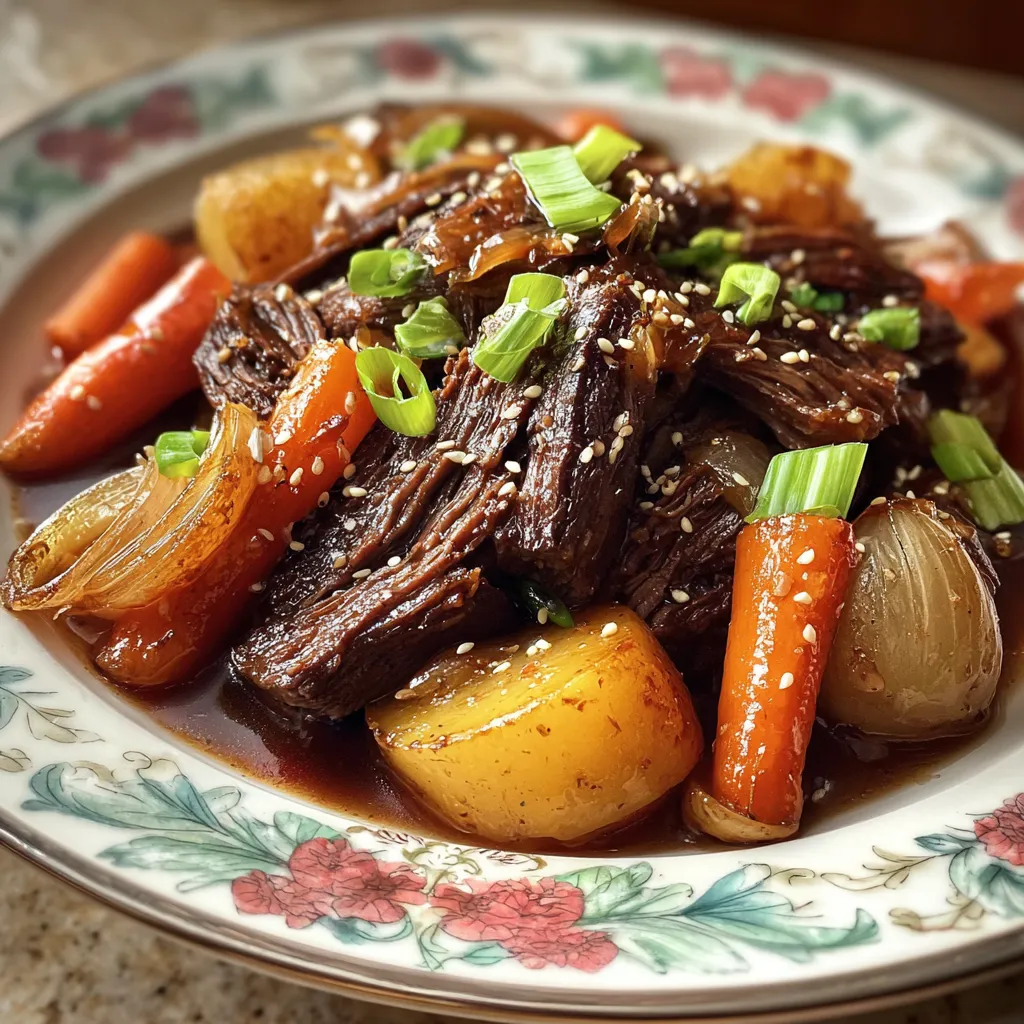

Korean Style Pot Roast
Description
Fragrant ginger, garlic, and chili paste meld into a rich broth that caramelizes the roast’s crust. As it simmers, the beef yields to your fork, while vegetables soak up that bold, savory-spicy essence.
Ingredients
Instructions
-
Heat vegetable oil in a large Dutch oven over medium-high heat until shimmering.
-
Season the beef roast lightly with salt and pepper, then sear on all sides until browned, about 4 minutes per side. Remove and set aside.
-
In the same pot, add onion, garlic, and ginger; sauté for 2 to 3 minutes until fragrant and translucent.
-
Stir in soy sauce, gochujang, gochugaru, brown sugar, and sesame oil to form a paste. Cook for 1 minute.
-
Return the roast to the pot, then pour in beef broth. Bring to a simmer, cover, and reduce heat to low.
-
Cook gently for 2 hours, turning the roast once halfway through.
-
After 2 hours, add carrots and potatoes, cover, and cook for another 30 to 40 minutes until vegetables are tender and meat is fork-tender.
-
Remove roast and vegetables to a serving platter; skim excess fat from the sauce and spoon it over top.
-
Garnish with sliced green onion and toasted sesame seeds before serving.
Note
- For extra depth, marinate the roast in the sauce mixture for 2 hours before searing.
- You can substitute sweet potatoes or daikon for the potatoes and carrots.
- Leftovers keep well in the refrigerator for up to 3 days and taste even better reheated.
- Serve with steamed rice or crusty bread to soak up the spicy-savory sauce.

