

Roasted Cauliflower and Chickpea Curry is a celebration of simple ingredients transformed into a vibrant, comforting meal. Crunchy roasted cauliflower florets and tender chickpeas bathe in a creamy coconut-tomato sauce, spiced with cumin, turmeric, and chili powder for warmth. Perfect for an easy weeknight dinner or a plant-based feast, each spoonful delivers a burst of flavor and satisfying texture. Grab your apron—this curry will make you fall in love with veggies all over again!
Key Ingredients
To make this curry a success, you only need a handful of vegetables, pantry staples, and warming spices:
- 600 g cauliflower florets: crunchy florets that roast to golden perfection, adding texture and a nutty backbone.
- 1 can chickpeas, drained and rinsed: hearty legumes that absorb spices and provide protein-rich heft.
- 2 tbsp olive oil: brings richness and helps roast veggies to a caramelized finish.
- 1 medium onion, finely chopped: forms the savory base, softening into sweet, aromatic layers.
- 2 cloves garlic, minced: delivers pungent depth and fragrant warmth.
- 1 tbsp fresh ginger, minced: lends a bright, spicy kick that complements the coconut.
- 400 g diced tomatoes (canned): adds tangy sweetness and liquid for the curry sauce.
- 400 ml coconut milk: gives a creamy, tropical richness that balances the spices.
- 2 tbsp curry powder: the heart of the dish, blending turmeric, coriander, and other spices.
- 1 tsp ground cumin: adds earthy, smoky notes that deepen the flavor profile.
- 1 tsp ground coriander: enhances citrusy, floral undertones in the curry.
- 1/2 tsp turmeric: brings a warm color and subtle, peppery flavor.
- 1/2 tsp chili powder: introduces a gentle heat that you can adjust to taste.
- 1 tsp salt: enhances all the flavors and ties the curry together.
- 1/2 tsp black pepper: adds a sharp, peppery finish.
- 2 tbsp fresh cilantro, chopped: brightens the dish with herbal freshness when sprinkled on top.
How To Make Roasted Cauliflower and Chickpea Curry
This recipe combines the satisfying crunch of roasted vegetables with a luscious, spiced coconut-tomato sauce. You’ll roast the cauliflower and chickpeas first to deepen their flavors, then build a fragrant curry base on the stovetop. Finally, everything comes together in a gentle simmer, melding each element into a cohesive, flavorful dish. Follow these detailed steps for a perfect result every time:
1. Preheat the oven to 220°C and line a baking sheet with parchment paper to prevent sticking and make cleanup easy.
2. In a large bowl, toss the cauliflower florets and chickpeas with 1 tbsp olive oil, salt, and pepper until each piece is evenly coated.
3. Spread the mixture on the prepared sheet in a single layer and roast for 25 minutes, flipping halfway, until the cauliflower is tender and lightly browned.
4. Meanwhile, heat the remaining 1 tbsp olive oil in a large pan over medium heat to create your curry base.
5. Add the chopped onion and cook, stirring occasionally, until translucent and lightly golden, about 5 minutes. Stir in the garlic and ginger, cooking for 1 minute more until aromatic.
6. Sprinkle in the curry powder, ground cumin, ground coriander, turmeric, and chili powder. Stir constantly for 1 minute to toast the spices and unlock their flavors.
7. Pour in the diced tomatoes and coconut milk, stirring to combine. Bring the sauce to a gentle simmer, allowing it to thicken slightly.
8. Gently fold in the roasted cauliflower and chickpeas. Simmer for another 5–10 minutes, letting the flavors meld and the sauce coat the veggies.
9. Taste and adjust seasoning with extra salt or pepper if needed. Remove from heat and garnish with fresh cilantro before serving.
Serving Suggestions
This curry shines when paired with complementary sides that soak up its creamy sauce and balance its warming spices. Here are four ways to serve it:
- Steamed Basmati Rice: Fluffy, aromatic rice is perfect for catching every drop of curry sauce.
- Warm Naan Bread: Tear pieces and use them as edible spoons to scoop up the veggies and sauce.
- Cooling Cucumber Raita: A yogurt-based side with chopped cucumber and mint that soothes the spices.
- Simple Green Salad: Toss crisp lettuce, cherry tomatoes, and a lemon-olive oil dressing for fresh contrast.
Tips For Perfect Roasted Cauliflower and Chickpea Curry
A few extra pointers can take this curry from great to exceptional. Keep these friendly tips in mind as you cook:
- Serve with steamed basmati rice or warm naan bread for a complete meal.
- Substitute other vegetables like sweet potato or bell pepper as desired.
- Store leftovers in an airtight container in the refrigerator for up to 3 days.
- Reheat gently over medium heat to preserve texture and flavor.
How To Store It
Whether you’re meal-prepping or just dealing with leftovers, proper storage keeps your curry tasting its best. Follow these methods:
- Refrigeration: Transfer cooled curry into an airtight container and chill for up to 3 days.
- Freezing: Portion into freezer-safe containers or heavy-duty bags; freeze for up to 1 month. Thaw overnight in the fridge before reheating.
- Stovetop Reheat: Warm gently over medium heat, stirring in a splash of water or coconut milk to loosen the sauce.
- Microwave: Heat individual servings covered in 30-second intervals, stirring between each to ensure even warmth.
Frequently Asked Questions
Curious about prep time, substitutions, or storage? Here are answers to common questions:
- How long does it take to prepare and cook the Roasted Cauliflower and Chickpea Curry?
It takes about 45–55 minutes in total. Preparing the ingredients takes roughly 10–15 minutes. Roasting the cauliflower and chickpeas takes 25 minutes. While they roast, you’ll build the curry base in about 10 minutes, then simmer everything together for another 5–10 minutes.
- Can I substitute the coconut milk with another ingredient?
Yes. You can replace coconut milk with an equal amount of cashew cream or almond milk thickened with 2 tablespoons of plain yogurt for creaminess. If you prefer a lighter curry, use light coconut milk or a mix of low-fat coconut milk and unsweetened almond milk, keeping the overall volume at 400 ml to maintain the recipe’s balance.
- How can I adjust the spice level to make the curry milder or hotter?
To make it milder, reduce or omit the chili powder and use only ½ teaspoon of curry powder. For a spicier version, increase chili powder to 1 teaspoon or add a pinch of cayenne. You can also stir in sliced fresh chilies or a dash of hot sauce at the end of cooking. Taste the curry before adding extra heat to avoid overpowering the other flavors.
- What are the best ways to store and reheat leftovers?
Store leftovers in an airtight container in the refrigerator for up to 3 days. When reheating, warm gently over medium heat on the stovetop, stirring occasionally and adding a splash of water or coconut milk to loosen the sauce. You can also microwave individual portions, covered, in 30-second intervals, stirring between each interval to ensure even heating.
- Is it possible to use dried chickpeas instead of canned?
Yes. Rinse and soak 200 g of dried chickpeas in cold water for at least 8 hours or overnight. Drain, rinse, and cook them in fresh water until tender (about 60–90 minutes). Drain well, then proceed with tossing in oil, salt, and pepper before roasting alongside the cauliflower.
- What other vegetables can I add or substitute in this curry?
You can add diced sweet potato, bell peppers, or green beans for extra color and nutrition. If using firmer vegetables like sweet potato, toss them with the cauliflower in step 2 and roast until tender. For leafy greens such as spinach or kale, stir them in during the final 5 minutes of simmering so they wilt but retain a bright color.
- How can I ensure the cauliflower comes out perfectly roasted and not soggy?
Cut the florets into uniform pieces to promote even cooking. Spread them in a single layer on the baking sheet without overcrowding; this allows hot air to circulate and encourages browning. Halfway through the 25-minute roast, shake or flip the florets and chickpeas to brown all sides. Higher oven heat (220 °C) helps achieve a crisp exterior while keeping the interior tender.
- What are some recommended serving suggestions to complement this curry?
Serve with steamed basmati rice or warm naan to soak up the sauce. A side of cooling cucumber raita or a simple green salad dressed with lemon and olive oil balances the curry’s warmth. Garnish with extra chopped cilantro, a squeeze of lime juice, or toasted nuts like cashews for added texture and flavor.
What Makes This Special
This curry stands out thanks to its crunchy roasted cauliflower, protein-packed chickpeas, and a dreamy coconut-tomato sauce spiced just right with curry powder, cumin, and turmeric. The contrast between the caramelized veggies and the creamy sauce delivers layers of flavor in every bite. It’s easy enough for a cozy weeknight yet festive enough to serve to friends—plus, it’s entirely plant-based. Feel free to print this article and tuck it into your recipe binder. Drop a comment or question below if you give it a whirl or need a hand perfecting those golden florets!
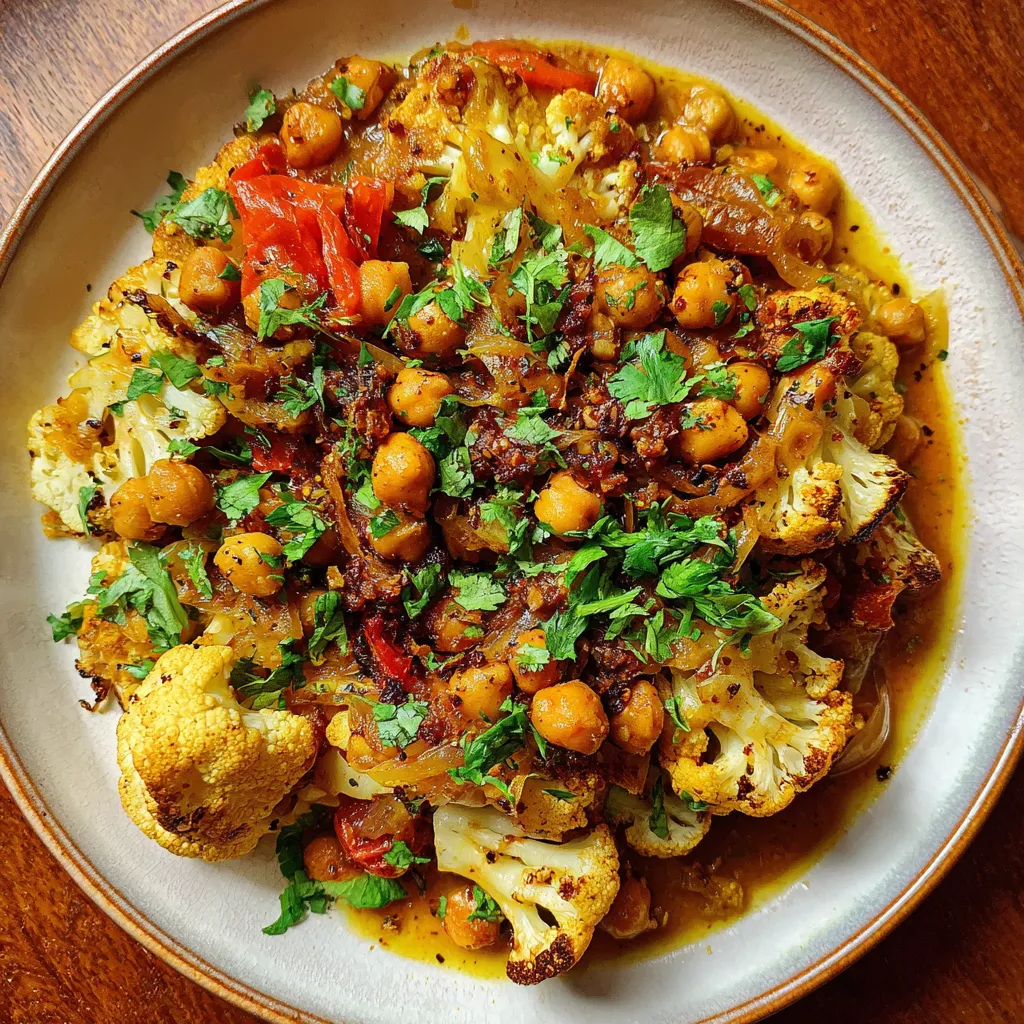

Roasted Cauliflower and Chickpea Curry
Description
Roasted cauliflower florets and chickpeas simmer in a coconut-tomato curry, releasing notes of ginger, cumin, and turmeric. Each spoonful offers a creamy texture, aromatic spice, and a pop of tender vegetables.
Ingredients
Instructions
-
Preheat the oven to 220°C and line a baking sheet with parchment paper.
-
In a bowl, toss cauliflower florets and chickpeas with 1 tbsp olive oil, salt, and pepper.
-
Spread the mixture on the prepared sheet and roast for 25 minutes, until the cauliflower is tender and lightly browned.
-
Meanwhile, heat remaining olive oil in a large pan over medium heat.
-
Add onion and cook until translucent, about 5 minutes. Stir in garlic and ginger and cook for 1 minute more.
-
Add curry powder, ground cumin, ground coriander, turmeric, and chili powder, stirring constantly for 1 minute to release the spices’ aromas.
-
Pour in diced tomatoes and coconut milk, then bring to a gentle simmer.
-
Stir in the roasted cauliflower and chickpeas, simmering for 5–10 minutes until the flavors meld.
-
Adjust seasoning if needed and remove from heat. Garnish with fresh cilantro before serving.
Note
- Serve with steamed basmati rice or warm naan bread for a complete meal.
- Substitute other vegetables like sweet potato or bell pepper as desired.
- Store leftovers in an airtight container in the refrigerator for up to 3 days.
- Reheat gently over medium heat to preserve texture and flavor.

