

Lemon Caper Pasta brings together bright lemon juice, briny capers, and garlic in a silky butter–olive oil sauce that comes together in minutes. Finished with fresh parsley and a sprinkle of Parmesan, this quick weeknight dinner tastes like you spent hours in the kitchen—without the sweat. Whether you’re craving a light, tangy meal or looking to impress guests on short notice, this dish hits all the right notes. Dive in and discover why this simple pasta recipe deserves a permanent spot in your rotation.
Key Ingredients
Here’s what you need to make this vibrant Lemon Caper Pasta shine:
- 8 ounces pasta: Durable base that soaks up the zesty, caper-studded sauce.
- 2 tablespoons olive oil: Adds fruity richness and helps emulsify the butter for a smooth coating.
- 2 tablespoons unsalted butter: Enriches the sauce with a silky mouthfeel and balances acidity.
- 3 cloves garlic minced: Infuses a savory punch and aromatic depth without overwhelming the lemon.
- 2 tablespoons capers drained: Briny pops that perfectly complement the citrus brightness.
- 1 tablespoon lemon zest: Contributes concentrated lemon aroma and lively tang.
- 2 tablespoons lemon juice: Delivers fresh, citrusy flavor and helps form the sauce.
- 1/4 teaspoon crushed red pepper flakes: Lends a subtle heat that lifts the overall flavor.
- Salt to taste: Enhances all the natural flavors.
- Freshly ground black pepper to taste: Adds warm spice and balance.
- 1/4 cup chopped fresh parsley: Offers herbaceous color and a fresh finish.
- 1/4 cup grated Parmesan cheese: Melts into the sauce for nutty, savory richness.
- 1/2 cup reserved pasta cooking water: The secret to a silky, clingy sauce that coats every noodle.
How To Make Lemon Caper Pasta
Creating this Lemon Caper Pasta is super approachable: you’ll cook the noodles until they’re perfectly al dente, build a fragrant garlic–caper–lemon sauce in a skillet, then toss it all together with butter, olive oil, Parmesan, and a splash of starchy pasta water. That reserved water is your magic ingredient for a luscious finish that binds the sauce and noodles. Just follow these straightforward steps, and you’ll have a bright, flavorful dinner on the table in about 20 minutes.
1. Bring a large pot of salted water to a rolling boil and cook the pasta until al dente according to package instructions. Before draining, ladle out and reserve 1/2 cup of the pasta cooking water, then drain the noodles well.
2. While the pasta cooks, heat the olive oil and unsalted butter in a large skillet over medium heat until the butter melts and the mixture starts to shimmer, indicating the fat is hot and ready.
3. Add the minced garlic to the skillet and sauté, stirring constantly, for about 1 minute until it becomes fragrant but stops short of browning to avoid bitterness.
4. Sprinkle in the drained capers and crushed red pepper flakes, stirring for 30 seconds so their briny and spicy notes bloom in the hot fat.
5. Stir in the lemon zest and lemon juice, mixing well to combine, then remove the skillet from the heat to preserve the fresh citrus aroma.
6. Add the drained pasta to the skillet and use tongs to toss it in the sauce. Gradually add the reserved pasta water a little at a time until you achieve a silky, clingy consistency.
7. Sprinkle in the Parmesan cheese and chopped parsley, tossing briefly until the cheese melts and the herbs are evenly distributed. Season with salt and freshly ground black pepper to taste.
8. Divide the pasta among plates and garnish with extra parsley or capers for a professional finish before serving.
Serving Suggestions
When it comes to plating your Lemon Caper Pasta, a few simple touches can elevate the experience. Whether you’re dishing it up for a casual family dinner or a special date night, these serving ideas will make each forkful feel extra special.
- Top with grilled shrimp for a protein boost and a smoky, charred contrast to the lemony sauce.
- Serve alongside a crisp green salad dressed with a lemon–olive oil vinaigrette to lighten the meal.
- Offer crusty bread to mop up residual sauce—no drop of that buttery, tangy goodness should go to waste.
- Pair with a chilled glass of dry white wine, like Sauvignon Blanc, whose citrus notes mirror the pasta’s brightness.
Tips For Perfect Lemon Caper Pasta
These friendly tips will help you nail Lemon Caper Pasta every time, whether you’re a beginner or a seasoned home cook:
- Use high-quality pasta: The better the pasta, the firmer the bite and the more it clings to the lemon–caper sauce for maximum flavor in every forkful.
- Adjust red pepper flakes: Tweak the 1/4 teaspoon to dial the heat up or down—half for a gentle warmth or double for a lively kick.
- Reserve pasta water: That starchy water is magic for creating a silky, cohesive sauce that coats each noodle beautifully.
- Serve immediately: Pasta is at its peak flavor and texture right off the stove, so plate and enjoy to avoid a gummy sauce.
How To Store It
If you have leftovers (good problem!), proper storage will keep your Lemon Caper Pasta tasting fresh and vibrant. Follow these methods to maintain that bright, tangy profile and silky sauce texture:
- Refrigeration: Transfer cooled pasta into an airtight container and keep in the fridge for up to 2 days to preserve flavor and prevent drying out.
- Freezing: Portion the pasta into freezer-safe containers, leaving a little headspace for expansion. Freeze for up to 1 month; thaw overnight in the refrigerator before reheating.
- Thawing: Move frozen portions to the fridge several hours before reheating—this gentle thaw helps maintain noodle integrity.
- Reheating: Warm gently in a skillet over low heat with a splash of reserved water or olive oil to restore the saucy consistency without overcooking.
Frequently Asked Questions
Here are answers to the most common questions about Lemon Caper Pasta—no guesswork required!
- How long does it take to prepare this recipe?
The total time is about 20–25 minutes. Plan for 5–10 minutes of prep—mincing garlic, zesting and juicing the lemon, and measuring ingredients—and 10–15 minutes of cooking, which includes boiling the pasta until al dente and sautéing the sauce components.
- What type of pasta works best for Lemon Caper Pasta?
High-quality long strands like spaghetti or linguine work beautifully because their flat surfaces catch the garlic-lemon sauce, but short shapes like penne or fusilli also hold the capers and peppers well. Choose a pasta you enjoy, just adjust cooking time according to the package.
- Why is reserving pasta cooking water important and how should I use it?
The starchy pasta water acts as a natural thickener and emulsifier, helping the olive oil, butter, lemon juice, and cheese cling to each strand. After draining the pasta, add the reserved water a little at a time while tossing until you reach a creamy, coat-the-pasta consistency without making the dish soupy.
- How can I control the heat level in this dish?
The recipe calls for 1/4 teaspoon of crushed red pepper flakes for a light kick. To reduce heat, cut the flakes in half or omit them entirely. To turn up the spice, double the flakes or finish each plate with an extra pinch. Always taste as you go so you hit your desired spice level.
- What’s the best way to sauté garlic without burning it?
Keep the skillet over medium heat and watch the garlic closely. Add it right after the butter melts and the oil shimmers, stir continuously for about 30–60 seconds, then proceed with the capers. If the garlic begins to turn golden brown too quickly, lower the heat immediately to prevent bitterness.
- Can I substitute any ingredients if I don’t have exactly what the recipe calls for?
You can swap unsalted butter with additional olive oil for a lighter version, though you’ll lose some richness. If you’re out of capers, finely chopped green olives can mimic the briny pop—just adjust salt accordingly. Fresh parsley can be replaced with basil or chives for a different herb note.
- How should I store and reheat leftovers to maintain the best texture?
Store any leftovers in an airtight container in the refrigerator for up to 2 days. When reheating, gently warm the pasta in a skillet over low heat with a splash of water or olive oil to loosen the sauce and prevent sticking. Avoid the microwave if possible, as it can make the sauce separate.
What Makes This Special
Lemon Caper Pasta stands out because it marries zesty citrus, briny capers, and garlic in a buttery sauce that’s both simple and sophisticated. The trick is that reserved pasta water—it transforms oil and cheese into a velvety coating, making each bite irresistibly creamy. It’s perfect for weeknights yet impressive enough for guests. Print this article, tuck it into your recipe binder, and whip it up whenever you need a fast, flavor-packed meal. Give it a go, and let me know in the comments how it turned out or if you have any questions!
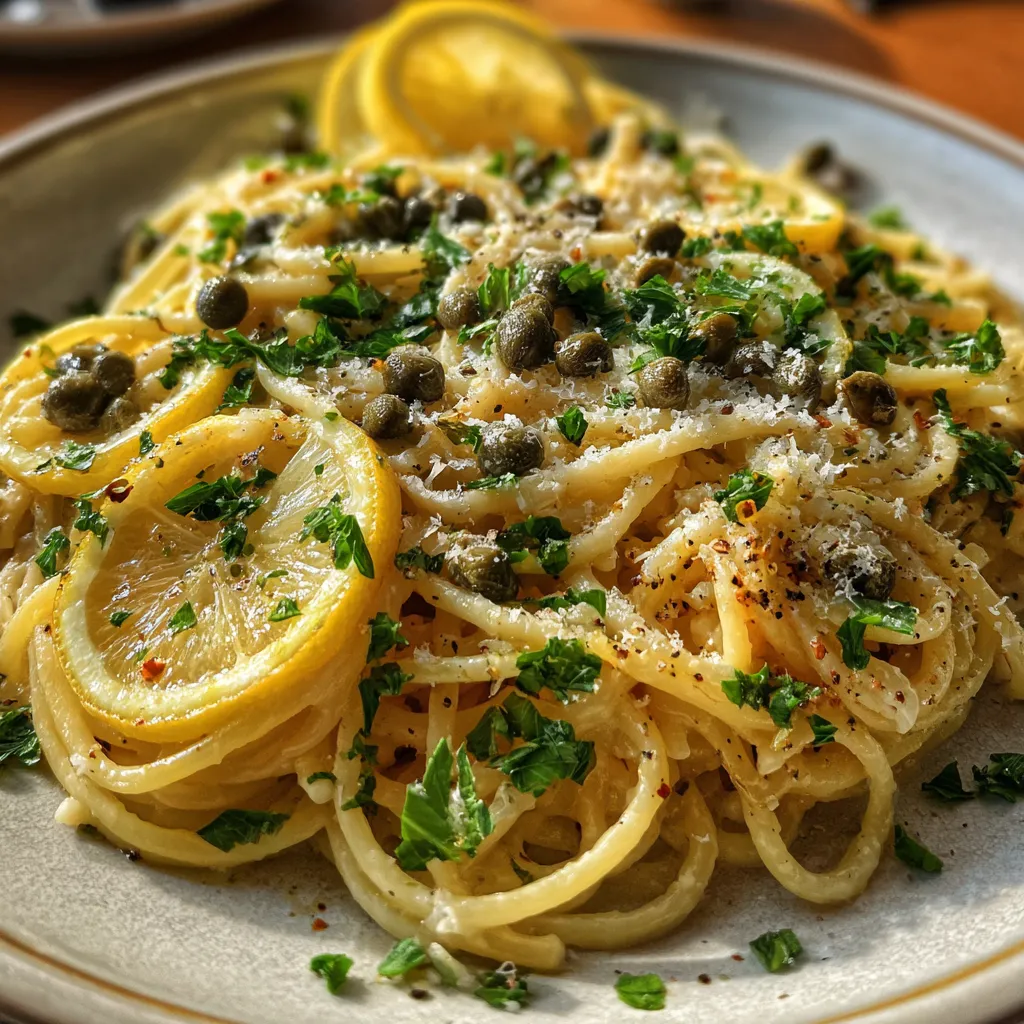

Lemon Caper Pasta
Description
This pasta marries bright lemon juice, briny capers, and garlic in a silky butter-olive oil sauce. Tossed with Parmesan and parsley, each mouthful bursts with fresh, balanced flavor in minutes.
Ingredients
Instructions
-
Bring a large pot of salted water to a boil and cook pasta until al dente according to package instructions, then reserve 1/2 cup cooking water and drain the pasta.
-
While pasta cooks, heat olive oil and butter in a large skillet over medium heat until the butter is melted and the mixture is shimmering.
-
Add garlic to the skillet and sauté for about 1 minute until fragrant but not browned.
-
Stir in capers and red pepper flakes and cook for 30 seconds.
-
Add lemon zest and lemon juice and stir to combine, then remove skillet from heat.
-
Add drained pasta to the skillet and toss to coat with the sauce, adding reserved pasta water a little at a time until the sauce reaches desired consistency.
-
Stir in Parmesan cheese and chopped parsley and season with salt and freshly ground black pepper to taste.
-
Divide pasta among serving plates and garnish with extra parsley or capers if desired.
Note
- Use high-quality pasta for best texture
- Adjust red pepper flakes for desired level of heat
- Reserve pasta water to help bind the sauce
- Serve immediately for best flavor and texture

