

If you’re craving a vibrant weeknight dinner that’s both comforting and packed with bold flavors, these Korean BBQ Chicken Bowls are your new best friend. Picture spicy-sweet gochujang-glazed chicken sizzling to a caramelized finish, mingling garlic and ginger aromas in every bite. Piled atop fluffy rice with crisp shredded carrots, cooling cucumber, and tangy kimchi, this spicy-sweet Korean-style chicken bowl delivers an irresistible balance of textures and tastes. Let’s dive in and make dinner unforgettable!
Key Ingredients
Before we dive into cooking, let’s meet the stars of these bowls and see how each one pulls its weight in flavor and texture.
- 1 pound chicken thighs boneless skinless: Juicy, tender protein that soaks up every drop of the spicy-sweet marinade.
- 3 tablespoons soy sauce: Provides savory umami depth and essential saltiness.
- 2 tablespoons gochujang: Korean chili paste that adds vibrant color and a spicy-sweet kick.
- 1 tablespoon brown sugar: Balances the heat with sweetness and helps caramelize the chicken.
- 1 tablespoon sesame oil: Delivers a toasty, nutty aroma that elevates the marinade.
- 2 teaspoons rice vinegar: Brings bright acidity to cut through the richness.
- 3 cloves garlic minced: Infuses bold, aromatic flavor throughout the dish.
- 1 teaspoon fresh ginger grated: Adds warm, zesty notes to balance the garlic.
- 1/4 teaspoon ground black pepper: Gives a subtle, rounding heat.
- 2 tablespoons vegetable oil: For searing the chicken to a golden-brown crust.
- 2 cups cooked white rice: The perfect fluffy base that soaks up all those delicious juices.
- 1 cup carrots shredded: Lends crunchy sweetness and vivid color.
- 1 cup cucumber sliced: Offers crisp, cooling contrast to the spicy chicken.
- 1/2 cup kimchi chopped: Brings tangy, fermented brightness to each bowl.
- 2 green onions sliced: Fresh garnish that adds a pop of flavor and color.
- 1 tablespoon sesame seeds: Final sprinkle for delicate crunch and nutty accent.
How To Make Korean BBQ Chicken Bowls
Let’s roll up our sleeves and transform those ingredients into a crave-worthy meal. You’ll start by crafting a bold gochujang marinade, then sear the chicken until it’s beautifully caramelized. Finally, we’ll assemble the bowls with fluffy rice, crisp veggies, and tangy kimchi for a harmonious blend of textures and tastes that come together in minutes.
1. In a medium bowl, whisk together soy sauce, gochujang, brown sugar, sesame oil, rice vinegar, garlic, ginger, and black pepper until the brown sugar dissolves and the marinade is smooth.
2. Add chicken thighs to the marinade and toss to coat each piece evenly. Cover the bowl and refrigerate for at least 15 minutes to let those flavors infuse.
3. Heat vegetable oil in a large skillet over medium-high heat until shimmering and hot.
4. Remove chicken from the marinade, shaking off any excess. Place the thighs in the hot skillet without crowding, and sear for about 5 minutes per side until deeply browned and cooked through.
5. Transfer the chicken to a cutting board and let it rest for a few minutes. Slice into strips against the grain for maximum tenderness.
6. Divide the cooked rice evenly among serving bowls, creating a fluffy base.
7. Top each bowl with sliced chicken, shredded carrots, sliced cucumber, and chopped kimchi for a mix of flavors and textures.
8. Garnish with sliced green onions and sesame seeds right before serving to preserve their fresh crunch.
Serving Suggestions
These Korean BBQ Chicken Bowls shine on their own, but a few thoughtful extras can elevate your meal even more. Whether you’re hosting friends or just treating yourself, these suggestions will take your bowl from delicious to memorable.
- Pair with a side of steamed broccoli or bok choy tossed in sesame oil for vibrant greens.
- Drizzle on a swirl of gochujang mayo or spicy aioli for creamy, fiery richness.
- Add a soft-boiled egg or a runny fried egg on top for extra protein and silky yolk goodness.
- Serve alongside a crisp cucumber salad dressed in rice vinegar, sesame oil, and a pinch of sugar for cooling contrast.
Tips For Perfect Korean BBQ Chicken Bowls
Nailing these bowls is all about balancing bold flavors and textures, and a few simple tweaks can make your life easier while boosting taste. Follow these friendly insider notes to make sure each bowl is as delicious as possible!
- You can substitute chicken breasts for thighs if you prefer a leaner option; just watch the cooking time so they don’t dry out.
- Marinate the chicken overnight to deepen the gochujang flavor and tenderize the meat perfectly.
- Serve with extra gochujang or sriracha on the side for anyone craving additional heat or a spicier finish.
- Use brown rice or cauliflower rice instead of white for a heartier or lower-carb base that still soaks up all those delicious juices.
How To Store It
Leftovers of these bowls save beautifully and make for a quick, satisfying meal on busy days. Proper storage ensures your chicken stays juicy and the veggies maintain their crunch.
- Refrigerate leftovers in airtight containers for up to 3 days, keeping the chicken and rice separate if possible to prevent sogginess.
- Freeze portions in meal-sized packs for up to 2 months; thaw in the fridge overnight before reheating.
- Reheat rice with a splash of water in the microwave or on the stovetop to restore its fluffy texture.
- Warm chicken in a hot skillet over medium heat for 2–3 minutes per side, just until heated through to avoid overcooking.
Frequently Asked Questions
Got questions? I’m here to help make your cooking journey smooth and delicious!
- How long does it take to prepare and cook these Korean BBQ Chicken Bowls?
The total time is about 40 minutes. Preparation—whisking the marinade, chopping garlic, ginger, carrots, cucumber, and kimchi—takes roughly 15 minutes. You should marinate the chicken for at least 15 minutes, though longer (up to overnight) enhances the flavor. Cooking the chicken in the skillet takes about 10–12 minutes (5 minutes per side) and slicing adds another 2 minutes. Assembling the bowls with rice and toppings takes around 5 minutes.
- Can I substitute chicken breasts for thighs, and will the cooking time change?
Yes, you can use boneless, skinless chicken breasts instead of thighs. Breasts cook slightly faster and can dry out if overcooked. Sear them over medium-high heat for about 4–5 minutes per side, then check for an internal temperature of 165°F. If breasts are very thick, you may want to pound them to an even thickness or slice them in half horizontally before cooking.
- How can I adjust the spice level if I find gochujang too mild or too hot?
To increase heat, add a teaspoon or two of sriracha or Korean chili flakes (gochugaru) to the marinade or drizzle on the finished bowls. To reduce spice, use only one tablespoon of gochujang and omit extra chili additions. You can also stir a little honey into the marinade to balance any extra heat for a milder, sweeter profile.
- What tips ensure the rice doesn’t become soggy under the chicken?
Use freshly cooked rice that’s slightly cooled, not piping hot, so it absorbs sauces without becoming mushy. Fluff the rice with a fork and spread it in the bowls before adding any extra marinade or juices. Place the sliced chicken on top rather than mixing immediately. This layering helps keep the rice texture intact until you’re ready to combine and eat.
- How should I store and reheat leftovers for the best texture and flavor?
Store chicken and rice separately in airtight containers in the refrigerator for up to 3 days. When reheating, warm the rice in the microwave or on the stove with a splash of water to steam it gently. Reheat the chicken in a skillet over medium heat for 2–3 minutes per side, just until warmed through, to avoid overcooking. Assemble bowls after reheating and garnish with fresh green onions and sesame seeds.
- Can I make this recipe gluten-free?
Absolutely. Swap regular soy sauce with tamari or a gluten-free soy sauce alternative. Double-check that your gochujang and rice vinegar don’t contain hidden gluten (some brands do). If you’re replacing vegetable oil with sesame oil, use refined sesame oil to avoid a strong flavor, or stick with a neutral oil like avocado.
- What are some additional toppings or side dishes that pair well with these bowls?
You can add pickled red onions, shredded lettuce, or kimchi slaw for extra crunch and acidity. A soft-boiled egg or a fried egg on top adds creaminess. For sides, serve with steamed broccoli, sautéed spinach, or a simple cucumber salad dressed in rice vinegar and sesame oil. A drizzle of extra gochujang mayo or spicy aioli also complements the savory chicken.
What Makes This Special
These Korean BBQ Chicken Bowls hit the sweet spot between bold, spicy gochujang flavors and fresh, crisp veggies, all tucked into a comforting bed of rice. It’s a playful mash-up of textures—caramelized chicken, crunchy carrots, cooling cucumber, and tangy kimchi—that keeps every bite exciting. Whether it’s a weeknight supper or meal prep for the week ahead, this recipe is fun, fast, and totally crave-worthy. Go ahead, print this article, bookmark it, and drop a comment if you whip it up or have questions—I can’t wait to hear how your bowls turn out!
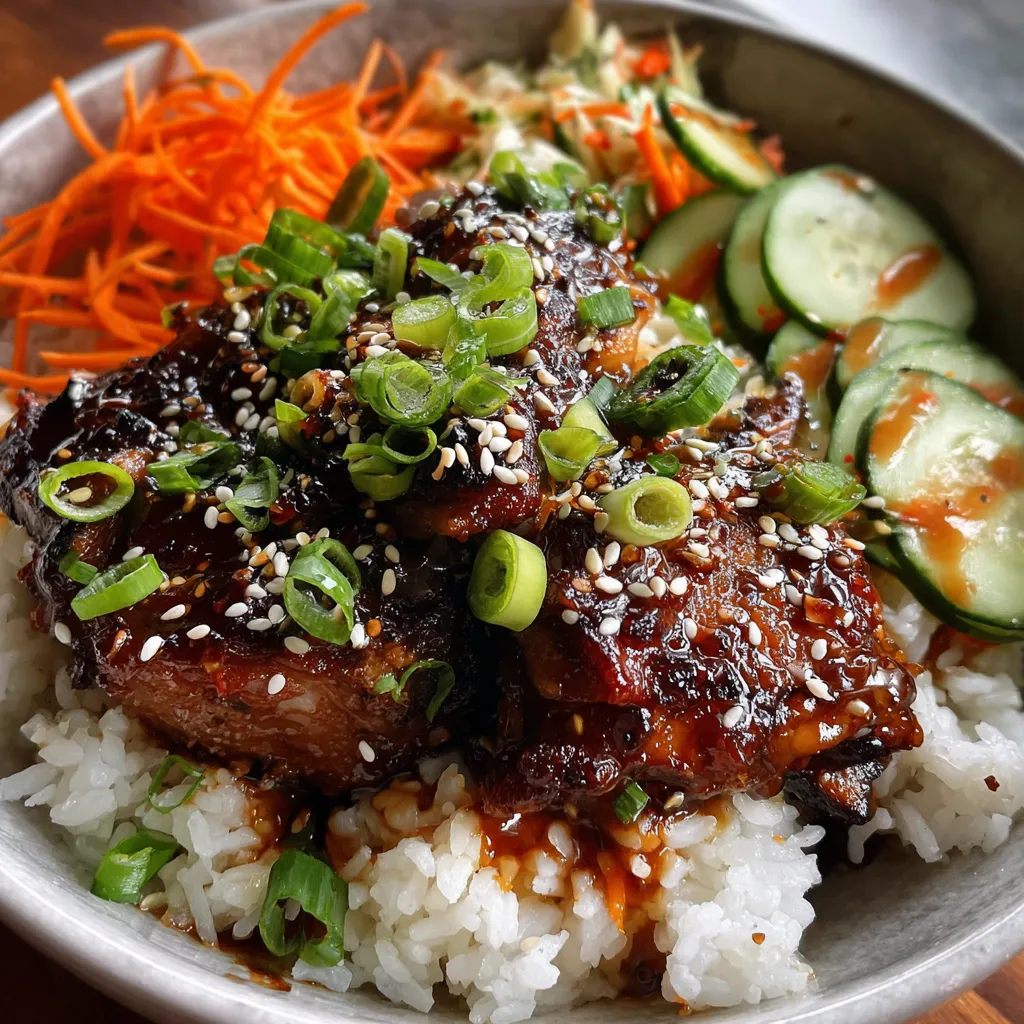

Korean BBQ Chicken Bowls
Description
Gochujang-marinated chicken sizzles to a caramelized finish, mingling garlic and ginger aromas. Piled atop fluffy rice, shredded carrots, sliced cucumber, and tangy kimchi for a bold, balanced bowl.
Ingredients
Instructions
-
In a medium bowl whisk together soy sauce, gochujang, brown sugar, sesame oil, rice vinegar, garlic, ginger, and black pepper.
-
Add chicken thighs to the marinade and toss to coat evenly. Cover and refrigerate for at least 15 minutes.
-
Heat vegetable oil in a large skillet over medium-high heat.
-
Remove chicken from the marinade, shake off excess, and cook in the hot skillet until browned and cooked through, about 5 minutes per side.
-
Transfer chicken to a cutting board and slice into strips.
-
Divide cooked rice among serving bowls.
-
Top each bowl with sliced chicken, shredded carrots, sliced cucumber, and chopped kimchi.
-
Garnish with sliced green onions and sesame seeds before serving.
Note
- You can substitute chicken breasts for thighs if preferred
- Marinate the chicken overnight for deeper flavor
- Serve with extra gochujang or sriracha for more heat
- Use brown rice or cauliflower rice for a healthier option

