
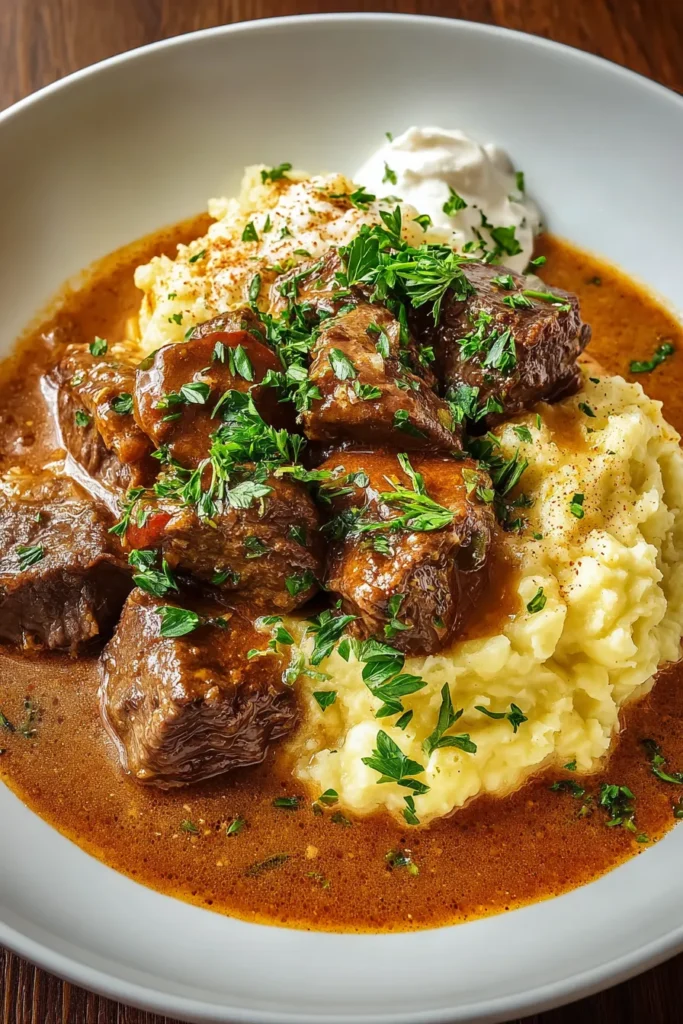
There’s something deeply satisfying about a dish that simmers gently on the stovetop while you settle in for a cozy evening. Creamy Bavarian Braised Rahmgulasch is one of those treasures that warms you from the inside out. Tender cubes of beef chuck absorb a symphony of sweet and smoky paprika, rich tomato paste, and a hint of caraway, creating a sauce so velvety it practically beckons you to dive in. Every stirring motion releases layers of flavor—from the bright tang of tomato paste melding with the warm earthiness of paprika to the subtle bite of minced garlic and the complex notes of dry white wine.
As the gulasch bubbles away, your kitchen fills with enticing hints of comfort and tradition. This isn’t just dinner; it’s a celebration of Bavarian heritage, where rustic simplicity meets indulgent creaminess. The final touch of sour cream swirls into the sauce, mellowing the spices and adding that signature “rahm” richness. Whether you’re sharing it with family on a chilly night or serving guests who appreciate a hearty meal, this gulasch stands out as a satisfying centerpiece. It’s a versatile dish too—perfect with spaetzle, a mound of fluffy rice, or a slab of crusty bread to soak up every last drop of that luscious sauce.
The beauty of this recipe lies in its balance of flavors and textures. You start by building a sturdy foundation of seared beef and golden onions, then layer in aromatic spices and deglazing liquids. After a slow, gentle simmer, the meat transforms into succulent bites that practically melt in your mouth. And when you stir in the creamy sour cream at the end, the sauce takes on an almost velvety sheen. This intermediate-level recipe offers a rewarding cooking experience—one that invites you to slow down, savor the process, and look forward to a soul-warming meal. Trust me, once you’ve tasted homemade Rahmgulasch, you’ll want to keep this recipe in heavy rotation all winter long.
To make this Bavarian classic come alive, we rely on a handful of star ingredients that each play a crucial role in developing flavor, texture, and richness. From hearty beef to a swirl of sour cream, every element contributes to the dish’s comforting appeal.
This cut is well-marbled and ideal for slow cooking. As it braises, the fat and connective tissues break down, resulting in tender, flavorful bites.
Provides a neutral frying medium to sear the beef without overpowering the other ingredients. It helps achieve a beautiful brown crust on each cube.
Finely chopped and sautéed until translucent and golden, onions form the sweet, savory base of the sauce, lending depth and body.
Minced garlic adds a fragrant, slightly pungent layer of flavor. Just a minute of cooking unlocks its aromatic qualities without burning.
Intensely concentrated and slightly sweet, tomato paste enhances color and umami, drawing all the spices together in the sauce.
Whether sweet, hot, or a combination, paprika brings warm, smoky notes with a hint of peppery bite. It’s the spice that gives the gulasch its signature hue.
These tiny seeds introduce an earthy, slightly licorice-like flavor that complements the paprika and adds an authentic Bavarian twist.
A robust liquid foundation that keeps the meat moist while infusing the sauce with beefy richness.
Adds acidity and complexity, balancing the richness of the cream and beef. It also helps deglaze the pot, scraping up those savory browned bits.
Swirled in at the end, sour cream mellows the spices and gives the sauce its characteristic creaminess without being overly heavy.
Simple seasonings that enhance every other ingredient. Adjust carefully at the end to suit your taste.
Sprinkled over the meat and onions, flour thickens the sauce slightly, ensuring it clings luxuriously to each piece of beef.
Just a splash brightens the entire dish, cutting through richness and highlighting the layers of spice.
Infuses a subtle earthy note during the long simmer, then is removed before serving.
A final garnish of chopped parsley adds a burst of color and a fresh, herbaceous finish.

Let’s dive into the cooking process step by step. This journey transforms simple ingredients into a luxuriously creamy, deeply flavored gulasch that’s perfect for cozy dinners or special gatherings.
1. Begin by heating the vegetable oil in a large, heavy-bottomed pot or Dutch oven over medium-high heat. A hot pot ensures the beef cubes sear quickly, locking in juices and creating flavorful crusts.
2. Add the beef cubes in batches to avoid overcrowding. Brown each batch on all sides, letting the exterior caramelize before flipping. Once well-seared, transfer the beef to a plate and set aside.
3. In the same pot, drop in the chopped onions. Sauté them, stirring occasionally, until they become translucent and golden—this usually takes about 5–7 minutes. The rendered onion edges contribute delicious sweetness and color.
4. Stir in the minced garlic and cook for another minute until fragrant, being careful not to let it burn. The garlic will meld with the onions, amplifying the aromatic base.
5. Add the tomato paste, paprika, and caraway seeds (if using). Stir well to coat the onions and garlic evenly with the spices, blooming their flavors to full intensity.
6. Return the browned beef to the pot, mixing it thoroughly with the onion and spice mixture so each cube is blanketed in color and seasoning.
7. Sprinkle the flour evenly over the beef and onions, then stir to combine. This step helps thicken the sauce later, giving it a silky texture.
8. Pour in the beef broth and dry white wine, using a wooden spoon to deglaze the pot. Scrape up any flavorful browned bits stuck to the bottom—those are pure gold for your sauce.
9. Add the apple cider vinegar and the bay leaf. Bring the mixture to a simmer, allowing the flavors to meld and develop before the long cook.
10. Reduce the heat to low, cover the pot, and let it simmer gently for about 1.5 to 2 hours. During this time, the connective tissues in the beef break down, resulting in tender, melt-in-your-mouth bites.
11. Once the beef is fall-apart tender, remove and discard the bay leaf. Stir in the sour cream until the sauce becomes luxuriously smooth and creamy.
12. Taste and adjust with salt and freshly ground black pepper to lift the flavors.
13. Let the gulasch cook for an additional 5–10 minutes on low heat, ensuring all the elements harmonize perfectly.
14. Serve hot, garnished with chopped fresh parsley. This gulasch shines alongside spaetzle, fluffy rice, or crusty bread to soak up every drop of its velvety sauce.
This Creamy Bavarian Braised Rahmgulasch is a showstopper on its own, but pairing it with the right sides and garnishes takes it to the next level. Follow these ideas to present a meal that looks as good as it tastes, making every bite a delightful experience.
Serve your gulasch over homemade or store-bought spaetzle. The pillowy dumplings soak up the creamy sauce beautifully. Just drop spoonfuls of spaetzle onto each plate, ladle the gulasch on top, and sprinkle with freshly chopped parsley.
Offer a side of bright green vegetables like broccoli, green beans, or asparagus. Steam until tender-crisp, toss in a pat of butter, and season lightly with salt. The crisp veggies contrast perfectly with the rich stew.
Warm slices of a rustic loaf—think sourdough or a seeded country bread—are ideal for sopping up every last bit of sauce. Toast lightly if you prefer some extra crunch.
A dollop of silky mashed potatoes on each plate creates a comforting bed for the gulasch. Use Yukon Gold potatoes whipped with butter and cream for maximum decadence.
Storing your Rahmgulasch properly ensures you can enjoy all those rich flavors again and again. Whether you’re saving leftovers or planning ahead, these tips will help maintain freshness, texture, and taste.
Retain as much of the creamy sauce as possible around the beef when transferring to storage containers. This helps prevent meat from drying out. Let the gulasch cool to room temperature—no more than two hours—before sealing to avoid excess condensation and bacterial growth.
Transfer cooled gulasch into a sealed, airtight container. Store in the fridge for up to 3–4 days. When reheating, warm gently on the stovetop over low heat, stirring occasionally and adding a splash of broth if needed to loosen the sauce.
For longer storage, divide the gulasch into individual or family-sized portions in freezer-safe containers or heavy-duty resealable bags. Remove as much air as possible before sealing. Label each with the date and freeze for up to 3 months. Thaw overnight in the fridge before reheating.
Whether from fridge or freezer, always reheat gently over medium-low heat. Stir often to redistribute heat evenly. If the sauce has thickened too much, add a small amount of water, broth, or cream to restore its original consistency.
Keep spaetzle, bread, or mashed potatoes in separate containers to avoid sogginess. Reheat these sides independently and assemble just before serving for the best texture.
Creamy Bavarian Braised Rahmgulasch is more than just a hearty dinner—it’s a culinary journey that brings the warmth and tradition of Bavarian comfort food right into your kitchen. Starting with well-browned beef and golden onions, then layering in the rich notes of paprika, tomato paste, and deglazing wine, this dish builds depth of flavor at every turn. The final addition of sour cream transforms the sauce into a velvety masterpiece that clings lovingly to each tender bite of meat. Whether you follow it with spaetzle, rice, or crusty bread, every mouthful feels like a hug, perfect for chilly nights, family gatherings, or any time you crave a soul-soothing meal.
Feel free to print out this article and save it for later use—whether you’re bookmarking it for a special occasion or just planning weekday comfort dinners, you’ll have all the tips and steps ready whenever the craving strikes. Remember, you can also find a FAQ below to answer any questions you might have about substitutions, techniques, or troubleshooting. I’d love to hear how your gulasch turns out—please leave a comment if you try the recipe, share your own twists, or need help along the way. Your feedback, questions, and personal stories are what make sharing recipes such a delight, so don’t hesitate to reach out!
Experience the rich flavors of tender beef simmered in a creamy, spiced sauce, perfect for cozy dinners. This Bavarian classic is a true comfort food staple.

Hey there ! I'm Julia Martinez, and welcome to my kitchen where tradition meets innovation. Growing up in a multigenerational household, I learned that the best recipes aren't just about ingredients – they're about the stories, memories, and love that get passed down through each carefully prepared dish.