
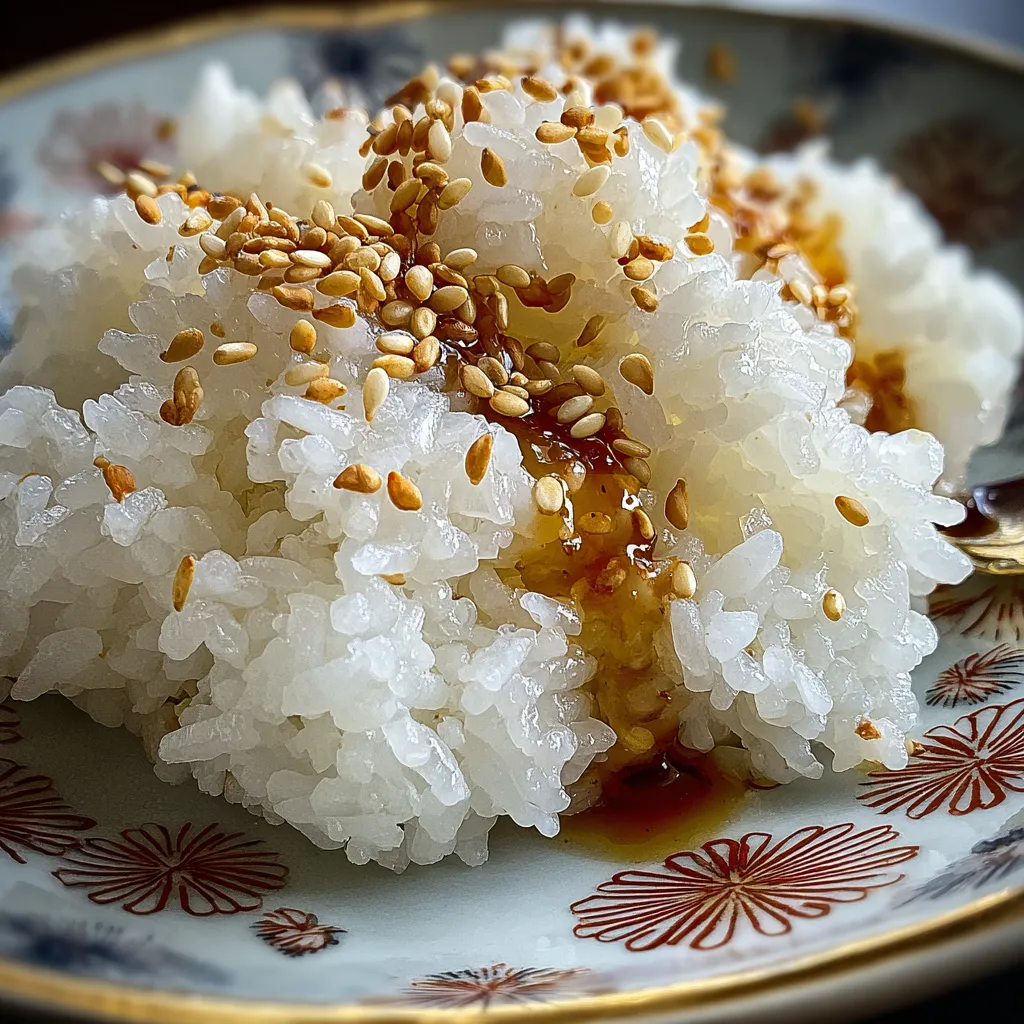
Discover how simple ingredients come together in Flavorful Steamed Sticky Sushi Rice, a glossy, perfectly seasoned bed of steamed rice that clings together in every bite, bringing authentic sushi magic to your home kitchen. Experience the gentle aroma of kombu-infused steam as soft, sticky grains shimmer with a sweet vinegar sheen—ready to cradle your favorite fillings or toppings and turn any dinner into a special occasion.
To achieve that perfect balance of stickiness, gloss, and flavor, you’ll need just a handful of pantry staples:
Mastering sushi rice is all about precision and timing. You’ll gently rinse, soak, steam, rest, and season in a sequence that builds layers of flavor and texture. From the delicate infusion of kombu to the careful folding of the vinegar dressing, every step ensures your rice ends up glossy, tender, and perfectly sticky.
1. Place sushi rice in a bowl and rinse under cold water, swirling gently until the water runs clear to remove excess starch.
2. Drain the rice thoroughly and soak in fresh water for 30 minutes to promote even hydration, then drain again.
3. Combine the rice, water, kombu, sake, and mirin in a pot or steamer; bring to a gentle boil, then cover and steam for 12 minutes over medium-low heat.
4. Remove the pot from heat, keep the lid closed, and let the rice rest for 10 minutes to finish steaming in its own steam without lifting the lid.
5. While the rice rests, mix rice vinegar, sugar, and salt in a small bowl until fully dissolved, creating a sweet-tart seasoning.
6. Remove the kombu and transfer the rice to a wooden hangiri or wide bowl, then gently fold in the vinegar mixture using a cutting motion to distribute the seasoning evenly.
7. Fan the rice as you fold to cool it quickly and develop a glossy sheen, then cover with a damp cloth until you’re ready to serve.
Whether you’re building elegant sushi rolls, vibrant bowls, or simple rice balls, the versatile nature of Flavorful Steamed Sticky Sushi Rice shines through. Its glossy grains cling together just enough to hold shape, making it ideal for classic maki or delicate nigiri. You can also scatter it beneath colorful sashimi in chirashi style, or shape it into onigiri for a portable snack any time of day. Beyond Japanese favorites, this sticky rice is a fantastic base for donburi bowls, soaking up savory sauces from teriyaki, karaage, or tempura for a comforting one-bowl dinner.
Nailing sushi rice is about attention to detail and a gentle hand. With these friendly pointers—straight from our own kitchen experiments—you’ll be on your way to flawless rice every time.
Sticky sushi rice is happiest when freshly made, but if you need to hold it for a little while, follow these simple storage tips to keep it soft and flavorful. Proper resting and covering methods will help maintain those glossy grains without drying out.
Let’s clear up any sushi rice curiosities so you can cook with confidence and ease:
A: Rinsing the rice until the water runs clear takes about 5 minutes. Soaking the drained rice for 30 minutes allows even hydration. Steaming or cooking with kombu, sake, and mirin begins with a gentle boil then covered steaming for 12 minutes. Finally, resting off heat for 10 minutes under the lid completes the process. In total, active hands-on time is about 20 minutes, with 52 minutes including soaking and resting.
A: Yes. Rinse and soak the rice as directed, then transfer it with 2 1/4 cups water, kombu, sake, and mirin into the rice cooker. Cook on the regular or sushi rice setting. Once the cycle ends, keep the lid closed and let it rest for 10 minutes before removing the kombu and transferring the rice for seasoning.
A: Kombu adds subtle umami, but you can omit it if necessary. The rice will still be flavorful thanks to sake and mirin. If you have dried shiitake mushrooms, add one small cap to the cooking liquid and remove it along with the rice’s resting period. The overall texture and taste remain very good.
A: Proper sushi rice should be glossy, sticky enough to hold shape, yet each grain should remain slightly separate. After folding in the vinegar mixture and fanning, the rice should feel moist but not soggy. If it clumps excessively, use a wider bowl to increase airflow during fanning; if it seems dry, sprinkle a few drops of water before folding to adjust moisture.
A: Sushi rice is best at room temperature and consumed within a few hours. If you must prepare ahead, keep it covered with a damp cloth at room temperature for up to two hours. Avoid refrigeration, as it will harden the rice. If you need to briefly reheat, use a steamer for 2–3 minutes, then re-cover with a damp cloth before serving.
A: A wide, nonreactive bowl such as glass or stainless steel works well. The key is having enough surface area for even seasoning and fanning. Line the bowl with a damp clean cloth if it’s not wooden to help absorb excess moisture. Proceed to fold in the vinegar mixture gently to preserve grain integrity.
A: If you increase rice to 4 cups, double all ingredients proportionally: 4 1/2 cups of water, 2 pieces of kombu, 2 tablespoons each of sake and mirin, and for the vinegar dressing use 4 tablespoons rice vinegar, 2 tablespoons sugar, and 2 teaspoons salt. Maintain the same steaming, resting, and folding techniques for consistent flavor and texture.
This sushi rice truly shines because every step—from the kombu infusion to the delicate fanning—builds layers of flavor and texture you’ll notice in every bite. The glossy grains cling just enough to hold shape, yet remain tender and distinct. It’s perfect for sushi novices and pros alike, turning a simple rice-base into a showstopper. Print and save this guide for your next sushi night, and don’t be shy—drop a comment or question below if you give it a try or need any help perfecting your rice!
Experience the gentle aroma of kombu-infused steam as soft, sticky grains shimmer with a sweet vinegar sheen. This method creates sushi rice that's tender yet cohesive, ready to cradle your favorite fillings or toppings.

Hey there ! I'm Julia Martinez, and welcome to my kitchen where tradition meets innovation. Growing up in a multigenerational household, I learned that the best recipes aren't just about ingredients – they're about the stories, memories, and love that get passed down through each carefully prepared dish.