
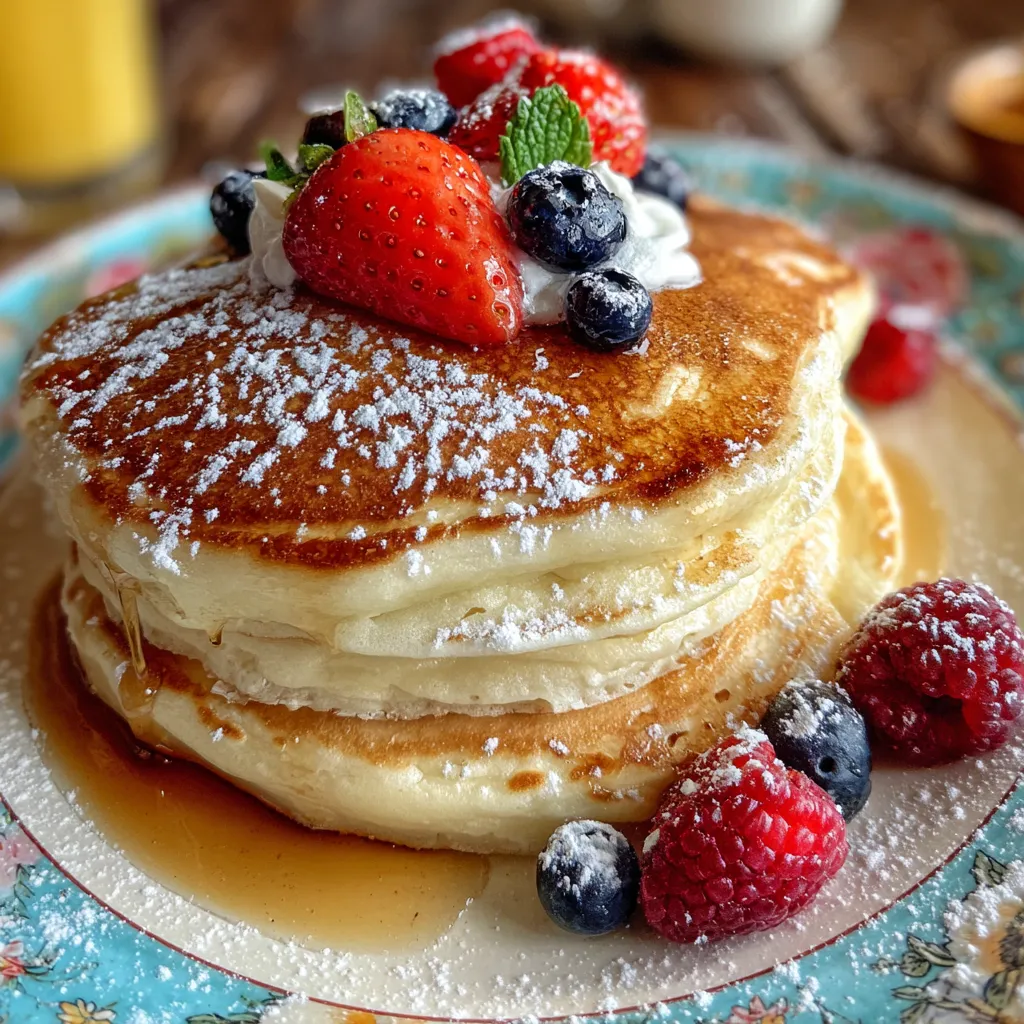
Start your morning with tall, soft pancakes that hold a pillowy texture and golden crust, perfect for syrup-soaked bites. Fluffy Old Fashioned Pancakes mix a warm vanilla-spiked batter into thick, lumpy goodness that yields golden disks, soft centers, and crisp edges. A brief rest puffs them up into airy cakes that melt on the tongue—this beginner-friendly breakfast is bound to become your go-to weekend treat.
Before you dive into flipping these beauties, here’s what you’ll need:
With just a few bowls and a hot griddle, you’ll whip up fluffy pancakes in no time. The process is straightforward: combine wet ingredients, mix dry ingredients, fold them together gently, and then let the batter rest to maximize fluffiness. Once your skillet is hot, cooking these pancakes is all about temperature control and timing—bubble formation, a quick flip, and a final golden brown finish.
1. Prepare the wet ingredients: In a medium bowl or large measuring jug, whisk together the room-temperature milk, egg, melted butter, and vanilla extract until smooth and fully combined. Make sure the melted butter is warm—not hot—to avoid cooking the egg.
2. Combine the dry ingredients: In a large mixing bowl, add the flour, sugar, baking powder, baking soda, and salt. Whisk thoroughly so the leavening agents and sugar distribute evenly, preventing clumps and ensuring a uniform rise.
3. Make the batter: Create a well in the center of the dry ingredients, then pour in the wet mixture. Using a spatula or wooden spoon, gently stir just until the flour is mostly incorporated—your batter should be thick and slightly lumpy. If it’s too stiff to pour, fold in 1–2 tablespoons of additional milk until it’s thick but pourable.
4. Rest the batter: Let the mixture sit at room temperature for 5–10 minutes. This rest allows the flour to hydrate and the baking powder to activate, giving you extra-fluffy results.
5. Preheat the pan: Place a large nonstick skillet or griddle over medium heat for 3–5 minutes until evenly hot. Lightly grease with butter or neutral oil, spreading a thin, even layer with a paper towel.
6. Cook the pancakes: Reduce heat to medium-low or medium. Pour about 1/4 cup of batter per pancake onto the skillet, leaving space between each mound. Cook until bubbles form across the surface and edges look set, about 2–3 minutes, then check for a golden-brown underside.
7. Flip and finish cooking: Slide a spatula underneath each pancake and flip quickly but gently. Cook for another 1½–3 minutes, until golden brown on the second side and the center springs back when pressed. Adjust heat if needed to prevent over-browning.
8. Keep pancakes warm: Transfer cooked pancakes to a plate or baking sheet and place in a 200°F (95°C) oven for up to 20 minutes, loosely covered with foil to retain moisture.
9. Repeat with remaining batter: Lightly re-grease the skillet between batches, adjusting heat as necessary for consistent coloring.
10. Serve: Stack warm pancakes on plates, add a pat of butter, and drizzle generously with maple syrup. Top with berries, sliced bananas, whipped cream, or a dusting of powdered sugar, and enjoy immediately.
These Fluffy Old Fashioned Pancakes shine on their own but can be elevated with a few extras. Here are some fun ways to plate and serve them for brunch or a cozy breakfast:
These pancakes are pretty foolproof, but a few insider tricks will take them from great to absolutely irresistible. Below are friendly, practical pointers to boost fluffiness, texture, and flavor—easy tweaks you’ll wish you’d known sooner!
Keeping your pancake stash fresh and ready for reheating is simple. Whether you’re planning to enjoy leftovers for tomorrow’s breakfast or stocking up for weekend guests, these storage tips will preserve flavor, texture, and that pillow-soft interior.
Got questions? Here are quick answers to the most common pancake puzzles:
The batter should be thick and slightly lumpy, just thick enough to pour slowly but not so stiff that it holds shape completely. If it feels too dense and doesn’t spread slightly when you pour, fold in 1–2 tablespoons of extra room-temperature milk until it reaches a thick but pourable consistency.
Resting the batter for 5–10 minutes at room temperature allows the flour to fully hydrate and gives the baking powder time to activate. This relaxation of gluten and early leavening reaction produces taller, more tender pancakes.
Reduce the heat to medium-low or medium, and allow the pan to reheat evenly. Make sure your skillet has been preheated 3–5 minutes and lightly greased. Cooking on slightly lower heat lets the centers cook through without overbrowning the exterior.
Yes. Using buttermilk adds a tangy flavor and extra tenderness; if you do, reduce baking powder from 1 tablespoon to 2½ teaspoons. For non-dairy alternatives, choose unsweetened almond or oat milk at room temperature and expect a minor change in flavor and rise.
Separate the egg, whisk the white to soft peaks, and fold it gently into the finished batter just before cooking. Also, be careful not to overmix the batter—small lumps are fine—and allow the 5–10 minute rest.
Place cooked pancakes on a baking sheet in a 200°F (95°C) oven for up to 20 minutes. Lightly tent with foil to retain moisture without steaming too much, and adjust the oven rack so the pancakes stay evenly warm.
Cool completely, then layer with parchment paper in a freezer-safe bag and freeze. To reheat, pop them in a toaster or warm in a 350°F (175°C) oven until hot. Avoid microwaving directly from frozen, as this can make them soggy.
Fluffy Old Fashioned Pancakes stand out thanks to their pillowy centers, crisp edges, and that warm vanilla infusion—plus a resting step that truly puffs them up sky-high. This beginner-friendly recipe works every time, whether you’re serving a casual family breakfast or hosting friends for brunch. Feel free to print this guide and save it for later, then come back and let me know how your stacks turned out. Questions, tweaks, or epic topping combos? Drop a comment or reach out—I’d love to hear your pancake triumphs!
Fluffy Old Fashioned Pancakes mix a warm vanilla-spiked batter into thick, lumpy goodness that yields golden disks, soft centers, and crisp edges. Rested batter puffs up, creating airy cakes that soak up maple syrup and melt on the tongue.

Hey there ! I'm Julia Martinez, and welcome to my kitchen where tradition meets innovation. Growing up in a multigenerational household, I learned that the best recipes aren't just about ingredients – they're about the stories, memories, and love that get passed down through each carefully prepared dish.