
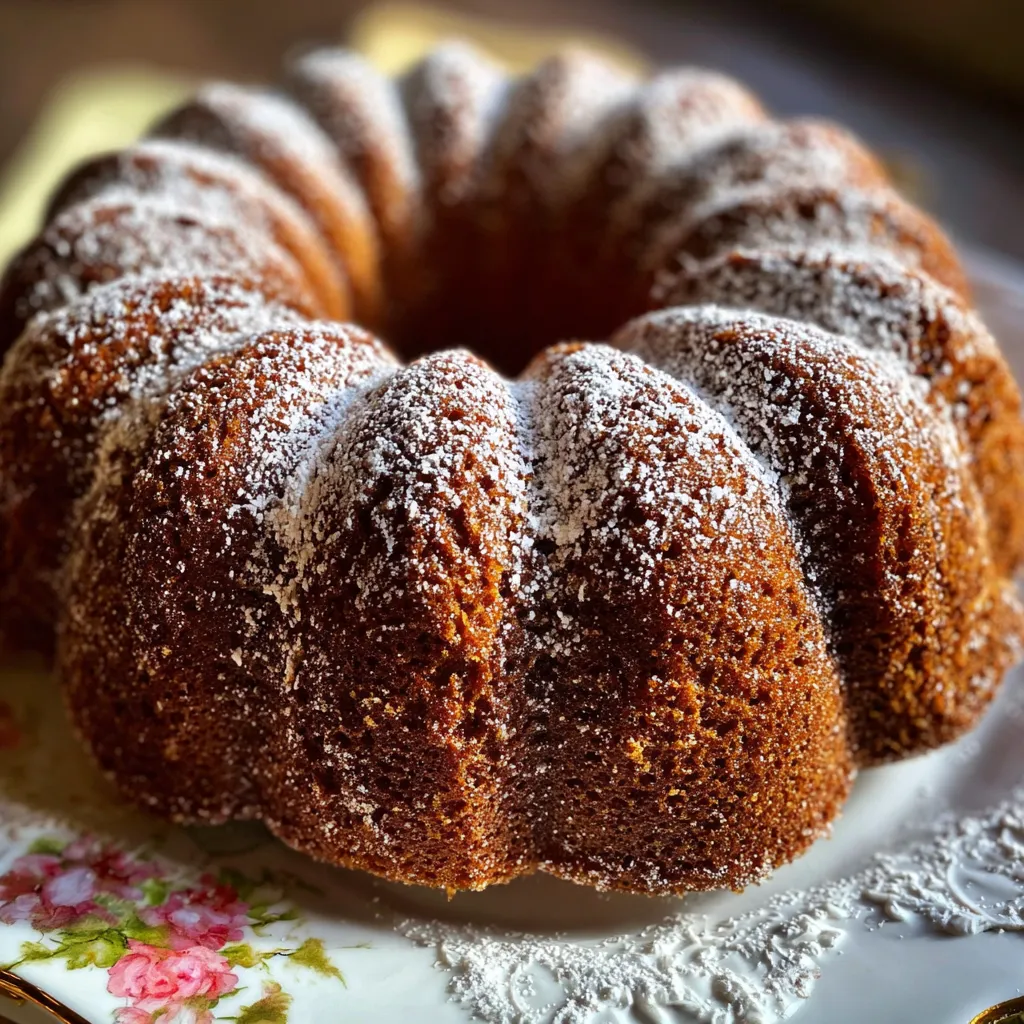
There’s something irresistibly cozy about slicing into a moist, spiced Bundt cake at home—especially one that marries warm ginger, cinnamon, and rich molasses into a tender crumb. This Gingerbread Bundt Cake is just the ticket for festive afternoons or a simple treat alongside your favorite cup of coffee or tea. Easy enough for beginners and brimming with holiday charm, you’ll find every bite as comforting as a winter cardigan. Ready to stir up some cheer in your kitchen?
Gather these pantry staples and spices to make your Gingerbread Bundt Cake shine:
This recipe comes together in a few simple stages: mixing dry ingredients, creaming butter and sugars, combining wet and dry mixtures, and baking to golden perfection. Follow each step carefully to achieve a moist, evenly baked cake loaded with warm spice notes that fill your kitchen with holiday magic.
1. Preheat your oven to 350°F (175°C). Grease and flour a 10 to 12-cup Bundt cake pan, ensuring to coat all the crevices so the cake releases cleanly.
2. In a medium bowl, whisk together the all-purpose flour, baking soda, baking powder, ground ginger, ground cinnamon, ground nutmeg, ground cloves, and salt. Set this dry mix aside.
3. In a large mixing bowl, use an electric mixer to cream together the softened butter, packed brown sugar, and granulated sugar until the mixture is light and fluffy, about 2–3 minutes.
4. Add the eggs one at a time to the creamed butter-sugar mixture, beating well after each addition until fully incorporated.
5. Pour in the molasses and vanilla extract, mixing on low speed until the dark, glossy liquid is evenly distributed.
6. Gradually add the dry ingredients to the wet mixture, alternating with the hot water—starting and ending with the dry ingredients. Mix just until combined to avoid overworking the gluten.
7. Pour the batter into the prepared Bundt pan, smoothing the top with a spatula to ensure an even surface.
8. Bake for 50–60 minutes, or until a toothpick inserted into the center comes out clean or with a few moist crumbs attached.
9. Allow the cake to cool in the pan for 10–15 minutes, then invert it carefully onto a wire rack to cool completely.
10. Once cooled, you can dust with powdered sugar, drizzle with a simple glaze, or serve as is for a rustic finish.
When your Gingerbread Bundt Cake is ready, elevate each slice with these delightful finishing touches:
Nailing this cake is all about balancing spices, moisture, and timing. Start with room-temperature ingredients for even mixing, and resist the urge to overblend once you’ve combined wet and dry components. Using hot water helps dissolve sugars and ensures a smooth batter, but be sure to alternate additions for a uniform rise. If you want a little extra flair, stir in some nuts or dried fruit before baking. Keep an eye on the bake time—every oven runs a bit differently! With these pointers, you’ll end up with a beautifully spiced, tender cake every time.
To keep your Gingerbread Bundt Cake tasting its best, proper storage is key. After the cake has fully cooled, choose any of these methods to maintain moisture and flavor:
Here are a few common questions that come up when baking this Bundt cake:
Preparation takes about 15–20 minutes, including measuring and mixing ingredients. Baking requires 50–60 minutes in a 350°F (175°C) oven. Allow an additional 10–15 minutes for cooling in the pan and another 30–45 minutes on a wire rack before serving, for a total of roughly 1 hour and 45 minutes from start to finish.
Thoroughly grease the Bundt pan with softened butter or nonstick spray, making sure to coat all crevices. Dust the greased surface lightly with flour or cocoa powder, tapping out excess. Allow the cake to rest in the pan for 10–15 minutes after baking; then invert it gently onto a cooling rack. Running a thin knife or offset spatula around the edges can help release stubborn spots.
For a dairy‐free version, replace the ¾ cup of unsalted butter with a plant‐based margarine or coconut oil in equal measure. For a gluten‐free cake, use a 1:1 gluten‐free flour blend, but add 1 teaspoon of xanthan gum if your blend doesn’t already contain it. If you need to reduce sugar, swap half of the brown sugar and granulated sugar with coconut sugar or use ½ cup honey or maple syrup, reducing the hot water by 2 tablespoons to maintain batter consistency.
Wet centers often result from underbaking or inaccurate oven temperature. First, use an oven thermometer to verify 350°F. If the top browns too quickly, tent the cake with aluminum foil halfway through baking. Always test doneness by inserting a toothpick into the deepest part; it should come out clean or with a few moist crumbs. Extend baking 5–10 minutes if needed, checking every 5 minutes to avoid overbaking.
Store cooled cake in an airtight container at room temperature for up to 5 days. To retain moisture, wrap slices in plastic wrap or place a slice in a resealable bag with a small piece of bread (the bread helps keep the cake soft). Reheat individual slices in the microwave for 10–15 seconds or warm the whole cake in a 300°F oven for about 10 minutes, loosely covered with foil.
Yes, freeze the cake or slices wrapped tightly in plastic wrap and then in aluminum foil or a freezer bag to prevent freezer burn. Freeze for up to 3 months. Thaw overnight in the refrigerator or for a few hours at room temperature. If desired, refresh the cake by warming it in a 300°F oven for 10–15 minutes before serving.
To enhance texture and flavor, fold in ½ cup chopped pecans, walnuts, or crystallized ginger when you add the dry ingredients. For fruit accents, stir in ½ cup raisins or dried cranberries tossed in a teaspoon of flour. You can also swap ½ teaspoon of ground ginger for an equal amount of cardamom or add a pinch of star anise for a spicier profile. Top with a simple glaze of powdered sugar mixed with a tablespoon of milk and a drop of vanilla extract for extra sweetness.
This Gingerbread Bundt Cake works its magic by combining pantry staples—flour, butter, sugars—with a powerhouse blend of ginger, cinnamon, nutmeg, and cloves to create a cozy, moist dessert that’s as easy to bake as it is delightful to slice. The hot water technique ensures perfect moisture, while molasses gives every bite that classic gingerbread depth. Feel free to print this recipe and tuck it into your holiday binder—or save it on your phone for impromptu baking sessions. Bake it, slice it, and let me know how it turned out in the comments or if you have any questions!
A tender, molasses-sweet cake with warm ginger and cinnamon notes fills the air as you slice, revealing a soft crumb that’s perfect with a dusting of powdered sugar or a drizzle of glaze.

Hey there ! I'm Julia Martinez, and welcome to my kitchen where tradition meets innovation. Growing up in a multigenerational household, I learned that the best recipes aren't just about ingredients – they're about the stories, memories, and love that get passed down through each carefully prepared dish.