
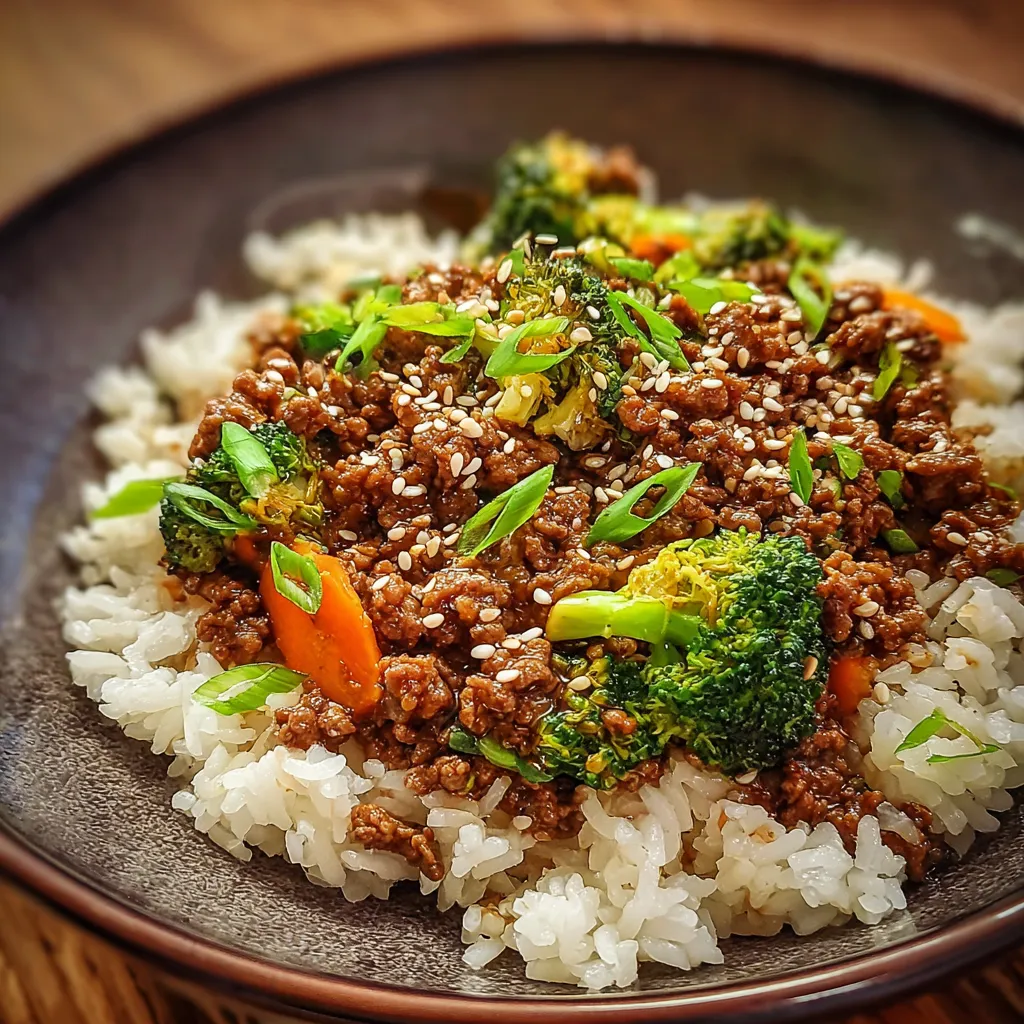
Dive into this Healthy Korean Beef Rice Bowl, a vibrant spin on classic bibimbap that laces lean ground beef with a spicy-sweet honey-gochujang glaze over nutty brown rice and crisp veggies. With tender broccoli florets and carrots for crunch and a sprinkle of sesame seeds and green onions for a burst of flavor, this beginner-friendly dinner is as satisfying as it is wholesome. Grab your skillet and rice pot—this bowl brings homemade Korean flair right to your table.
Here’s what you’ll need to build these bowls from the ground up—each ingredient plays a key role in achieving that perfect balance of sweet, savory, and spicy.
Preparing this bowl is all about layering flavors and textures in a few straightforward steps. You’ll cook nutty brown rice until tender, whip up a honey-gochujang glaze for the beef, and steam crisp broccoli and carrots. Follow these detailed instructions to achieve perfectly seasoned meat, fluffy grains, and vibrant veggies that come together in a delicious, balanced bowl.
1. Rinse the brown rice under cold water and combine with 2 cups water in a saucepan. Bring to a boil, then reduce heat to low, cover, and simmer for 40 minutes until the water is absorbed. Fluff with a fork to release steam and keep grains separate.
2. In a small bowl, whisk together soy sauce, honey, gochujang, and cornstarch until smooth, ensuring there are no lumps.
3. Heat sesame oil in a large skillet over medium-high heat. Add the ground beef, breaking it up with a spoon, and cook until fully browned, about 5 minutes.
4. Add the minced garlic and grated ginger to the skillet, then sauté for 1 minute until fragrant and the flavors bloom.
5. Pour the sauce mixture into the skillet and stir constantly until it thickens and evenly coats the beef, about 2 minutes.
6. Meanwhile, steam the broccoli florets and sliced carrot in a steamer basket over boiling water until crisp-tender, about 4 minutes.
7. Divide the cooked rice among bowls, top with the Korean beef, and arrange the steamed vegetables alongside. Garnish each bowl with sliced green onions and a sprinkle of sesame seeds.
When it comes to plating these bowls, a few simple touches can take your meal from great to unforgettable. Consider these ideas to elevate the experience and satisfy every craving:
This beef bowl is so versatile it practically begs for personalization. With a few friendly pointers, you’ll nail the balance every single time:
After enjoying that first satisfying bowl, you’ll want to save the rest for later! Proper storage ensures your leftovers stay delicious and safe to eat:
Got a burning question? Let’s clear things up!
The total time is about 60 minutes. This includes 5 minutes rinsing and measuring rice, 40 minutes simmering the brown rice, about 5 minutes browning the beef, 1 minute sautéing garlic and ginger, 2 minutes thickening the sauce, and 4 minutes steaming the vegetables.
Yes. The heat level is controlled by gochujang. Start with 1 tablespoon for mild heat, increase to 1½ tablespoons for moderate spice, or substitute half gochujang and half chili garlic sauce for extra kick. You can also omit gochujang entirely and add a pinch of red pepper flakes for gentler heat.
You can swap the brown rice for cauliflower rice. Simply pulse cauliflower florets in a food processor until rice-like, then sauté in a skillet with a teaspoon of sesame oil for 4–5 minutes until tender. Follow the same assembly steps, placing the Korean beef and vegetables over the cauliflower rice.
Store leftovers in an airtight container in the refrigerator for up to 3 days. To reheat, microwave on high for 1–2 minutes, stirring halfway through to ensure even heat. For a crispier texture, reheat in a skillet over medium heat for 3–4 minutes, adding a splash of water to loosen the sauce if needed.
Absolutely. Cook the rice, beef, and steam the vegetables, then divide into individual meal containers. Let everything cool slightly before sealing. Store in the fridge for up to 3 days. Before serving, garnish with fresh green onions and sesame seeds, and optionally squeeze lime juice for brightness.
You can substitute an equal amount of arrowroot powder or tapioca starch. Whisk it into the sauce mixture just as you would with cornstarch. If you have neither, you can simmer the sauce a bit longer to reduce and thicken naturally, though the consistency may be slightly less glossy.
To keep broccoli and carrots crisp-tender, steam them just until bright in color and easily pierced with a fork, about 4 minutes. Avoid overcooking by placing them in a steamer basket over boiling water and checking at the 3-minute mark. Immediately transfer to a bowl to prevent carryover cooking.
This Healthy Korean Beef Rice Bowl hits every mark: lean beef simmered in a honey-gochujang glaze, nutty brown rice that soaks up every drop, and crisp veggies that add color and texture. It works because it balances heat, sweetness, and umami in every forkful. Feel free to print and save this recipe for weeknight dinners or meal prep, then come back and share your success—questions, tweaks, and tales of spice tolerance are always welcome!
Lean ground beef simmers in a honey-gochujang glaze, releasing a warm, spicy aroma as it coats fluffy brown rice. Tender broccoli and carrots add crunch, while sesame seeds and green onions finish each bowl with a nutty burst.

Hey there ! I'm Julia Martinez, and welcome to my kitchen where tradition meets innovation. Growing up in a multigenerational household, I learned that the best recipes aren't just about ingredients – they're about the stories, memories, and love that get passed down through each carefully prepared dish.