
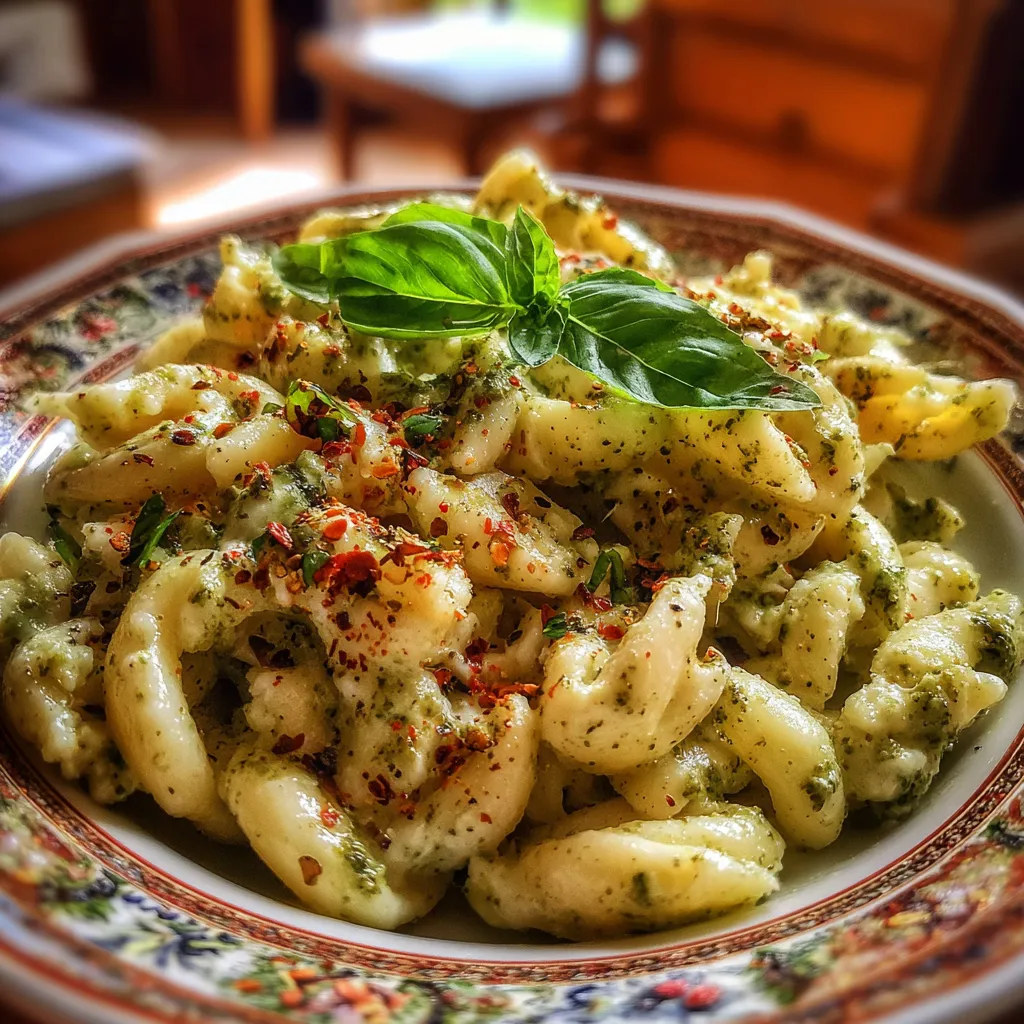
Pesto Goat Cheese Pasta is a bright and comforting dish that brings together glossy basil pesto, creamy goat cheese, and crunchy pine nuts in every bite. This easy vegetarian dinner is perfect for busy weeknights yet feels delightfully fancy, thanks to the herby basil and tangy cheese. One forkful, and you’ll discover how a handful of simple ingredients can create a flavor-packed meal that’s both satisfying and fun to make.
Before you dive into cooking, let’s meet the stars of Pesto Goat Cheese Pasta:
Crafting this recipe is a breeze: from boiling pasta al dente to stirring garlic and pesto into a silky sauce, then finishing with tangy goat cheese and crunchy pine nuts. You’ll end up with a luscious dish that highlights the glossy pesto cloaking the pasta, just like the subtitle promises, mingling flavors and textures in every forkful.
1. Bring a large pot of salted water to a rolling boil over high heat to ensure the pasta cooks evenly.
2. Add the pasta and cook until al dente according to package instructions, testing a strand a minute before the indicated time.
3. Meanwhile, heat the olive oil in a large pan over medium heat. Add the minced garlic and sauté for about 30 seconds until fragrant, taking care not to let it brown.
4. Stir in the basil pesto, then gradually whisk in the reserved pasta water a little at a time to create a smooth, glossy sauce.
5. Drain the pasta well and quickly transfer it to the pan with the sauce, tossing to coat each strand evenly.
6. Crumble the goat cheese over the pasta and gently toss so pockets of creamy tang melt into the hot noodles.
7. Season with salt and black pepper to taste, stirring once more to distribute the seasoning.
8. Serve immediately, topped with toasted pine nuts and scattered fresh basil leaves for crunch and herbaceous flair.
This pasta shines on its own, but a few thoughtful pairings can take your meal to the next level. Whether you’re hosting friends or enjoying a cozy night in, here are four ways to serve Pesto Goat Cheese Pasta with flair:
Getting this dish just right is all about small tweaks and personal touches. These friendly tips will help you elevate every plate and ensure your pesto and cheese harmony shines through:
Whether you’re meal-prepping or saving leftovers, proper storage keeps flavors bright and textures inviting. Follow these methods to maintain the freshness of your Pesto Goat Cheese Pasta:
Here are answers to some common questions about making and enjoying Pesto Goat Cheese Pasta:
To achieve al dente, start tasting the pasta about two minutes before the lower end of the package time. It should feel firm but not chalky in the center. Once it offers a slight bite without being hard, drain it immediately and transfer it to the sauce so it finishes cooking and absorbs flavor without becoming mushy.
Heat a dry skillet over medium heat and add the pine nuts in a single layer. Stir or shake the pan frequently for about two to three minutes until they turn golden brown and emit a nutty aroma. Remove them from the hot pan right away to a plate to stop the cooking process and prevent them from burning.
Gradually whisk in additional reserved pasta water in small increments until the sauce reaches a smooth, silky consistency. The starchy water will loosen the pesto without diluting its basil and garlic flavors. Add one tablespoon at a time until the sauce coats the pasta evenly and glides off a spoon.
You can replace goat cheese with a creamy cashew cheese or a store-bought vegan goat cheese alternative. The flavor will be milder and slightly sweet rather than tangy, so consider adding a squeeze of lemon juice or a pinch of nutritional yeast to boost savory depth. The texture remains creamy and works just as well when tossed with the pasta.
Absolutely. Short tube shapes like penne or rigatoni will trap bits of goat cheese and pesto in their ridges and hollows, offering bursts of flavor in each bite. Long strands like fettuccine or linguine create a more uniform coating of sauce. Choose shapes based on whether you prefer concentrated pockets of flavor or an even saucing throughout.
Store any leftover pasta in an airtight container in the refrigerator for up to two days. To reheat, transfer the pasta to a pan over low heat, add a splash of water or olive oil, and gently toss until warmed through. This prevents the sauce from clumping and restores the creamy consistency. Adjust seasoning with a pinch of salt or pepper if needed before serving.
This Pesto Goat Cheese Pasta really shines because it balances bright green pesto’s herb embrace with the tangy creaminess of goat cheese and the satisfying crunch of pine nuts. It’s a beginner-friendly, vegetarian dinner that feels gourmet every single time. You’ll love how the glossy, herbaceous coating clings to the pasta, just as described in our subtitle and recipe description. Feel free to print and save this page for your next cozy meal—then let me know in the comments below how it turns out or if you have any questions. Happy cooking!
Tender pasta ribbons are cloaked in glossy basil pesto, releasing a warm herbal aroma. Creamy goat cheese swirls melt into every bite, while toasted pine nuts add a satisfying crunch and nutty depth.

Hey there ! I'm Julia Martinez, and welcome to my kitchen where tradition meets innovation. Growing up in a multigenerational household, I learned that the best recipes aren't just about ingredients – they're about the stories, memories, and love that get passed down through each carefully prepared dish.