
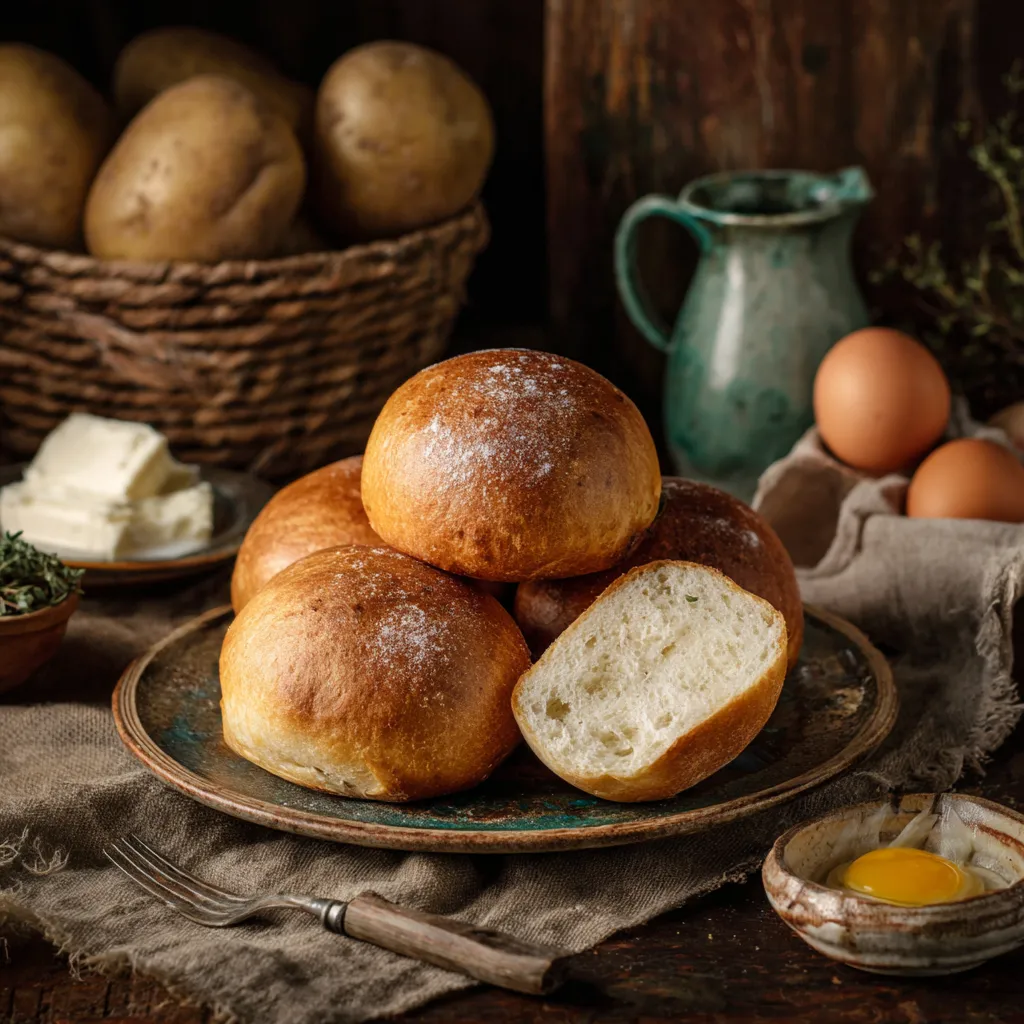
Potato Rolls and Bread delivers that irresistible combination of a golden, slightly crisp crust and an ultra-soft, pillowy interior thanks to creamy mashed potatoes in the dough. Whether you’re shaping individual rolls for family breakfasts or baking a hearty loaf for sandwiches, this recipe adapts beautifully. Grab your apron and get ready to enjoy warm, homemade rolls or a loaf that’ll have everyone asking for seconds!
To achieve that tender crumb and rich flavor, you’ll need a handful of everyday items that work together to create moisture, structure, and subtle sweetness.
With the mashed potatoes folded right into the dough, this recipe is a breeze once you have your ingredients prepped. You’ll proof the yeast, build a pliable dough full of tender pockets, let it rise twice for ultimate fluffiness, then bake to golden perfection. Each step brings you closer to irresistibly soft rolls or a loaf that slices like a dream.
1. Peel and dice the potatoes, then boil in water until tender. Drain thoroughly and mash until smooth, ensuring there are no lumps for a uniform crumb.
2. Warm 240 ml water to about 40°C, stir in sugar and yeast, then let sit for 5 minutes until a foamy layer forms on top—this shows your yeast is active.
3. Melt the butter and add it to the mashed potatoes along with the salt. Stir in the yeast mixture, combining all wet ingredients into a cohesive, creamy base.
4. Gradually add bread flour and knead by hand or with a stand mixer until the dough becomes smooth and elastic, about 8–10 minutes—look for a slightly tacky feel and good stretch.
5. Place the dough in a lightly greased bowl, cover with a clean cloth, and let rise in a warm spot until doubled in size, about 1 hour, allowing those flavorful air pockets to develop.
6. Punch down the dough, divide into 12 equal pieces for rolls or shape the entire batch into a loaf and place in a greased loaf pan. Cover and let rise again for 30–40 minutes, until puffy.
7. Preheat oven to 190°C. Beat the egg with milk and brush the wash evenly over rolls or loaf to encourage a shiny, golden crust.
8. Bake rolls for 18–20 minutes or the loaf for 30–35 minutes, until golden brown and hollow-sounding when tapped on the bottom.
9. Remove from oven and cool on a wire rack before slicing or serving to set the crumb and prevent gummy texture.
Enjoying your fresh-baked Potato Rolls and Bread is all about pairing and presentation. Here are a few serving ideas to make every bite special.
To achieve bakery-level results at home, a few extra pointers can make all the difference. Here’s how to get those rolls or loaf spot-on every time:
Proper storage preserves the moisture and tenderness of your Potato Rolls and Bread, so you can enjoy them days after baking. Follow these methods to keep everything fresh and delicious.
Got questions? Here are quick answers to common queries about Potato Rolls and Bread:
Russet potatoes are ideal because their starchy texture helps create a light, fluffy crumb. You can substitute with Yukon Gold or white potatoes, but reduce added water slightly since they retain more moisture; mash them thoroughly and adjust flour by a tablespoon or two if the dough feels too sticky.
Yes, you can use instant yeast in place of active dry yeast in a 1:1 ratio (7 g instant yeast). Mix it directly with the flour rather than proofing in water. Skip the 5-minute foam step, then proceed with adding water, mashed potatoes, butter, and salt. The dough may rise slightly faster, so watch its volume and adjust rising times as needed.
After 8–10 minutes of kneading by hand or with a stand mixer dough hook, the dough should feel smooth, elastic, and slightly tacky but not sticky. You can perform the “windowpane test” by stretching a small piece between your fingers—if it stretches thin enough to let light pass without tearing, the gluten is fully developed.
Divide the dough into 12 equal pieces using a kitchen scale for consistency. Round each piece by stretching the surface downward and pinching the seam underneath to create tension. Place each round in a greased pan with at least 1 cm (½″) of space between them; this prevents sticking as they expand during the second rise.
Tap the bottom of each roll or loaf—if it sounds hollow, the interior is fully baked. Rolls usually take 18–20 minutes and a loaf 30–35 minutes at 190 °C. An internal temperature probe should read around 96 °C (205 °F) at the center when done.
You can freeze baked rolls once completely cooled: wrap them tightly in plastic and store in an airtight container for up to 3 months. To freeze the dough, complete the first rise, punch it down, shape into rolls, flash-freeze on a baking sheet for 1 hour, then transfer to a freezer bag. Thaw overnight in the refrigerator, let them proof for 30–40 minutes at room temperature, brush with egg wash, and bake as directed.
Allow the baked goods to cool completely on a wire rack before storing. Place them in an airtight container or resealable bag at room temperature for up to 3 days. For longer storage, freeze as described above. To refresh slightly stale rolls, reheat in a 160 °C oven for 5–7 minutes or lightly toast slices before serving.
What sets these Potato Rolls and Bread apart is the creamy potato mash woven into every bite, creating a tender crumb that stays soft even days later. The golden crust seals in warmth and flavor, making each slice—or roll—mouthwateringly good. Feel free to print and save this recipe for cozy mornings or impromptu gatherings, and don’t be shy about sharing your baking tales. Have questions or crave more tips? Drop a comment and let’s chat about all things bread!
Fluffy dough enriched with mashed potatoes transforms into golden loaves or individual rolls, releasing a gentle potato aroma and yielding a tender, moist crumb that’s perfect for butter, sandwiches, or warming family breakfasts.

Hey there ! I'm Julia Martinez, and welcome to my kitchen where tradition meets innovation. Growing up in a multigenerational household, I learned that the best recipes aren't just about ingredients – they're about the stories, memories, and love that get passed down through each carefully prepared dish.