
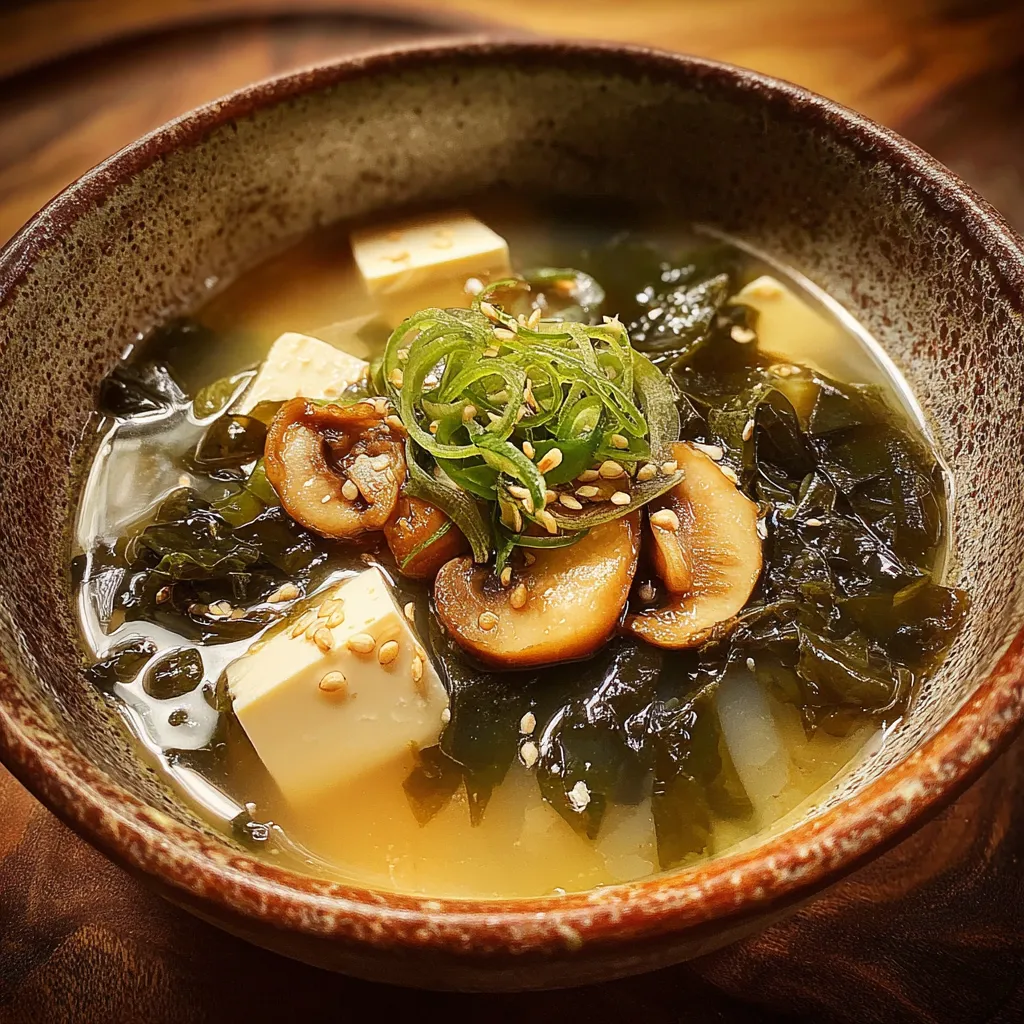
Silky Umami-Rich Japanese Miso Soup warms you with a delicate dashi broth brimming with deep umami, tender silken tofu cubes, earthy shiitake mushrooms, and rehydrated wakame. Gently simmered with white and red miso, each spoonful offers a whisper of rich, savory depth while scallions add a fresh bite. This beginner-friendly lunch recipe brings comfort in every warm, silky mouthful—perfect for cozy nights or a quick midday refuel. So grab your bowl and savor the magic of traditional Japanese flavors.
To bring this Silky Umami-Rich Japanese Miso Soup to life, gather these simple yet flavor-packed ingredients:
Crafting this soup is all about layering flavors and embracing gentle techniques. First, you’ll rehydrate the seaweed, then simmer mushrooms in dashi until tender. Next, you’ll fold in silken tofu and wakame before whisking in the miso blends to achieve that signature silky texture. Finally, a splash of soy sauce and a quick garnish of scallions bring everything together. Follow these steps for a perfectly balanced, umami-rich bowl of Japanese comfort.
1. In a small bowl, rehydrate the dried wakame by covering it with cold water for 5 minutes. Drain thoroughly and set aside.
2. Pour the dashi stock into a medium pot and bring it to a gentle simmer over medium heat.
3. Add the thinly sliced shiitake mushrooms and cook for 2–3 minutes until they’re tender and release their earthy aroma.
4. Carefully stir in the diced silken tofu and the rehydrated wakame, heating everything through for another 1–2 minutes without breaking the tofu.
5. Scoop a ladle of the hot broth into a small bowl and whisk in both the white and red miso pastes until you have a smooth mixture.
6. Pour the dissolved miso back into the pot, stirring gently to combine. Be sure to avoid boiling so the miso retains its silky texture and healthful enzymes.
7. Season with soy sauce and a pinch of salt, then immediately remove from heat to preserve the delicate flavor.
8. Ladle the soup into bowls and garnish each with the thinly sliced scallion for a fresh, crisp finish.
While this Silky Umami-Rich Japanese Miso Soup shines on its own, pairing it with thoughtful sides or garnishes can elevate the meal to new heights. Whether you’re aiming for a simple lunch or a multi-course dinner, these serving ideas will complement the soup’s delicate umami and silky textures. Use these tips to craft a well-rounded spread that highlights the comforting warmth and depth of this classic Japanese dish.
These friendly tips will help you master every spoonful of this miso soup recipe. From selecting the right dashi to timing your final seasoning, these pointers ensure a harmonious, silky result every time. Keep these in mind as you cook, and feel free to tweak them to match your own taste adventures.
If you find yourself with leftover Silky Umami-Rich Japanese Miso Soup, proper storage is key to preserving its delicate flavor and smooth texture. Although miso soup is happiest fresh, these methods will help you enjoy those gentle umami notes later without any compromise.
Wondering about the ins and outs of this miso soup? Here are answers to the most common questions:
Yes, you can use high-quality instant dashi granules dissolved in water according to the package instructions. Opt for kombu- and bonito-based granules to capture the authentic umami depth. Homemade dashi made by simmering kombu and katsuobushi will yield the richest flavor, but a premium instant version works well in a pinch.
Silken tofu is very delicate. To minimize breakage, gently slide the diced tofu into the simmering broth without stirring vigorously. Use a soft spatula or spoon to coax the cubes into place, and stir only when necessary, using gentle folding motions to heat the tofu through.
Boiling miso destroys its beneficial probiotics and can make the flavor harsh or grainy. By whisking the miso into a small bowl of hot broth first, then gently stirring it back into the pot off the heat, you preserve miso’s silky texture, nuanced umami, and healthful enzymes.
White miso is milder and sweeter, while red miso is saltier and more robust. For a lighter soup, increase white miso to 4 tablespoons and omit the red. For a deeper, heartier flavor, swap in an extra tablespoon of red miso and reduce white to 2 tablespoons. Always taste after dissolving the miso and adjust in ½-teaspoon increments.
To keep it vegetarian or vegan, replace bonito-based dashi with kombu-only stock. Skip any fish-based seasonings and confirm your miso contains no fish ingredients. Use vegan soy sauce. The resulting broth remains rich in umami from kombu, wakame, and shiitake.
Miso soup is best eaten fresh, but you can refrigerate leftovers in an airtight container for up to 2 days. Store the tofu and wakame in the broth together. Reheat gently over low heat without boiling. If the broth has thickened, whisk in a splash of water to restore its silky consistency.
Absolutely. Thinly sliced daikon, spinach, or baby bok choy can be added with the mushrooms. For extra protein, try blanched shrimp or thinly sliced chicken breast—add them after the mushrooms and cook until just done. Adjust seasoning afterward, as extra ingredients may dilute the broth’s flavor.
With its harmonious blend of white and red miso, tender silken tofu, earthy shiitake, and briny wakame in a gently simmered dashi broth, this soup strikes the perfect balance of flavor and texture. Whether you’re warming up on a chilly day or craving a quick, nourishing lunch, its silky mouthfeel and deep umami make every spoonful feel like a comforting hug. Don’t forget to print or bookmark this article so you can revisit the recipe whenever that craving hits. Have questions, feedback, or your own twist to share? Drop a comment below—I’d love to hear how you make this classic Japanese miso soup your own!
Silken tofu floats in a gently simmered dashi broth, enriched with white and red miso. Shiitake slices and wakame add earthy notes, while scallions lend a fresh bite. Each spoonful whispers umami depth in every warm mouthful.

Hey there ! I'm Julia Martinez, and welcome to my kitchen where tradition meets innovation. Growing up in a multigenerational household, I learned that the best recipes aren't just about ingredients – they're about the stories, memories, and love that get passed down through each carefully prepared dish.