
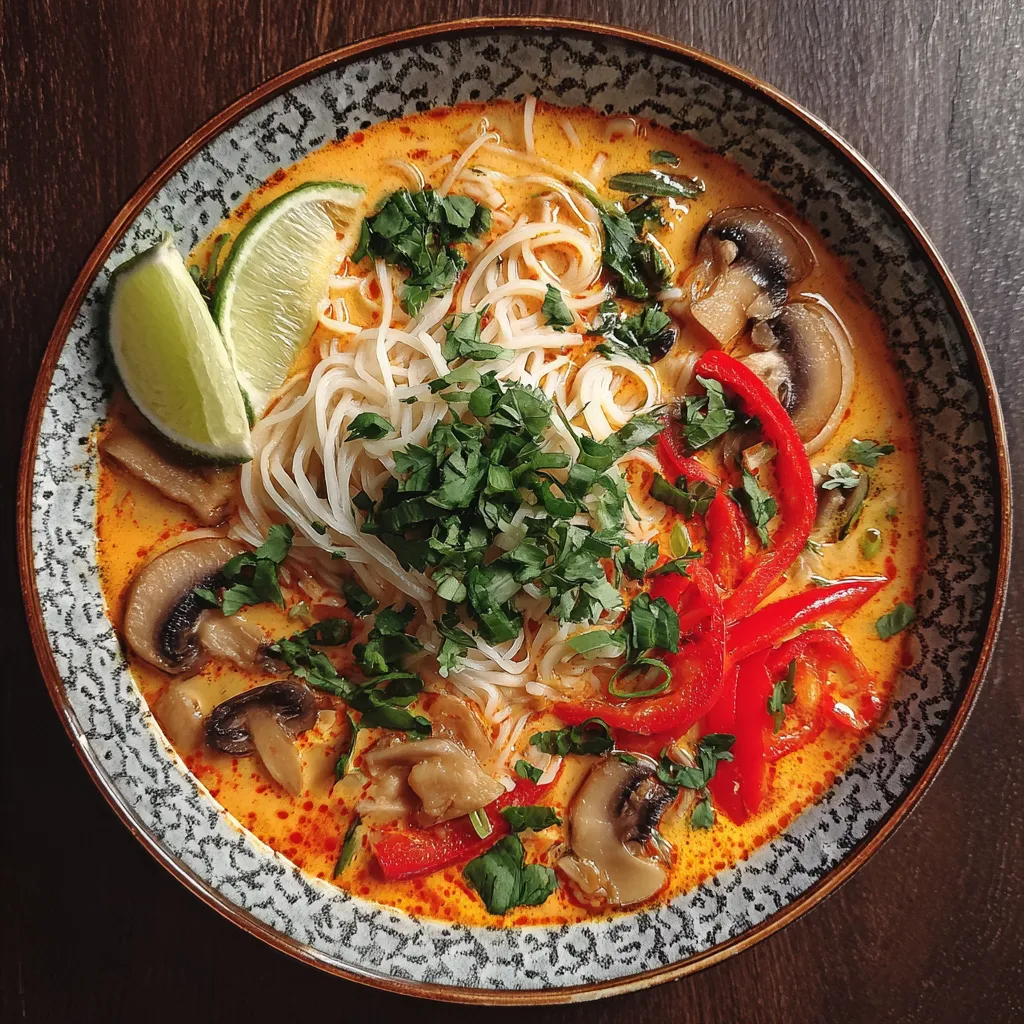
Thai Red Curry Noodle Soup delivers a burst of Southeast Asian flavors in every spoonful. A spicy coconut broth tangled with tender rice noodles, crisp bell peppers, mushrooms and carrots, and finished with bright lime and fresh herbs, this vibrant bowl transports your taste buds straight to a Thai street stall. Perfect for beginner cooks, it’s a comforting dinner that balances creamy richness with aromatic red curry and zesty lime, all ready in about 30 minutes—ideal for busy weeknights when you crave something both exotic and soul-warming.
Let’s break down the star ingredients that bring this Thai Red Curry Noodle Soup to life:
This simple, one-pot approach makes preparing Thai Red Curry Noodle Soup both efficient and rewarding. You’ll start by building deep flavor in the pot, then gently simmer vegetables in the fragrant coconut-curry broth, and finish by tenderizing rice noodles right in the soup. With careful attention to timing, the noodles will soak up just enough liquid without getting mushy, while the fish sauce, lime juice, and sugar round out the seasoning for a perfectly balanced bowl.
1. Heat vegetable oil in a large pot over medium heat until it shimmers, creating the ideal base for toasting aromatics.
2. Add garlic and ginger and sauté until fragrant, about 1 minute, releasing their warm, spicy notes.
3. Stir in red curry paste and cook for another minute, allowing the spices to bloom and deepen in flavor.
4. Pour in coconut milk and chicken broth, stirring gently, then bring the mixture to a gentle simmer to meld the flavors.
5. Add bell pepper, carrot, and mushrooms and cook for 3 to 4 minutes until the vegetables are just tender but still vibrant.
6. Add rice noodles and cook until they are soft, about 5 minutes, stirring occasionally to prevent sticking and ensure even cooking.
7. Stir in fish sauce, sugar, and lime juice, tasting as you go, and adjust seasoning to achieve a balanced sweet, salty, sour profile.
8. Divide the soup among bowls and garnish generously with cilantro and Thai basil for a fresh, herbaceous finish.
9. Serve hot with optional chili flakes scattered on top for an extra kick of heat if desired.
This Thai Red Curry Noodle Soup shines on its own but also pairs beautifully with a few simple sides and garnishes. Whether you’re hosting a casual dinner or enjoying a quiet night in, these ideas will elevate your bowl and round out the meal.
Ready to make your Thai Red Curry Noodle Soup truly shine? These friendly pointers will help you customize and refine the recipe so it’s exactly the way you like it.
Ensuring your Thai Red Curry Noodle Soup stays fresh means proper storage and careful reheating. Follow these methods to keep the soup’s creamy broth and tender noodles in top form for your next meal.
Here are quick answers to the questions readers ask most often about making and customizing this soup:
From start to finish, you’ll need about 25 to 30 minutes. This includes 5 minutes for ingredient prep (slicing peppers, carrots, mushrooms; mincing garlic and ginger; soaking or preparing noodles) and 20 to 25 minutes for cooking—sautéing aromatics, simmering the broth with curry paste and coconut milk, cooking the vegetables and noodles, and finally seasoning and garnishing.
Yes. You can replace or add tofu, shrimp, or thinly sliced chicken. For tofu, cube firm tofu and add it with the vegetables so it warms through. For shrimp or chicken, stir-fry the protein first until almost cooked (shrimp pink and opaque or chicken no longer pink inside), remove and set aside, then proceed with the soup. Return the protein to the pot with the noodles so it finishes cooking and absorbs the curry flavors.
The red curry paste provides medium heat by default. To tone it down, start with 1 tablespoon of curry paste instead of 2, omit chili flakes, and add extra coconut milk. To increase heat, add up to 1 teaspoon of optional chili flakes or stir in a pinch of Thai chilies when sautéing garlic and ginger. Taste as you go to reach your preferred spice level.
For firmer, springy noodles, cook them separately according to package instructions until al dente, drain, rinse under cold water to stop cooking, then add them to individual bowls before ladling in the hot soup. If cooking them directly in the pot, watch the time closely and stir gently to avoid over-stirring, removing from heat as soon as they’re tender (about 5 minutes).
Store cooled soup in an airtight container in the refrigerator for up to 2 days. When reheating on the stove, warm gently over medium-low heat, stirring occasionally, and add a splash of water or broth if the curry has thickened. If noodles have absorbed too much liquid and softened, stir in a few fresh noodles or briefly toast them in a dry pan and add before serving.
A small amount of sugar balances the heat from the curry paste and the tang from lime juice, enhancing the overall flavor complexity. You can substitute with brown sugar, palm sugar, or even honey in equal measure. Taste after stirring it in and adjust slightly if your substitute is sweeter than granulated sugar.
Use full-fat coconut milk rather than light. After stirring in the curry paste, allow it to cook for an extra 30 seconds in the oil to fully emulsify the fats. You can also swirl in a tablespoon of coconut cream just before serving or top each bowl with a small drizzle of coconut milk for an extra creamy finish.
Nothing beats the cozy comfort of slurping noodles in a fragrant coconut-curry broth that’s zippy with lime, sweet from sugar, and layered with umami. Thai Red Curry Noodle Soup works because each ingredient—cream, spice, herbs, and noodles—plays off the others in perfect harmony. It’s so easy you’ll keep coming back to this recipe, whether you need weeknight warmth or a weekend flavor adventure. Feel free to print and save this guide, and don’t be shy—drop a comment below if you try it or have questions. Enjoy every spicy, creamy spoonful!
This vibrant soup blends creamy coconut milk, aromatic red curry, sweet bell peppers and silky noodles, topped with lime and herbs for a bright, comforting bowl that warms you from the inside out.

Hey there ! I'm Julia Martinez, and welcome to my kitchen where tradition meets innovation. Growing up in a multigenerational household, I learned that the best recipes aren't just about ingredients – they're about the stories, memories, and love that get passed down through each carefully prepared dish.