

Christmas Baked Salmon is a festive table centerpiece of tender salmon glazed in citrus-herb sauce with aromatic herbs and vibrant pomegranate for a holiday dinner to remember. Succulent salmon bakes in a golden citrus-herb glaze, its skin crisping beneath a crown of orange and lemon slices. Fresh pomegranate and herbs add bright color and sweet-tart pops, making every bite festive and flavorful. Ready for an unforgettable Christmas feast? Let’s get cooking!
Key Ingredients
Gather these ingredients to achieve that perfect balance of citrus zing, herb aroma, and holiday flair:
- 1 whole side of salmon, skin-on, about 1.2–1.5 kg (2.5–3 lb), pin bones removed: The star of the show, providing tender, flaky meat for your centerpiece.
- 2 tbsp olive oil: Helps seasonings cling and ensures a silky finish.
- 1 tbsp melted unsalted butter: Adds richness and a golden crust under the spice rub.
- 1 ½ tsp fine sea salt: Enhances natural salmon flavors.
- ½ tsp freshly ground black pepper: Gives a gentle heat and depth.
- 1 tsp garlic powder: Infuses savory garlic notes without overpowering.
- 1 tsp onion powder: Adds sweet warmth and depth.
- 1 tsp smoked paprika (or sweet paprika): Contributes a festive smoky color and mild aroma.
- ½ tsp ground coriander (optional but festive and aromatic): Brings a subtle citrusy-spice note.
- Zest of 1 large lemon: Brightens the fish with tangy citrus oils.
- Zest of 1 large orange: Adds sweet, fragrant citrus aroma.
- 2 tbsp olive oil: Forms the base of the citrus-herb topping.
- 2 tbsp freshly squeezed lemon juice: Provides acidity to balance richness.
- 1 tbsp freshly squeezed orange juice: Lends sweetness and fruitiness.
- 1 tbsp Dijon mustard: Emulsifies the topping and adds gentle tang.
- 1 tbsp pure maple syrup or honey: Sweetens and helps caramelize the glaze.
- 2 garlic cloves, very finely minced: Packs fresh garlic flavor into every bite.
- 1 tbsp fresh thyme leaves (or 1 tsp dried thyme): Offers earthy, herbal notes.
- 1 tbsp fresh rosemary, finely chopped (or 1 tsp dried rosemary): Delivers piney, festive aroma.
- 2 tbsp fresh parsley, finely chopped: Brightens colors and freshens the palate.
- ½ tsp fine sea salt: Balances the citrus-herb topping.
- ¼ tsp freshly ground black pepper: Provides a mild peppery kick.
- 1 small orange, thinly sliced into rounds: Creates decorative, caramelized citrus layers.
- 1 small lemon, thinly sliced into rounds: Adds color contrast and zing.
- ½ small red onion, very thinly sliced (optional, for color): Gives a pop of festive purple.
- ⅓ cup fresh pomegranate arils: Offers sweet-tart crunch and jewel-like garnish.
- ⅓ cup fresh cranberries (optional, for decoration – not all guests will eat them): Adds bright color and festive flair.
- 2 tbsp chopped fresh dill or parsley: Garnishes with fresh herbal aroma.
- Extra thyme or rosemary sprigs for serving: Enhances holiday presentation.
- Extra lemon wedges: Lets guests adjust citrus brightness.
- Flaky sea salt (optional): Finishing touch for taste and texture.
- Crusty bread, roasted potatoes, or rice, as desired: Perfect accompaniments to soak up every drop of glaze.
How To Make Christmas Baked Salmon
Baking this Christmas Baked Salmon is a breeze when you follow each step carefully, from prepping your pan and salmon to layering on citrus slices and zesty topping. The method ensures even cooking, a golden crust, and that delightful burst of citrus-herb flavor in every bite. Let’s walk through the process for a show-stopping holiday main dish.
1. Prepare the oven and pan
Preheat your oven to 200°C / 400°F (or 190°C / 375°F fan-forced) for an even bake. Line a large baking sheet or roasting pan with parchment or foil and lightly brush with olive oil to prevent sticking. Place the salmon fillet skin-side down on the tray. If your fish is very cold, let it rest at room temperature for 10–15 minutes so it cooks uniformly.
2. Check and prepare the salmon
Gently run your fingertips along the flesh to feel for any leftover pin bones and remove them with clean tweezers or fish pliers. Pat the salmon dry with paper towels; this removes excess moisture so the oil and seasonings adhere, giving a better crust and texture.
3. Season the salmon base
In a small bowl, combine 2 tbsp olive oil and 1 tbsp melted unsalted butter, then brush evenly over the top and sides of the salmon. In another bowl, mix fine sea salt, black pepper, garlic powder, onion powder, smoked paprika, ground coriander, lemon zest, and orange zest. Sprinkle this spice-zest blend all over the salmon, gently pressing to ensure it sticks.
4. Make the citrus-herb topping
In a medium bowl, whisk olive oil, lemon juice, orange juice, Dijon mustard, maple syrup (or honey), and minced garlic until slightly emulsified. Stir in thyme, rosemary, parsley, salt, and pepper. Taste and adjust: more salt for savoriness, extra maple/honey for sweetness, or a splash of lemon for brightness.
5. Coat the salmon with the topping
Spoon or brush the citrus-herb mixture evenly over the salmon, letting some drip down the sides. Reserve 1–2 tablespoons in the bowl to drizzle over after baking for a glossy finish.
6. Add the citrus slices
Arrange orange and lemon slices decoratively on the salmon, overlapping like scales or fanning diagonally. If using, tuck a few thin red onion slices among the citrus for extra color, leaving space for the topping to caramelize.
7. Bake the salmon
Place the tray on the middle rack of your preheated oven. Bake for 15–20 minutes, estimating 8–10 minutes per 2.5 cm (1 inch) thickness. Begin checking at 14–15 minutes: the salmon is done when it flakes easily with a fork, appears just opaque in the center, or reads 50–52°C (122–125°F) for medium.
8. Rest the salmon
Remove from the oven and let the fish rest 5–8 minutes so the juices redistribute. During this time, spoon pan juices over the top to keep every piece moist.
9. Add the festive garnish
While resting, sprinkle pomegranate arils over the salmon for bright color and sweet-tart pops. Scatter fresh cranberries for decoration, add chopped dill or parsley, drizzle reserved topping if desired, and nestle thyme or rosemary sprigs around the platter.
10. Serve
Slide a large spatula between the salmon and skin to lift portions onto plates, ensuring each serving has citrus slices, herbs, and pomegranate. Finish with a sprinkle of flaky sea salt, an extra squeeze of lemon, and your favorite holiday sides.
Serving Suggestions
Once your Christmas Baked Salmon emerges golden and aromatic, you’ll want to serve it in style. Think fresh garnishes, complementary sides, and interactive elements that highlight the citrus-herb flavors and festive colors. Whether you host a formal dinner or casual buffet, these ideas will let your salmon shine on the holiday table:
- Slice on a wooden board: Gently lift the salmon and lay it on a rustic board, garnished with herb sprigs and citrus wheels for a charming centerpiece.
- Layer on a bed of greens: Arrange slices over mixed baby greens or watercress, then scatter pomegranate arils for color and texture.
- Pair with warm sides: Serve alongside roasted potatoes, creamy risotto, or buttery rice to balance the tangy glaze.
- Offer interactive garnishes: Set out extra lemon wedges, flaky sea salt, and fresh dill sprigs so guests can customize each bite.
Tips For Perfect Christmas Baked Salmon
Getting that perfect Christmas Baked Salmon is all about thoughtful prep, timing, and flavor balance. A few insider tweaks will ensure even cooking, vibrant aromas, and a show-stopping holiday presentation. These friendly pointers will help you master the recipe and impress your family and friends this season:
- Use center-cut salmon fillet for even thickness so it cooks uniformly and looks neater on a holiday table.
- For a stronger Christmas aroma, increase the orange zest and fresh rosemary slightly, but avoid overpowering the delicate fish.
- This recipe works beautifully with smaller fillets too; simply reduce the baking time and check early.
- You can prepare the topping and season the salmon (without the citrus slices) up to 4 hours ahead; keep covered in the fridge and add slices just before baking.
- Leftover salmon is excellent flaked into salads, pasta, or breakfast eggs the next day; store tightly covered in the fridge for up to 2 days.
- If serving buffet-style, present the whole side of salmon on a wooden board or large platter lined with greens for a show-stopping centerpiece.
How To Store It
To ensure none of your Christmas Baked Salmon goes to waste, proper storage is key. Whether you have leftovers or want to prep ahead, storing and reheating correctly preserves moisture and flavor. Follow these methods to keep your festive fish fresh and delicious:
- Refrigerate leftovers: Transfer cooled salmon to an airtight container and store in the fridge for up to 2 days.
- Prep ahead: Season and top the salmon up to 4 hours in advance; cover and chill, adding fresh citrus slices just before baking.
- Freeze portions: Wrap individual pieces tightly in plastic wrap and foil, then freeze for up to 1 month. Thaw overnight in the fridge before reheating.
- Reheat gently: Warm in a 160°C/325°F oven, covered loosely with foil, for 10–12 minutes to preserve moisture and texture.
Frequently Asked Questions
Here are some quick answers to common Christmas Baked Salmon questions:
- How long does it take to prepare and bake the Christmas Baked Salmon?
From start to finish this recipe takes about 35–45 minutes. That includes 10–15 minutes to prep the salmon (removing pin bones, drying, mixing seasonings, and arranging citrus), plus 15–20 minutes for baking at 200°C/400°F. Allow an additional 5–8 minutes of resting time after baking before serving.
- Can I prepare any components of the recipe ahead of time?
Yes. You can mix the citrus-herb topping and season the salmon (without citrus slices) up to 4 hours in advance. Cover and chill the salmon after seasoning. Keep the topping in a sealed container in the fridge. Add the citrus slices just before baking to prevent wilting and get the best presentation.
- How do I tell if the salmon is perfectly cooked?
The salmon is done when it flakes easily at the thickest part and appears just opaque in the center. An instant-read thermometer should read 50–52°C (122–125°F) for medium or up to 57°C (135°F) if you prefer firmer flesh. Begin checking around 14–15 minutes to avoid overcooking.
- What substitutions can I make if I don’t have some of the spices or sweeteners?
If you’re missing ground coriander, skip it or replace with a pinch of cumin for warmth. Smoked paprika can be swapped for sweet paprika, though you’ll lose a hint of smokiness. Maple syrup and honey are interchangeable; if you’re out of both, a small amount of brown sugar dissolved in the juices works. Fresh herbs may be replaced with dried at one-third the quantity.
- How should I remove pin bones safely?
Run your fingertips gently along the salmon’s surface to locate any pin bones. Use clean fish tweezers or needle-nose pliers, grasping each bone at the skin side and gently pulling it out in the direction it’s embedded. Work slowly to avoid tearing the flesh.
- What’s the best way to reheat leftovers without drying them out?
Preheat your oven to 160°C/325°F. Place the salmon on a baking sheet, drizzle with a little olive oil or reserved citrus-herb topping, and cover loosely with foil. Warm for about 10–12 minutes until just heated through to preserve moisture.
- How can I ensure even cooking across a large side of salmon?
Use a center-cut fillet of uniform thickness so that the bake time remains consistent. Allow cold salmon to sit at room temperature for 10–15 minutes before baking to minimize temperature differences. When arranging citrus slices, avoid piling them too thickly in one area so heat reaches the fish evenly.
- What festive sides and garnishes pair best with this salmon?
Serve with extra lemon wedges, flaky sea salt, crusty bread, roasted potatoes, or rice. Fresh green beans or Brussels sprouts add color. Garnish the baked salmon platter with pomegranate arils, fresh dill or parsley, and sprigs of thyme or rosemary for a holiday centerpiece.
What Makes This Special
This Christmas Baked Salmon shines because the citrus-herb glaze wakes up every flaky bite while the caramelized orange and lemon slices add both color and tangy sweetness. Pomegranate arils deliver sweet-tart pops, and fresh herbs tie it all together in a festive symphony of flavors. It’s easy enough for home cooks yet impressive enough to steal the holiday spotlight. Print and save this recipe for a quick reference next season, and don’t forget to leave a comment or question if you give it a whirl—your feedback makes cooking even more fun!
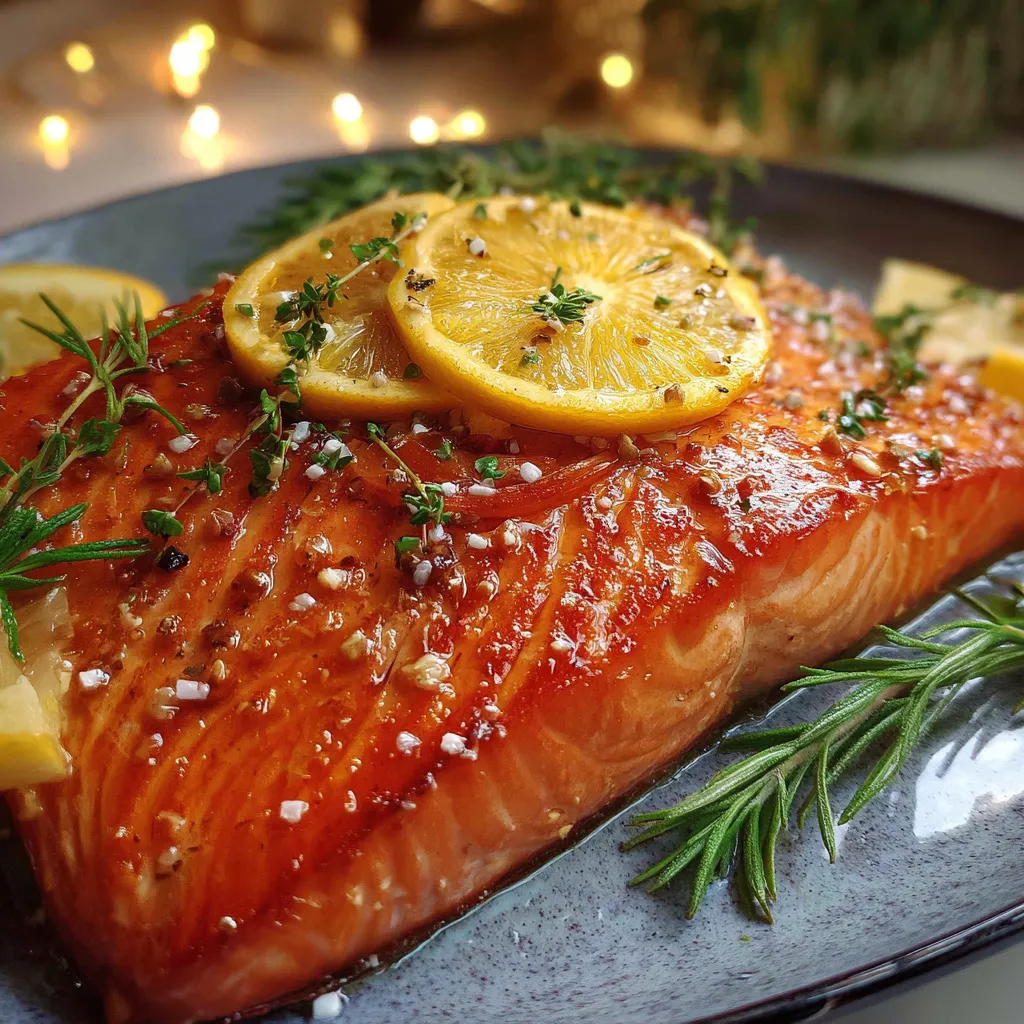

Christmas Baked Salmon
Description
Succulent salmon bakes in a golden citrus-herb glaze, its skin crisping beneath a crown of orange and lemon slices. Fresh pomegranate and herbs add bright color and sweet-tart pops, making every bite festive and flavorful.
Ingredients
Instructions
-
Prepare the oven and pan:
-
- Preheat your oven to 200°C / 400°F (or 190°C / 375°F fan-forced).
-
- Line a large baking sheet or roasting pan with baking parchment or foil. Lightly brush or spray with a little olive oil to prevent sticking.
-
- Place the salmon fillet skin-side down on the prepared tray. If the salmon is very cold, let it sit at room temperature for 10–15 minutes while you prepare the seasonings so it bakes more evenly.
-
Check and prepare the salmon:
-
- Run your fingertips gently along the surface of the salmon to check for any remaining pin bones. If you feel any, pull them out with clean tweezers or fish pliers.
-
- Pat the salmon dry with paper towels; this helps the oil and seasonings adhere and gives better texture.
-
Season the salmon base:
-
- In a small bowl, combine 2 tbsp olive oil and 1 tbsp melted unsalted butter.
-
- Brush this mixture evenly over the top and sides of the salmon.
-
- In another small bowl, mix together the fine sea salt, black pepper, garlic powder, onion powder, smoked paprika, ground coriander (if using), lemon zest, and orange zest.
-
- Sprinkle this spice-zest mixture evenly over the salmon, gently pressing it so it adheres to the surface.
-
Make the citrus-herb topping:
-
- In a medium bowl, whisk together olive oil, lemon juice, orange juice, Dijon mustard, maple syrup (or honey), and minced garlic until well combined and slightly emulsified.
-
- Stir in thyme, rosemary, parsley, salt, and pepper.
-
- Taste the mixture and adjust seasoning: add a pinch more salt for savoriness, a bit more maple/honey for sweetness, or a little extra lemon for brightness, according to your preference.
-
Coat the salmon with the topping:
-
- Spoon or brush the citrus-herb mixture evenly over the salmon, letting a little run down the sides.
-
- Reserve 1–2 tablespoons of the mixture in the bowl to drizzle on after baking if you like an extra glossy finish.
-
Add the citrus slices:
-
- Arrange the thin orange and lemon slices decoratively over the surface of the salmon, slightly overlapping like fish scales or in a diagonal pattern.
-
- If using, tuck a few very thin slices of red onion around the citrus for additional color and flavor. Avoid covering the fish completely so some of the topping can caramelize.
-
Bake the salmon:
-
- Place the tray into the preheated oven on the middle rack.
-
- Bake for about 15–20 minutes, depending on the thickness of your salmon. As a guideline, allow about 8–10 minutes per 2.5 cm (1 inch) at the thickest part.
-
- Begin checking at 14–15 minutes. The salmon is done when:
-
- It flakes easily with a fork at the thickest point.
-
- The flesh is just opaque in the center but still very moist.
-
- An instant-read thermometer inserted into the thickest part reads about 50–52°C (122–125°F) for medium or up to 57°C (135°F) for more cooked.
-
- If you prefer a slightly caramelized top, you can switch to the broiler/grill setting for the last 1–2 minutes, watching closely to avoid burning the citrus slices.
-
Rest the salmon:
-
- Remove the tray from the oven and let the salmon rest for 5–8 minutes. This allows the juices to redistribute so the fish stays tender and silky.
-
- During this time, gently spoon any flavorful juices from the tray back over the top of the salmon.
-
Add the festive garnish:
-
- While the salmon rests, sprinkle the top with fresh pomegranate arils to add bright color and a sweet-tart pop.
-
- Scatter a few fresh cranberries around for a Christmas look (they are quite tart raw, so they are mainly decorative unless lightly cooked in the pan juices first).
-
- Sprinkle chopped fresh dill or additional parsley over the top.
-
- If you reserved some of the citrus-herb mixture, drizzle it lightly over the salmon now for a glossy finish.
-
- Tuck fresh thyme or rosemary sprigs around the sides of the salmon on the platter or tray for an aromatic, holiday presentation.
-
Serve:
-
- Carefully slide a large spatula between the salmon and the skin to lift portions for serving; the skin can stay on the tray.
-
- Transfer slices or large flakes of salmon to plates, making sure each portion gets some citrus slice, herbs, and pomegranate.
-
- Finish with a light sprinkle of flaky sea salt and an extra squeeze of fresh lemon if desired.
-
- Serve warm or at room temperature with your favorite holiday sides such as roasted potatoes, green beans, Brussels sprouts, or a fresh green salad.
Note
- Use center-cut salmon fillet for even thickness so it cooks uniformly and looks neater on a holiday table.
- For a stronger Christmas aroma, increase the orange zest and fresh rosemary slightly, but avoid overpowering the delicate fish.
- This recipe works beautifully with smaller fillets too; simply reduce the baking time and check early.
- You can prepare the topping and season the salmon (without the citrus slices) up to 4 hours ahead; keep covered in the fridge and add slices just before baking.
- Leftover salmon is excellent flaked into salads, pasta, or breakfast eggs the next day; store tightly covered in the fridge for up to 2 days.
- If serving buffet-style, present the whole side of salmon on a wooden board or large platter lined with greens for a show-stopping centerpiece.

