

Crispy Korean Vegetable Pancakes Yachaejeon bring a burst of golden, garden-fresh flavor to your table. These crackling, thin pancakes showcase a colorful medley of cabbage, zucchini, carrots, scallions, and onion, all bound together in a light, silky batter. Each bite delivers crispy edges and tender vegetable ribbons, pairing beautifully with a tangy soy-vinegar dipping sauce that awakens your palate. Perfect for lunch or as a crowd-pleasing appetizer, this beginner-friendly recipe will have you flipping pancakes like a pro in no time.
Key Ingredients
Before you start cooking, gather these simple yet essential ingredients—each playing a crucial role in creating the perfect Yachaejeon.
- 1 cup all-purpose flour: Provides structure and binds the vegetables into a smooth, cohesive batter.
- 1 cup cold water: Keeps the batter light and crispy by slowing gluten development.
- 1 egg: Adds richness and helps the batter hold together when frying.
- 1 teaspoon salt: Enhances the overall flavor of the vegetables and batter.
- 1 cup cabbage, thinly sliced: Offers a crunchy base and mild sweetness.
- 1/2 cup carrot, julienned: Brings bright color and subtle sweetness.
- 1/2 cup zucchini, julienned: Adds moisture and tender texture.
- 1/4 cup scallions, chopped: Infuses a sharp, aromatic bite.
- 1/4 cup onion, thinly sliced: Contributes sweetness and depth of flavor.
- 3 tablespoons vegetable oil for frying: Ensures each pancake turns golden and crisp.
How To Make Crispy Korean Vegetable Pancakes Yachaejeon
Ready to dive into the crispiest, veggie-packed pancakes you’ve ever made? This recipe flows seamlessly from mixing a velvety batter to frying perfect golden discs that stay crunchy and tender. Just follow these detailed steps and you’ll have a stack of Yachaejeon to impress family and friends.
1. In a large bowl, whisk together the all-purpose flour, cold water, egg, and salt until the batter is silky smooth and free of lumps.
2. Add the thinly sliced cabbage, julienned carrot and zucchini, chopped scallions, and sliced onion to the bowl. Stir gently until every strand of vegetable is evenly coated in the batter.
3. Heat 1 tablespoon of the vegetable oil in a nonstick skillet over medium-high heat, waiting until the oil shimmers but doesn’t smoke.
4. Spoon a ladleful of the vegetable batter into the hot skillet and use the back of the spoon to spread it thinly into a neat, even circle.
5. Cook the pancake undisturbed until the edges begin to brown and crisp, about 3 minutes. Peek underneath to confirm a golden hue.
6. Drizzle a little more oil around the edges, then carefully flip the pancake with a spatula. Cook the second side until it’s equally golden and crisp, about 2 minutes.
7. Transfer the cooked pancake to a paper-towel–lined plate. Repeat with the remaining batter, adding oil as needed to keep each pancake beautifully crisp.
Serving Suggestions
These savory pancakes shine when paired with complementary sides and thoughtful plating—here are four easy ways to elevate your Yachaejeon experience:
- Classic Dipping Sauce: Whisk soy sauce, rice vinegar, and a pinch of sugar; serve in a small bowl for dunking each pancake.
- Fresh Herb Garnish: Sprinkle cilantro or chopped chives over the pancakes for a pop of color and brightness.
- Spicy Kick: Drizzle gochujang mayo (mix gochujang with mayo) on the side or lightly across each pancake.
- Banchan Pairing: Serve alongside pickled radish or kimchi to balance the crispy texture with tangy, fermented notes.
Tips For Perfect Crispy Korean Vegetable Pancakes Yachaejeon
Mastering Yachaejeon is all about technique and small tweaks that make a big difference. Keep these friendly pointers in mind next time you fire up your skillet:
- Use ice-cold water in the batter for extra crispiness.
- Feel free to add bell peppers, mushrooms, or kimchi for a flavor twist.
- Serve with a dipping sauce made from soy sauce, rice vinegar, and a pinch of sugar.
- Keep pancakes warm in a low oven while you finish cooking the rest.
How To Store It
Once you’ve enjoyed your fresh, hot pancakes, here’s how to keep leftovers tasty and ready for later:
- Refrigerate in an airtight container: Cool pancakes to room temperature, then layer them with parchment paper. Store for up to 3 days.
- Freeze individual portions: Place pancakes between wax paper in a zip-top bag and freeze for up to one month.
- Reheat in a skillet: Warm over medium heat with a teaspoon of oil, flipping once to restore crisp edges.
- Avoid the microwave: It steams pancakes and makes them soggy—opt for the oven or stovetop instead.
Frequently Asked Questions
Here are answers to the most common questions about making Yachaejeon:
- How can I ensure my Yachaejeon turns out extra crispy every time?
Use ice-cold water for your batter to slow gluten development and create a light, crisp coating. Whisk the batter until it’s just combined—overmixing can make it gummy. When frying, heat your skillet over medium-high heat and add enough oil to coat the surface; the oil should shimmer but not smoke. Spread the batter thinly and evenly so each pancake cooks quickly. Cook the first side undisturbed until the edges brown (about 3 minutes), then flip and cook the second side until golden. Transfer finished pancakes to a paper-towel–lined plate and keep them in a warm oven (around 200°F/90°C) on a rack so air circulates and prevents sogginess.
- Can I prepare ingredients in advance and how should I store any leftover batter?
You can thinly slice the cabbage, julienne the carrots and zucchini, chop scallions, and slice onion up to a day ahead—store each in airtight containers or zip-top bags in the refrigerator. For best crispiness, make the batter just before cooking; if you must hold it, cover and refrigerate for no more than 30 minutes. Stir gently before using, then cook immediately—batter resting too long allows moisture to separate, leading to dense pancakes. Discard any leftover batter after two hours; it won’t yield the same texture if held longer.
- What vegetable variations or substitutions can I try in this recipe?
Feel free to customize with bell peppers, thinly sliced mushrooms, bean sprouts, or finely chopped kimchi for a tangy kick. You can also add shredded sweet potato or broccoli florets (par-cooked and patted dry). For a gluten-free version, substitute the all-purpose flour with a 1:1 gluten-free flour blend or rice flour mixed with a tablespoon of cornstarch to maintain crispness. Adjust seasoning or salt levels according to added ingredients.
- What’s the best way to serve Yachaejeon and make a dipping sauce?
Serve pancakes hot, stacked on a platter with optional banchan like kimchi or pickled radish on the side. For a classic dipping sauce, whisk together 2 tablespoons soy sauce, 1 tablespoon rice vinegar, and ½ teaspoon sugar until the sugar dissolves. Add a splash of sesame oil, a pinch of red pepper flakes or gochugaru, and thinly sliced scallions or minced garlic if desired. Drizzle a few toasted sesame seeds on top before serving.
- How can I reheat leftover pancakes without sacrificing crispiness?
Reheat in a nonstick skillet over medium heat with a teaspoon of oil, flipping once until both sides are crisp and warmed through. Alternatively, place them on a wire rack on a baking sheet in a preheated oven or toaster oven at 350°F (175°C) for 5 to 7 minutes. Avoid the microwave, which will steam them and make them soggy.
- Why did my pancake turn out soggy or gummy, and how can I fix it next time?
Sogginess often comes from a batter that’s too thick or containing excess water from vegetables. To fix this, pat vegetables dry with paper towels before mixing them in. Ensure your oil and pan are hot enough—if the skillet is too cool, the pancake will absorb oil rather than crisp immediately. Spread the batter thinly and cook on medium-high heat. If your batter feels too runny, add a tablespoon more flour; if it’s too stiff, a splash more ice-cold water will loosen it to the right consistency.
What Makes This Special
These Crispy Korean Vegetable Pancakes Yachaejeon stand out because they strike the perfect balance between crunchy edges and tender veggie goodness. The simple batter, chilled for extra crispiness, wraps every strand of cabbage, carrot, zucchini, scallion, and onion in a golden embrace. Plus, you can customize them with kimchi, bell peppers, or mushrooms for endless flavor adventures. Print this article, hang it on your fridge, and don’t forget to share your pancake pics or tips below—I’d love to know how your Yachaejeon turned out!
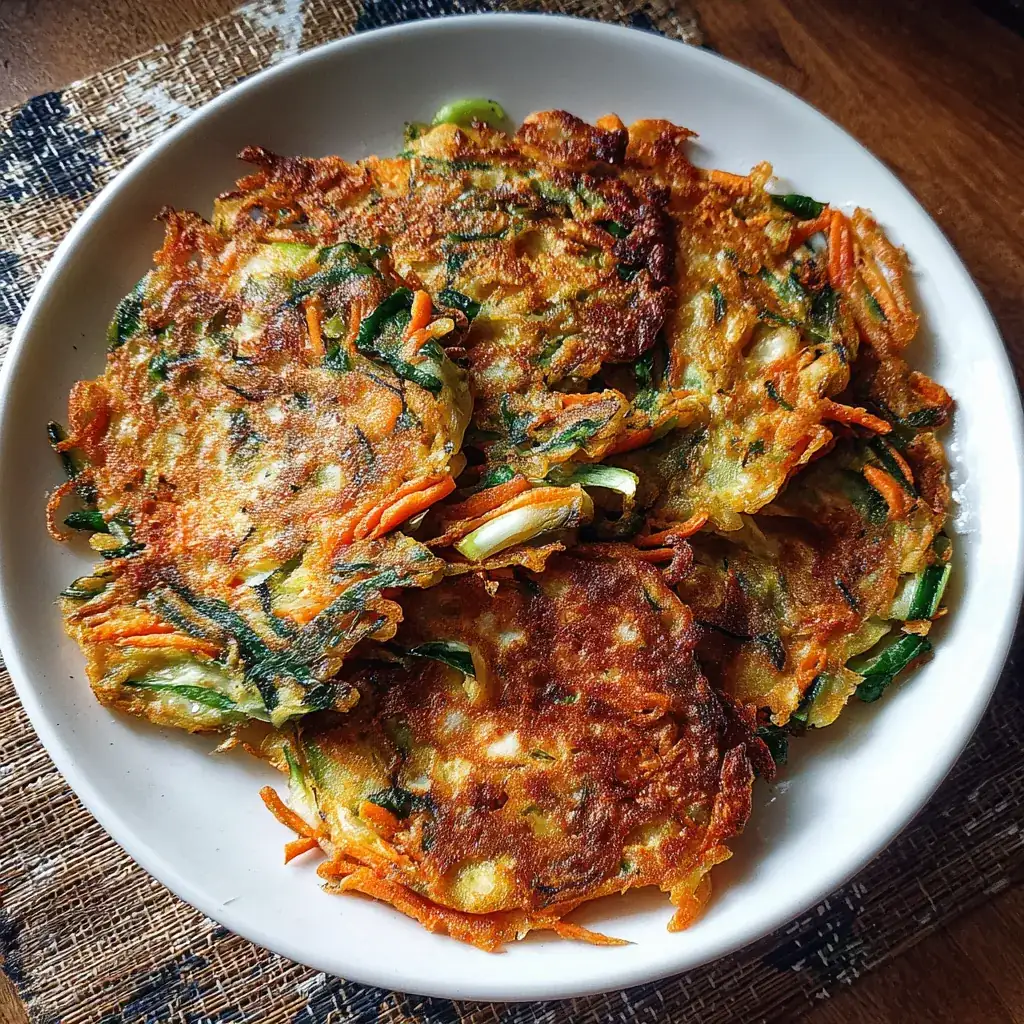

Crispy Korean Vegetable Pancakes Yachaejeon
Description
These Korean vegetable pancakes crackle under your fork, their golden edges giving way to tender strands of cabbage, zucchini, and carrot. Each savory bite pairs perfectly with a tangy soy-vinegar dipping sauce that awakens the palate.
Ingredients
Instructions
-
In a large bowl, whisk together flour, cold water, egg, and salt until the batter is smooth.
-
Add cabbage, carrot, zucchini, scallions, and onion to the batter and stir until all vegetables are evenly coated.
-
Heat 1 tablespoon of the vegetable oil in a nonstick skillet over medium-high heat.
-
Spoon a ladleful of the vegetable batter into the skillet and use the back of the spoon to spread it into a thin, even circle.
-
Cook until the edges begin to brown and the bottom is crisp, about 3 minutes.
-
Drizzle a little more oil around the edges, carefully flip the pancake, and cook the other side until golden and crisp, about 2 minutes.
-
Transfer the cooked pancake to a plate lined with paper towels. Repeat with remaining batter, adding oil as needed.
Note
- Use ice-cold water in the batter for extra crispiness.
- Feel free to add bell peppers, mushrooms, or kimchi for a flavor twist.
- Serve with a dipping sauce made from soy sauce, rice vinegar, and a pinch of sugar.
- Keep pancakes warm in a low oven while you finish cooking the rest.

