

Ground Pork Udon Noodles are a total game-changer for weeknight dinners. This quick skillet treat brings together tender udon noodles bathed in a rich soy-and-oyster sauce, mingling with juicy pork, aromatic ginger, and crisp onions. With bright green onions sprinkled on top, each forkful balances savory depth and fresh scallion bursts. Whether you’re craving an easy Asian stir fry or simply need a fast, comforting meal, this recipe delivers big flavors in under 30 minutes—perfect for busy nights and hungry families.
Key Ingredients
Before you dive in, gather these simple yet impactful ingredients to nail every bite:
- 8 ounces udon noodles: Chewy, thick noodles that hold up beautifully to stir-frying.
- 1 tablespoon vegetable oil: Neutral oil for high-heat cooking without burning.
- 1 pound ground pork: Juicy protein that soaks up the savory sauce.
- 1 small onion, sliced: Adds sweetness and texture as it softens.
- 2 cloves garlic, minced: Brings pungent warmth and depth.
- 1 teaspoon fresh ginger, grated: Zesty kick that brightens the pork.
- 3 tablespoons soy sauce: Salty umami base to flavor the dish.
- 1 tablespoon oyster sauce: Adds rich, slightly sweet complexity.
- 1 teaspoon sesame oil: Finishes with nutty aroma and taste.
- 2 green onions, sliced: Fresh garnish for color and mild sharpness.
How To Make Ground Pork Udon Noodles
Getting dinner on the table has never been more satisfying. In this section, we’ll stir-fry our aromatics and protein, then marry them with perfectly cooked udon noodles and a savory sauce. Follow each step for maximum flavor, making sure to keep the heat high for that classic wok hei taste and cook ingredients in the proper order for balanced texture and taste.
1. Bring a pot of water to a rolling boil and cook udon noodles for 2 to 3 minutes until tender. Drain well and set noodles aside to prevent overcooking.
2. Heat vegetable oil in a large skillet or wok over medium-high heat, ensuring a hot surface before adding ingredients.
3. Add sliced onion to the hot skillet and stir-fry until translucent, about 2 minutes, stirring constantly to avoid browning.
4. Add minced garlic and grated ginger, cooking for 30 seconds until fragrant. Keep ingredients moving to prevent burning.
5. Add ground pork to the skillet, breaking it into small pieces with your spatula. Stir-fry until no longer pink, about 4–5 minutes.
6. Stir in soy sauce, oyster sauce, and sesame oil, mixing evenly so each pork morsel is coated in the rich sauce.
7. Add cooked udon noodles back into the skillet and toss everything together, ensuring noodles are heated through and fully coated in sauce.
8. Remove from heat and garnish with sliced green onions before serving to add a pop of freshness.
Serving Suggestions
Elevate your Ground Pork Udon Noodles with these fun ideas to make each meal memorable. Whether you’re hosting friends or just treating yourself, these serving tips will help you style and customize your dish for maximum enjoyment.
- Serve in deep bowls with extra sauce spooned over the top for a comforting, saucy presentation.
- Plate alongside a small dish of chili oil or chili flakes so spice lovers can dial up the heat.
- Offer a side of quick-pickled cucumbers (thinly sliced with rice vinegar, sugar, and salt) for a bright, crunchy contrast.
- Garnish with a sprinkle of toasted sesame seeds and additional green onions for an extra layer of nutty flavor and color.
Tips For Perfect Ground Pork Udon Noodles
Nailing this recipe is all about timing and seasoning. A few friendly pointers will ensure your noodles stay springy, the pork stays juicy, and the sauce hits all the right notes. Let’s make this recipe even more foolproof with some insider tips from my own kitchen adventures.
- Use fresh udon noodles from the refrigerated section for best texture.
- Adjust soy and oyster sauce to taste for saltiness.
- Add a pinch of chili flakes for heat if desired.
- Serve immediately to prevent noodles from getting soggy.
How To Store It
If you happen to have leftovers (though that’s rare!), storing your Ground Pork Udon Noodles properly will keep them tasting almost as good as fresh. Follow these storage tips to maintain flavor, texture, and noodle integrity for your next meal.
- Room temperature cooling: Let the noodles cool completely before refrigerating to avoid steam buildup.
- Airtight container: Store in a sealed container for up to two days in the fridge.
- Separate sauce: If possible, reserve a bit of extra sauce on the side to refresh noodles when reheating.
- Gentle reheating: Warm in a skillet over medium heat with a splash of water or soy sauce to loosen before serving.
Frequently Asked Questions
Here are quick answers to your most common queries:
- How long does it take to prepare and cook Ground Pork Udon Noodles?
From start to finish, it takes about 20 to 25 minutes. This includes 2 to 3 minutes to cook the udon noodles, a few minutes to slice the onion, garlic, ginger, and green onions, and roughly 10 to 12 minutes to stir-fry the onions, garlic, ginger, and ground pork before tossing everything with the sauces and noodles.
- Can I use dried udon noodles instead of fresh ones?
Yes, you can use dried udon noodles, but you’ll need to follow the package instructions for cooking time. After boiling, drain and rinse them under cold water to remove excess starch, then toss with a little vegetable oil to prevent sticking before adding to the skillet.
- What can I do to prevent the noodles from becoming soggy?
To keep the noodles firm, drain them thoroughly and set them aside without stacking them too tightly. You can toss the cooked noodles with a teaspoon of vegetable oil to coat them lightly, which helps maintain their texture when stir-frying.
- How can I adjust the seasoning if I prefer it less salty or spicier?
To reduce saltiness, start by halving the soy sauce and oyster sauce, taste, and then add more if needed. For heat, sprinkle in chili flakes or drizzle a bit of chili oil when you stir in the sauces. You can also mix in sliced fresh chili peppers at step 4 for an extra kick.
- Is it possible to add vegetables to this recipe?
Absolutely. You can add bell peppers, snow peas, or shredded carrots. Stir-fry the heartier veggies like bell peppers and carrots after the onions have softened, cooking for about 2 minutes, then proceed with garlic and ginger before adding the pork.
- How should I store and reheat leftovers?
Allow the noodles to cool to room temperature before transferring to an airtight container. Store in the refrigerator for up to two days. Reheat in a skillet over medium heat, adding a splash of water or soy sauce if needed to loosen the noodles, and heat until warmed through.
- Can I substitute the ground pork with another protein?
Yes, ground chicken, turkey, or beef can be used as a substitute. Cooking times are similar: stir-fry until the meat is fully cooked and no longer pink, then proceed with the soy sauce, oyster sauce, and sesame oil as directed.
What Makes This Special
This Ground Pork Udon Noodles recipe works because it brings together quick-cook noodles, a savory pork sauce, and bright aromatics in one skillet—perfect for busy cooks who crave big flavor without fuss. The balance of ginger, garlic, soy, and oyster sauce creates a crave-worthy sauce that clings to each chewy strand. Feel free to print this article and save it for later—you’ll be glad you did next time your dinner plans need a delicious, speedy upgrade. Let me know in the comments if you tried it or have questions—I’m here to help!
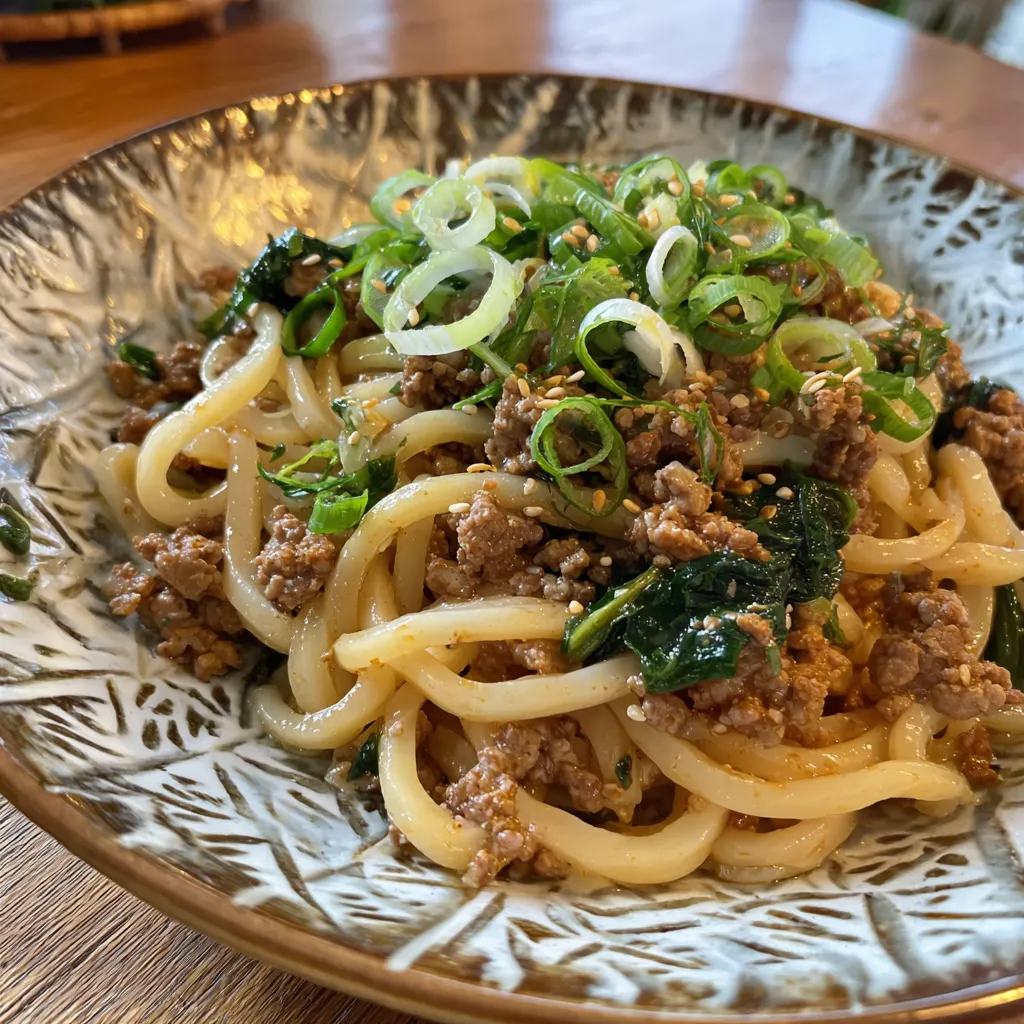

Ground Pork Udon Noodles
Description
Tender udon noodles bathed in a rich, soy-and-oyster sauce mingle with juicy pork, aromatic ginger, and crisp onions. Each forkful offers a perfect balance of savory depth and fresh scallion bursts.
Ingredients
Instructions
-
Bring a pot of water to a boil and cook udon noodles for 2 to 3 minutes until tender then drain and set aside.
-
Heat vegetable oil in a large skillet or wok over medium-high heat.
-
Add sliced onion to the skillet and stir-fry until translucent about 2 minutes.
-
Add minced garlic and grated ginger and cook for 30 seconds until fragrant.
-
Add ground pork to the skillet and stir-fry until no longer pink breaking it into small pieces.
-
Stir in soy sauce oyster sauce and sesame oil mixing evenly to coat the pork.
-
Add cooked udon noodles to the skillet and toss everything together until noodles are heated through.
-
Remove from heat and garnish with sliced green onions before serving.
Note
- Use fresh udon noodles from the refrigerated section for best texture.
- Adjust soy and oyster sauce to taste for saltiness.
- Add a pinch of chili flakes for heat if desired.
- Serve immediately to prevent noodles from getting soggy.

