

Healing Ginger Garlic Broth with Rice Noodles and Bok Choy is your new go-to lunch when you need a comforting, aromatic bowl brimming with silky rice noodles, tender baby bok choy, and zesty lime. Fragrant ginger and garlic infuse the clear broth with warm depth, while fresh cilantro brightens each spoonful. It's beginner-friendly, satisfying, and perfect for cozy afternoons at home.
Key Ingredients
To make this Healing Ginger Garlic Broth with Rice Noodles and Bok Choy shine, you only need a handful of fresh, pantry-friendly ingredients that pack serious flavor:
- 1 tablespoon vegetable oil: A neutral base that gently infuses the broth with flavor when sautéing ginger and garlic.
- 1 inch fresh ginger (sliced): Delivers bright, spicy warmth to soothe and invigorate every spoonful.
- 3 cloves garlic (minced): Provides savory depth and aromatic richness to round out the ginger’s zing.
- 4 cups vegetable broth: The clear, savory liquid foundation that carries the ginger-garlic essence and tender veggies.
- 1 tablespoon soy sauce: Adds umami and saltiness to balance the broth’s fresh flavors.
- 1 teaspoon fish sauce: Packs an extra punch of savory depth and complexity (omit for vegan option).
- 1 teaspoon sesame oil: Drizzled in for its toasty aroma, rounding out the broth’s flavor profile.
- 100 grams rice noodles: Silky, gluten-free strands that soak up every drop of the flavorful broth.
- 4 heads baby bok choy (halved): Tender leafy greens that add crunch and vibrant color.
- 1 pinch salt: Seasoning to taste, bringing out each ingredient’s natural flavors.
- 1 pinch pepper: A light kick of spice to highlight the ginger and garlic notes.
- 2 stalks green onion (sliced): Fresh garnish that delivers a crisp, oniony bite.
- Handful cilantro leaves: Bright herbal notes that lift the broth with fresh citrusy hints.
- 1 lime (cut into wedges): Provides a burst of tangy brightness when squeezed over each bowl.
How To Make Healing Ginger Garlic Broth with Rice Noodles and Bok Choy
Preparing this soothing soup is both easy and rewarding. You’ll bloom aromatic ginger and garlic in oil, build a flavorful broth with umami-rich seasonings, then add tender bok choy just before serving. Rice noodles are cooked separately so they remain perfectly tender. Follow these steps to create a harmonious bowl that balances warmth, freshness, and depth.
1. Heat 1 tablespoon vegetable oil in a large pot over medium heat until it shimmers, ensuring an even base for sautéing.
2. Add the sliced ginger and minced garlic and sauté for 1–2 minutes, stirring constantly until the garlic turns golden at the edges and releases its fragrant aroma.
3. Pour in 4 cups of vegetable broth and bring it to a gentle simmer, allowing the flavors to meld without boiling vigorously.
4. Stir in 1 tablespoon soy sauce, 1 teaspoon fish sauce, and 1 teaspoon sesame oil, whisking to incorporate the seasonings evenly into the broth.
5. Meanwhile, cook 100 grams rice noodles according to package instructions, then drain them thoroughly and set aside so they don’t overcook.
6. Add the halved baby bok choy to the simmering broth and cook for about 3 minutes until the stalks are tender yet still slightly crisp.
7. Divide the cooked rice noodles among serving bowls, creating a cozy nest for the broth and veggies.
8. Ladle the hot broth and tender bok choy over the rice noodles, ensuring each bowl gets a balance of liquid and greens.
9. Top each bowl with sliced green onion, cilantro leaves, and a lime wedge, then season with salt and pepper to taste for that final flavor boost.
Serving Suggestions
After all that care, it’s time to plate this Healing Ginger Garlic Broth with Rice Noodles and Bok Choy in style. Whether you’re hosting a casual lunch or enjoying a solo supper, these ideas will elevate your presentation and tasting experience:
- Crispy Shallots and Sesame Seeds: Sprinkle golden fried shallots and toasted sesame seeds on top for extra crunch and a nutty finish.
- Chili Oil Drizzle: Add a few drops of homemade or store-bought chili oil for a spicy kick that contrasts the gentle broth.
- Soft-Boiled Egg: Halve a perfectly soft-boiled egg and nestle it in the bowl to boost creaminess and protein.
- Side of Pickled Vegetables: Serve with a small dish of quick-pickled cucumbers or radishes to introduce a tangy, refreshing bite.
Tips For Perfect Healing Ginger Garlic Broth with Rice Noodles and Bok Choy
These little tricks will take your Healing Ginger Garlic Broth with Rice Noodles and Bok Choy from great to absolutely soul-soothing every time you make it. Feel free to adapt based on what’s in your pantry or your spice preferences: swap out broths for a deeper flavor, dial the garlic and ginger up or down to suit your taste buds, and find the perfect vegan balance by omitting the fish sauce or substituting tamari. I’ve found that serving this soup piping hot seals in the freshness, while prepping ingredients ahead of time means you can assemble bowls in record speed on busy nights. Keep these tips in mind to get the most out of each bowl, whether you’re feeding one hungry person or a whole family.
- You can substitute chicken broth if you prefer a meat-based broth.
- Increase or decrease garlic and ginger for a milder or stronger flavor.
- For a vegan option, omit fish sauce or replace it with extra soy sauce or tamari.
- Serve immediately to maintain the warmth and freshness of the ingredients.
How To Store It
Leftovers of this Healing Ginger Garlic Broth with Rice Noodles and Bok Choy can save dinner another night—if you store them properly. Keeping components separate and using airtight containers will preserve texture, flavor, and freshness, so nothing gets soggy or bland. Here’s how to stash your soup for up to three days (or freeze it for longer):
- Separate Containers: Store the broth and bok choy in one airtight container and the rice noodles in another to prevent the noodles from absorbing too much liquid.
- Refrigeration: Keep both containers in the fridge for up to three days, ensuring you cool them to room temperature before sealing.
- Freezing Broth: Freeze the broth (without noodles) in a leakproof container or freezer bag for up to 3 months; thaw overnight in the fridge before reheating.
- Quick Reheat: Warm the broth and bok choy gently on the stove until simmering, then briefly dunk the noodles in hot water to revive their texture before assembling.
Frequently Asked Questions
Got questions? I’ve got you covered with answers to the most common queries about this soothing soup.
- How long does it take to prepare and cook this Healing Ginger Garlic Broth with Rice Noodles and Bok Choy?
From start to finish it takes about 25 minutes. This includes 5 minutes to slice ginger, mince garlic, halving bok choy and slicing green onions, 2 minutes to sauté aromatics, 10 minutes to simmer the broth and tenderize bok choy, and 8 minutes to cook and drain the rice noodles before assembling the bowls.
- Can I substitute any ingredients if I don’t have fish sauce or vegetable broth?
Yes. You can use chicken broth in place of vegetable broth for a meat-based flavor. If you prefer to keep it vegan, omit the fish sauce and add extra soy sauce or tamari. You can also swap sesame oil for a neutral oil if you lack it, though you’ll lose some of the toasty depth.
- How should I store and reheat leftovers for maximum freshness?
Store the broth and bok choy separately from the noodles in airtight containers in the refrigerator for up to three days. When reheating, gently warm the broth and bok choy on the stove until simmering, then quickly reheat the rice noodles by briefly plunging them into hot water. Assemble just before serving to prevent soggy noodles.
- What’s the best way to adjust the flavor intensity of the broth?
If you want a milder taste, reduce the garlic and ginger by half. For a stronger punch, add an extra clove of garlic or an additional half-inch of ginger. You can also increase or decrease soy sauce and fish sauce by a quarter teaspoon to fine-tune saltiness and umami.
- Can I use different noodles or leafy greens instead of rice noodles and bok choy?
Absolutely. You can substitute rice vermicelli or glass noodles following their package cooking time. If bok choy isn’t available, baby spinach, Swiss chard, or napa cabbage work well—just add them at the same step and cook until just tender to maintain their texture and color.
- How do I assemble and garnish each bowl for the best presentation and flavor balance?
Divide the cooked noodles between bowls, ladle hot broth and bok choy on top, then garnish with sliced green onions and cilantro leaves. Serve with a lime wedge so diners can squeeze fresh juice for brightness. For extra heat, offer chili oil or red pepper flakes alongside.
- What tips ensure the ginger and garlic develop maximum flavor without burning?
Keep the heat at medium and watch closely during sautéing—stir constantly for about one to two minutes until you see small bubbles and smell the fragrance. If they begin to brown too quickly, reduce the heat slightly to prevent bitterness.
What Makes This Special
There’s something almost magical about how a simple blend of ginger, garlic, and bright herbs can transform humble rice noodles and bok choy into a bowl of pure comfort. This Healing Ginger Garlic Broth with Rice Noodles and Bok Choy works because each element balances warmth, freshness, and umami—no fancy ingredients required. It’s the kind of recipe you’ll want to print, save, and revisit whenever you need a midweek mood booster. Plus, the flexibility means you can customize it to suit any pantry. Let me know in the comments if you tried it, have any questions, or discovered your own tasty twist!
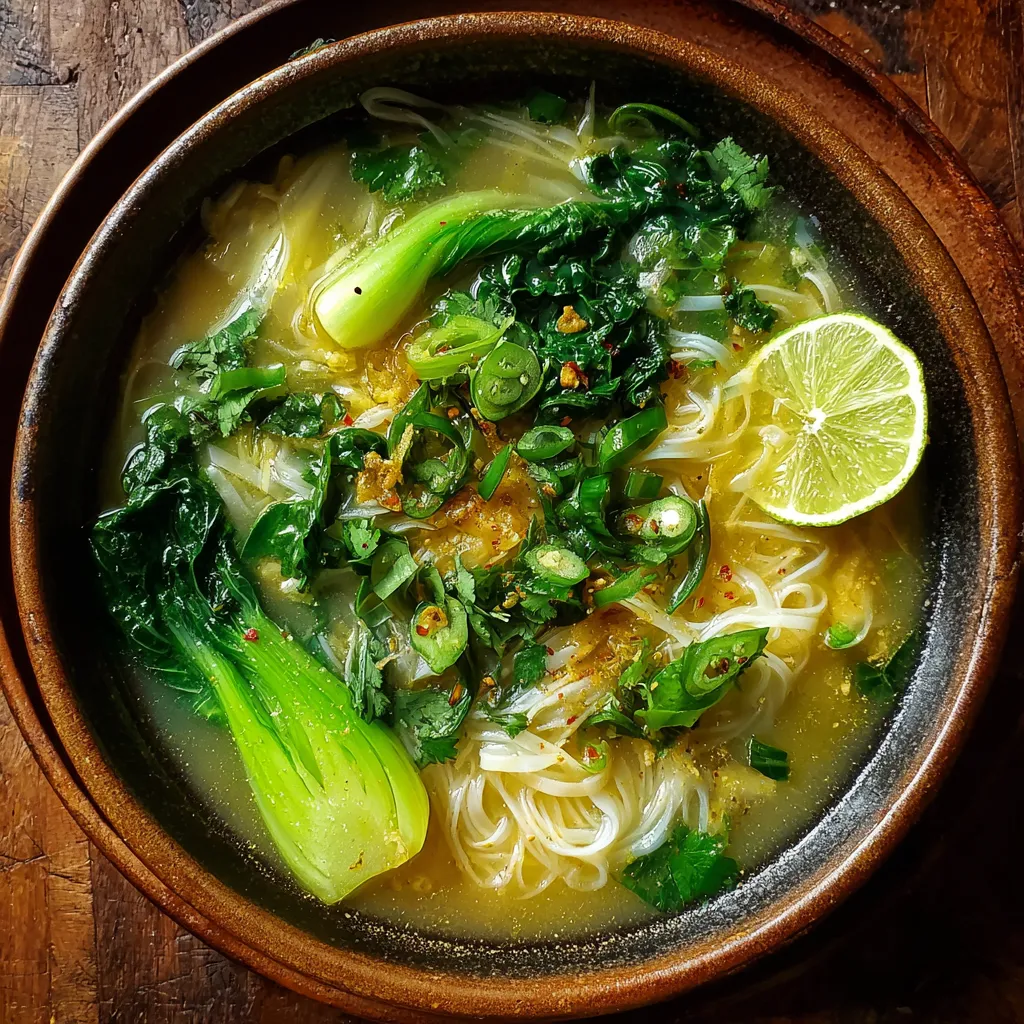

Healing Ginger Garlic Broth with Rice Noodles and Bok Choy
Description
Fragrant ginger and garlic infuse the clear broth with warmth, while crisp bok choy and soft rice noodles soak up every drop. A squeeze of lime and fresh cilantro add brightness to this soothing soup.
Ingredients
Instructions
-
Heat vegetable oil in a large pot over medium heat.
-
Add sliced ginger and minced garlic and sauté for 1–2 minutes until fragrant.
-
Pour in vegetable broth and bring to a gentle simmer.
-
Stir in soy sauce, fish sauce, and sesame oil.
-
Meanwhile, cook rice noodles according to package instructions, then drain and set aside.
-
Add halved baby bok choy to the simmering broth and cook for about 3 minutes until tender.
-
Divide cooked rice noodles among serving bowls.
-
Ladle hot broth and bok choy over the noodles.
-
Top each bowl with sliced green onion, cilantro leaves, and a lime wedge. Season with salt and pepper to taste.
Note
- You can substitute chicken broth if you prefer a meat-based broth.
- Increase or decrease garlic and ginger for a milder or stronger flavor.
- For a vegan option, omit fish sauce or replace it with extra soy sauce or tamari.
- Serve immediately to maintain the warmth and freshness of the ingredients.

