

Get ready to dive into Healthy Chicken Pad Thai, a vibrant twist on Thai tradition that tosses tender chicken and crunchy veggies in a tangy tamarind sauce. This guilt-free stir-fry brings together tender chicken slices and chewy brown rice noodles that mingle with aromatic garlic, zingy tamarind, fresh bell pepper, and crisp bean sprouts, then crowned with crushed peanuts and cilantro for an irresistible burst of textures. Perfect for a beginner-friendly weeknight dinner, it’s a balanced, low-sodium recipe that proves you don’t need to sacrifice flavor for health.
Key Ingredients
Here’s the rundown of ingredients you’ll need to whip up this Healthy Chicken Pad Thai, each playing a unique role in building those bold, balanced flavors.
- 8 ounces brown rice noodles: a chewy foundation that soaks up the tangy tamarind and savory sauces.
- 12 ounces chicken breast, thinly sliced: lean protein that pairs perfectly with the veggies and absorbs the sauce.
- 1 tablespoon peanut oil: high-smoke-point oil for quick, even stir-frying.
- 2 cloves garlic, minced: adds aromatic zest that wakes up the palate.
- 2 eggs, beaten: provides extra protein and a silky texture.
- 3 tablespoons low-sodium tamarind paste: delivers that signature tangy punch.
- 1 tablespoon low-sodium soy sauce: brings umami depth and a touch of saltiness.
- 1 tablespoon fish sauce: adds savory, salty complexity.
- 1 tablespoon coconut sugar: balances the tang with gentle sweetness.
- 1/4 teaspoon red chili flakes: a spicy kick to wake up your taste buds.
- 3 green onions, sliced: offers a fresh, mild onion flavor.
- 1 cup bean sprouts: introduces delightful crunch and freshness.
- 1 red bell pepper, thinly sliced: adds natural sweetness and vibrant color.
- 2 tablespoons crushed peanuts: for nutty crunch and garnish.
- 1 lime, cut into wedges: brightens every bite with citrus zing.
- 1/4 cup fresh cilantro, chopped: herbaceous garnish that ties all flavors together.
How To Make Healthy Chicken Pad Thai
Ready to stir things up? Transform simple pantry staples into a vibrant, restaurant-worthy pad Thai right at home. You’ll start by hydrating the noodles, whisking a tangy sauce, and then building layers of flavor through quick, high-heat cooking. Follow these steps closely for perfect texture and taste.
1. Place the rice noodles in a bowl and cover with warm water. Let soak for 20 minutes, then drain.
2. In a small bowl, whisk together tamarind paste, soy sauce, fish sauce, coconut sugar and chili flakes. Set sauce aside.
3. Heat peanut oil in a large skillet or wok over medium-high heat. Add garlic and stir-fry for 30 seconds until fragrant.
4. Add chicken slices and cook for 4–5 minutes until cooked through and lightly browned.
5. Push chicken to the sides of the pan and pour beaten eggs into the center. Scramble eggs until just set, then mix with chicken.
6. Add drained noodles and the prepared sauce to the pan. Toss to coat and cook for 2–3 minutes until noodles are tender.
7. Stir in green onions, bean sprouts and red bell pepper. Cook for an additional 1–2 minutes until vegetables are slightly softened.
8. Remove pan from heat and divide Pad Thai among plates. Top with crushed peanuts, cilantro and lime wedges.
Serving Suggestions
Once your Healthy Chicken Pad Thai is ready, elevate the experience with these serving ideas that highlight texture and flavor balance:
- Family‐style platter: Spread the noodles on a large serving dish, sprinkle with peanuts and cilantro, and let everyone help themselves.
- Individual bowls: Portion into deep bowls, add extra lime wedges and a pinch of red chili flakes for a personalized kick.
- Lunch meal prep: Divide into airtight containers, tuck in a lime wedge, and sprinkle peanuts just before sealing to keep them crunchy.
- Herb and citrus bar: Serve alongside bowls of fresh bean sprouts, Thai basil, and lime wedges so guests can customize each bite.
Tips For Perfect Healthy Chicken Pad Thai
These friendly tips will ensure your pad Thai turns out sensational every time. From noodle swaps to extra flavor boosters, you’ll feel like a pro in no time.
- Swap brown rice noodles for shirataki noodles for a lower-carb option.
- Adjust chili flakes to taste or omit for a milder dish.
- Store leftovers in an airtight container in the refrigerator for up to 2 days.
- For extra flavor, add a splash of rice vinegar or a drizzle of sesame oil before serving.
How To Store It
To keep your Healthy Chicken Pad Thai tasting its best, follow these storage guidelines. Proper handling will maintain texture and flavor for your next meal.
- Refrigeration: Place cooled leftovers in an airtight container and store in the fridge for up to 2 days.
- Separate garnishes: Keep crushed peanuts, cilantro, and lime wedges in a small container to preserve crunch and freshness.
- Short-term freshness: Consume within 48 hours to enjoy the ideal texture and taste.
- Gentle reheating: Warm in a skillet over medium heat, stirring often and adding a splash of water or broth to prevent drying.
Frequently Asked Questions
Here are answers to your most common Healthy Chicken Pad Thai questions:
- How long should I soak the brown rice noodles before cooking?
You should soak the brown rice noodles in warm water for 20 minutes until pliable but still slightly firm. Drain thoroughly before adding to the pan to prevent soggy Pad Thai.
- Can I prepare any components of this recipe ahead of time?
Yes. You can soak and drain the noodles and slice the chicken breast up to a day in advance. Store the drained noodles in a lightly oiled, airtight container in the fridge, and keep the chicken covered until you’re ready to cook. You can also pre-mix the tamarind-soy-fish sauce blend and refrigerate it for up to 24 hours.
- What are some easy ingredient substitutions for dietary preferences?
For a lower-carb version, swap brown rice noodles for shirataki noodles. To make it vegetarian, replace chicken with firm tofu and use a vegetarian “fish” sauce or additional low-sodium soy sauce in place of fish sauce. You can also use coconut sugar substitutes like stevia or erythritol for a sugar-free option.
- How can I adjust the spiciness of this Pad Thai?
The recipe calls for 1/4 teaspoon of red chili flakes. For a milder dish, omit the chili flakes entirely or start with a pinch and add more at the end. For extra heat, increase the flakes to 1/2 teaspoon or finish each plate with a dash of chili oil.
- What’s the best way to store and reheat leftovers?
Store leftover Pad Thai in an airtight container in the refrigerator for up to 2 days. To reheat, gently warm in a skillet over medium heat, stirring often and adding a splash of water or broth to restore moisture. Avoid microwaving at high power to prevent the noodles from becoming too soft.
- How do I prevent the noodles from sticking together or becoming mushy?
After soaking, drain the noodles thoroughly and toss them with a small drizzle of peanut oil. Cook over medium-high heat, stirring constantly and adding the noodles only once the chicken and eggs are fully cooked. This high-heat, quick-toss method keeps the noodles separate and tender.
- Can I add extra vegetables or protein to this recipe?
Absolutely. You can stir in julienned carrots, snap peas, or mushrooms during step 7 for more veggies. For extra protein, add shrimp or thinly sliced beef alongside the chicken, adjusting the cook time by a minute or two for thicker cuts. Ensure any additional ingredients are added in small batches to maintain high cooking heat.
What Makes This Special
This Healthy Chicken Pad Thai stands out because it perfectly balances tangy tamarind, sweet coconut sugar, and savory sauces with chewy brown rice noodles, lean chicken, and vibrant veggies. It’s beginner-friendly, low-sodium, and bursting with contrasting textures—from crisp bean sprouts to crunchy peanuts. Feel free to print this article to save it for later weeknight dinners, and drop a comment or question below if you give it a try or need a hand with any step!
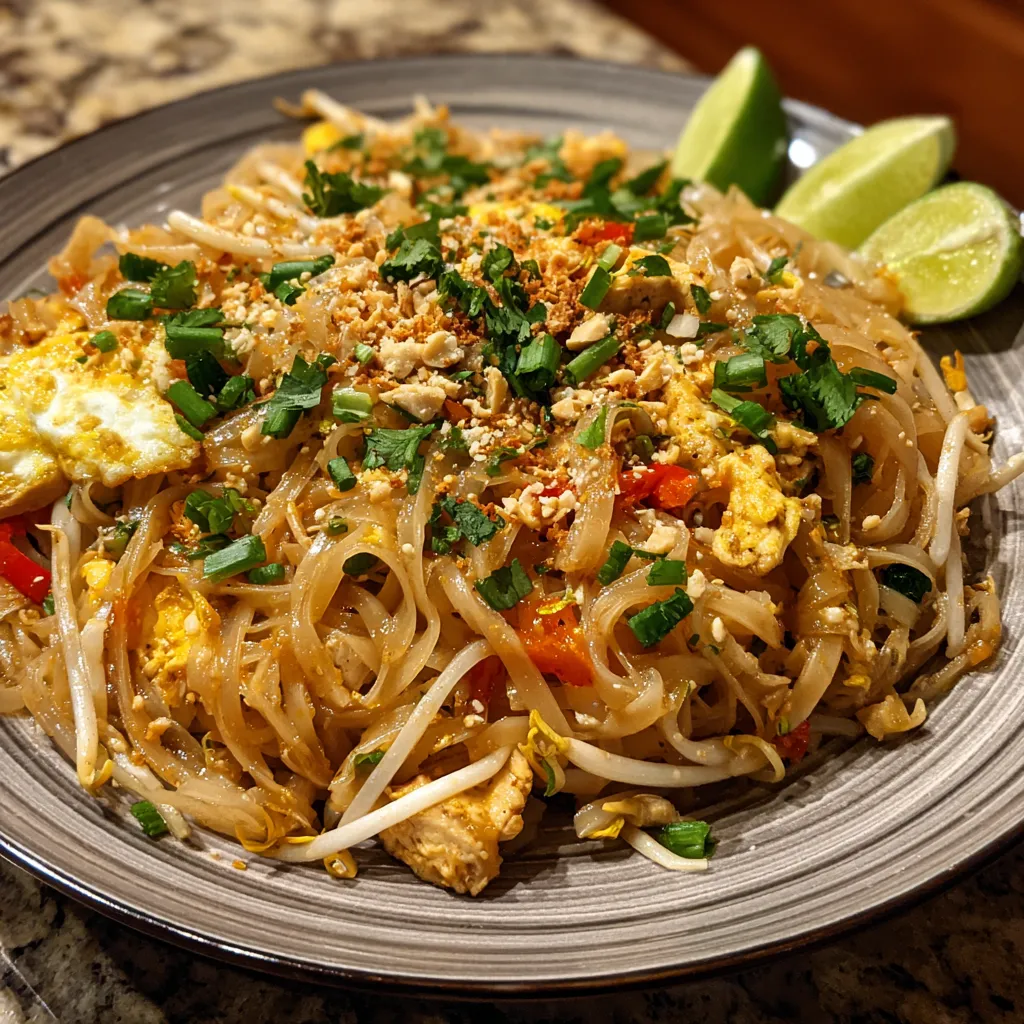

Healthy Chicken Pad Thai
Description
Tender chicken slices and chewy brown rice noodles mingle with garlic, zingy tamarind sauce, fresh bell pepper and crisp bean sprouts, crowned with peanuts and cilantro for a burst of textures.
Ingredients
Instructions
-
Place the rice noodles in a bowl and cover with warm water. Let soak for 20 minutes, then drain.
-
In a small bowl, whisk together tamarind paste, soy sauce, fish sauce, coconut sugar and chili flakes. Set sauce aside.
-
Heat peanut oil in a large skillet or wok over medium-high heat. Add garlic and stir-fry for 30 seconds until fragrant.
-
Add chicken slices and cook for 4–5 minutes until cooked through and lightly browned.
-
Push chicken to the sides of the pan and pour beaten eggs into the center. Scramble eggs until just set, then mix with chicken.
-
Add drained noodles and the prepared sauce to the pan. Toss to coat and cook for 2–3 minutes until noodles are tender.
-
Stir in green onions, bean sprouts and red bell pepper. Cook for an additional 1–2 minutes until vegetables are slightly softened.
-
Remove pan from heat and divide Pad Thai among plates. Top with crushed peanuts, cilantro and lime wedges.
Note
- Swap brown rice noodles for shirataki noodles for a lower-carb option.
- Adjust chili flakes to taste or omit for a milder dish.
- Store leftovers in an airtight container in the refrigerator for up to 2 days.
- For extra flavor, add a splash of rice vinegar or a drizzle of sesame oil before serving.

