

Savory Korean Stir-Fried Japchae brings together chewy sweet potato noodles, vibrant veggies, and tender strips of beef all coated in a glossy soy-sesame sauce. Bright ribbons of noodles intertwine with crisp carrots, bell pepper, and silky spinach, creating a perfect harmony of savory, sweet, and earthy notes. Whether you’re hosting a dinner or craving a comforting weeknight meal, this dish dazzles with color, texture, and bold flavors that’ll keep everyone coming back for more.
Key Ingredients
Before we dive into the sizzle, let’s meet the stars of our Japchae:
- 200 g sweet potato noodles: Chewy, translucent strands that soak up the glossy soy-sesame glaze.
- 100 g beef sirloin: Lean, tender strips that add rich umami when marinated and seared.
- 1 medium carrot: Julienned for a sweet crunch and vibrant orange hue.
- ½ medium onion: Thinly sliced to bring a touch of natural sweetness.
- 3 shiitake mushrooms: Earthy bites that deepen the flavor profile.
- 1 small red bell pepper: Adds juicy color and a gentle pop of sweetness.
- 2 cups fresh spinach: Wilt to silky perfection, lending freshness and color.
- 2 cloves garlic: Minced for aromatic depth and savory warmth.
- 3 tablespoons soy sauce: The salty backbone that ties all flavors together.
- 1 tablespoon sugar: Balances the saltiness with a hint of sweetness.
- 1 tablespoon sesame oil: Infuses a toasty, nutty aroma.
- 1 tablespoon vegetable oil: For high-heat stir-frying without burning.
- 1 teaspoon black pepper: Adds mild heat and seasoning.
- 1 tablespoon toasted sesame seeds: Final garnish for a crunch and nutty finish.
How To Make Savory Korean Stir-Fried Japchae
Let’s turn these vibrant ingredients into a mouthwatering feast. You’ll start by prepping your noodles and marinating your beef, then stir-fry each component in layers to preserve texture and maximize flavor. With the right timing and a hot skillet, you’ll achieve glossy, perfectly cooked Japchae that’s as stunning as it is delicious.
1. Soak the sweet potato noodles in warm water for 20 minutes, then drain and set aside to keep them slightly undercooked for the final toss.
2. Slice the beef sirloin into thin strips and marinate with 1 tablespoon soy sauce and black pepper for 10 minutes to infuse savory goodness.
3. Julienne the carrot, thinly slice the onion, bell pepper, and shiitake mushrooms; mince the garlic to ensure even distribution of flavor.
4. Heat vegetable oil in a large skillet over medium-high heat. Add marinated beef and stir-fry until browned, about 2–3 minutes. Remove and set aside to avoid overcooking.
5. In the same skillet, add garlic, carrot, onion, mushrooms, and bell pepper. Stir-fry for 4–5 minutes until vegetables are tender-crisp, preserving their vibrant color.
6. Add drained noodles, cooked beef, spinach, remaining soy sauce, sugar, and sesame oil to the skillet. Toss to combine and cook for another 3–4 minutes until spinach wilts and noodles become glossy.
7. Sprinkle toasted sesame seeds over the top and give a final toss. Adjust seasoning with extra soy sauce or sesame oil if needed for your taste.
8. Transfer to a serving plate and enjoy warm, savoring each savory-sweet, earthy bite of this colorful stir-fry.
Serving Suggestions
Japchae shines on its own, but here are four creative ways to elevate your dining experience:
- Serve with a side of kimchi: The spicy, tangy cabbage cuts through the savory-sweet flavors beautifully.
- Garnish with thinly sliced scallions and extra sesame seeds for a fresh crunch and aromatic finish.
- Pair with steamed rice to turn this noodle dish into a hearty, complete meal.
- Offer small bowls of pickled radish or cucumber for a crisp, refreshing contrast.
Tips For Perfect Savory Korean Stir-Fried Japchae
Nailing the texture and flavor balance in Japchae is all about timing, seasoning, and smart swaps. Whether you’re feeding a crowd or meal-prepping for the week, these friendly tips will keep your noodles glossy, veggies crisp, and flavors perfectly harmonized.
- For a vegetarian version, omit beef and increase mushrooms or add tofu to maintain that satisfying umami.
- Use low-sodium soy sauce to control saltiness and adjust sweetness with a pinch more sugar if needed.
- Japchae tastes best when noodles are slightly undercooked before stir-frying so they finish cooking in the sauce and hold their chew.
- Leftovers store well in an airtight container for up to 2 days—just give them a quick reheat to revive that glossy sheen.
How To Store It
Proper storage keeps your Japchae tasting fresh and vibrant, even a day or two later. Follow these simple steps to preserve the texture and flavor:
- Cool completely before storing to prevent condensation and sogginess.
- Store in an airtight container in the refrigerator for up to 2 days.
- Label with date to track freshness and ensure you enjoy it at its peak.
- Keep vegetables and noodles together so the flavors meld, but avoid over-packing the container to maintain crispness.
Frequently Asked Questions
Here are answers to common Japchae queries to keep your stir-fry game strong:
- How long should I soak the sweet potato noodles, and what happens if I soak them for too long?
Soak the sweet potato noodles in warm water for 20 minutes as directed. This softens them just enough for stir-frying. If you soak them longer, they may become too soft and break apart during cooking, resulting in a mushy texture rather than the desired chewy bite.
- Can I use a different protein instead of beef sirloin, and how should I adjust the marinade?
Yes, you can substitute chicken breast, pork loin, or firm tofu. For chicken or pork, use the same marinade of 1 tablespoon soy sauce and a dash of black pepper, and marinate for 10–15 minutes. For tofu, press out excess liquid, cut into strips, and toss gently with soy sauce and pepper immediately before stir-frying to prevent crumbling.
- What’s the best way to prevent the japchae from becoming too salty?
Use low-sodium soy sauce for both the beef marinade and the stir-fry sauce. Taste the mixture after adding the remaining soy sauce, sugar, and sesame oil, then adjust by adding more sugar to balance or a splash of water to dilute saltiness. You can also rinse the noodles quickly under warm water after soaking to remove any residual starch that could trap extra seasoning.
- How should I store and reheat leftovers to maintain the noodles’ texture?
Store leftovers in an airtight container in the refrigerator for up to 2 days. To reheat, gently warm in a skillet over medium heat with a few drops of sesame oil or water to prevent sticking and revive glossiness. Avoid microwaving directly without adding moisture, as that can overly dry or harden the noodles.
- Why is it recommended to keep the noodles slightly undercooked before stir-frying?
Slightly undercooked noodles finish cooking in the skillet while absorbing flavors from the sauce and vegetables. If they’re fully cooked in the soak, they may become overly soft during stir-frying, losing the characteristic chewy texture of japchae.
- How can I make a vegetarian version without losing depth of flavor?
Omit the beef and increase the shiitake mushrooms or add firm tofu. To enhance umami, sauté the mushrooms until they’re golden brown, then deglaze the pan with a little soy sauce before adding the other vegetables. You can also add a teaspoon of mushroom powder or a small piece of kombu to the soaking water for extra savory notes.
What Makes This Special
The beauty of Savory Korean Stir-Fried Japchae lies in its vibrant colors, contrasting textures, and perfectly balanced soy-sesame glaze that clings to every noodle ribbon. This dish works because each element—from the chewy sweet potato noodles to the crunchy carrot and tender beef—plays its part in a harmonious flavor symphony. It’s fun, flavorful, and surprisingly simple once you master the steps. Go ahead, print this recipe, save it for your next kitchen adventure, and let me know in the comments how your Japchae turned out or if you have questions along the way!
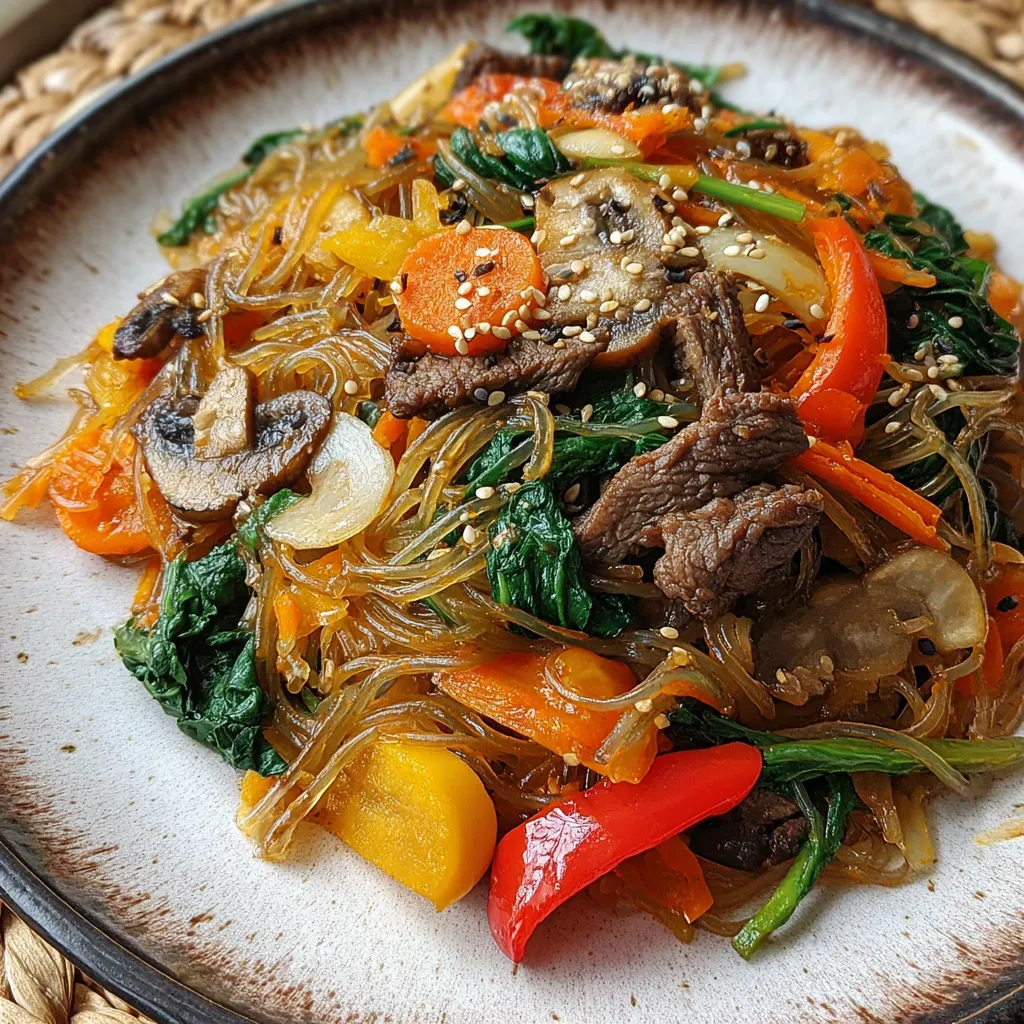

Savory Korean Stir-Fried Japchae
Description
Tender beef strips sizzle then mingle with chewy sweet potato noodles, crunchy carrot and pepper, and silky spinach, all coated in a glossy soy-sesame sauce that delivers a perfect balance of savory, sweet, and earthy notes.
Ingredients
Instructions
-
Soak sweet potato noodles in warm water for 20 minutes, then drain and set aside.
-
Slice beef sirloin into thin strips and marinate with 1 tablespoon soy sauce and black pepper for 10 minutes.
-
Julienne the carrot, thinly slice the onion, bell pepper, and shiitake mushrooms; mince the garlic.
-
Heat vegetable oil in a large skillet over medium-high heat. Add marinated beef and stir-fry until browned, about 2–3 minutes. Remove and set aside.
-
In the same skillet, add garlic, carrot, onion, mushrooms, and bell pepper. Stir-fry for 4–5 minutes until vegetables are tender-crisp.
-
Add drained noodles, cooked beef, spinach, remaining soy sauce, sugar, and sesame oil to the skillet. Toss to combine and cook for another 3–4 minutes until spinach wilts and noodles are glossy.
-
Sprinkle toasted sesame seeds over the top and give a final toss. Adjust seasoning with extra soy sauce or sesame oil if needed.
-
Transfer to a serving plate and enjoy warm.
Note
- For a vegetarian version, omit beef and increase mushrooms or add tofu.
- Use low-sodium soy sauce to control saltiness.
- Japchae tastes best when noodles are slightly undercooked before stir-frying.
- Leftovers store well in an airtight container for up to 2 days.

